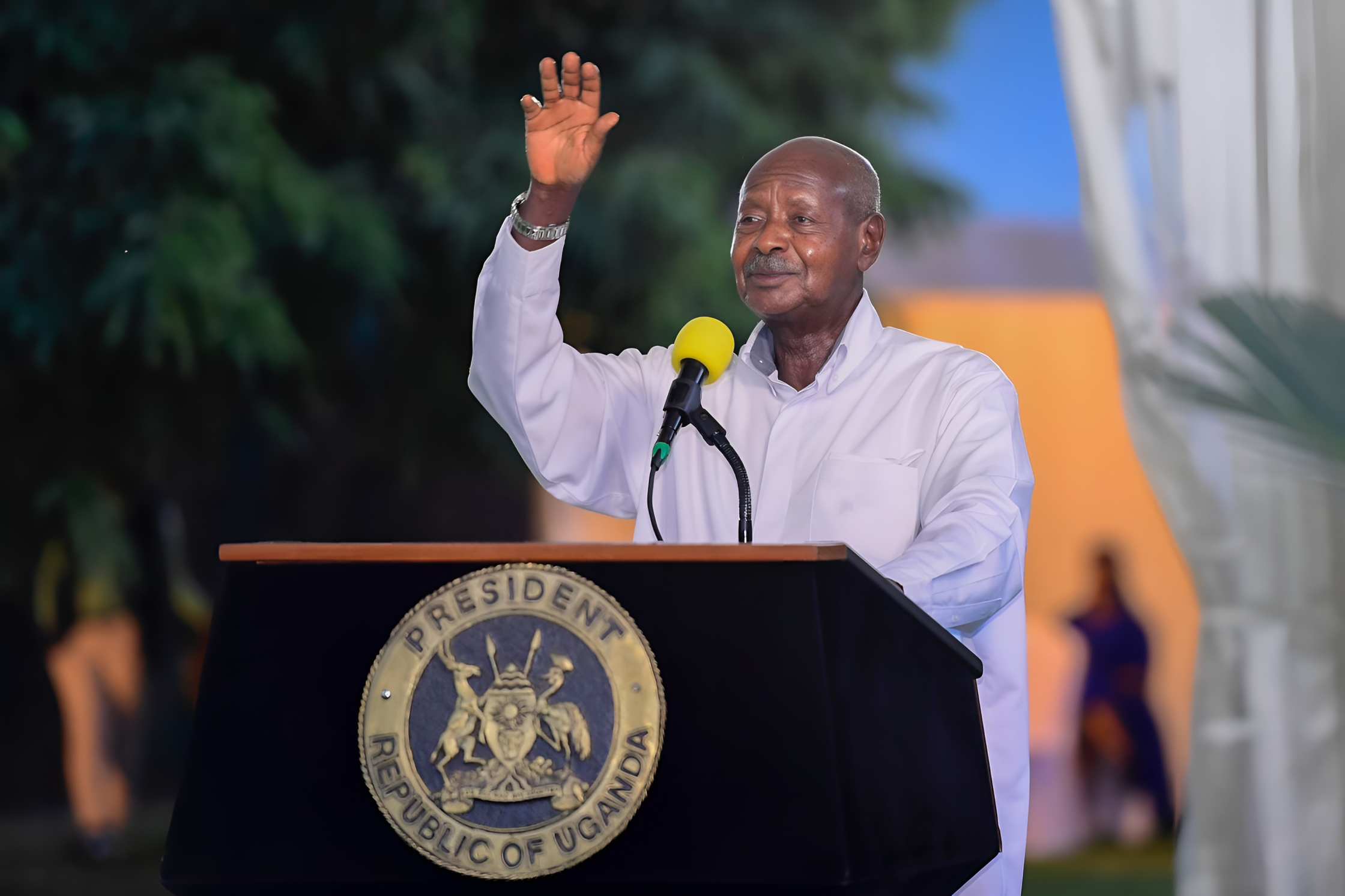
Uganda President Yoweri Museveni has launched his election manifesto ahead of the January 15 presidential vote, using the occasion to caution voters that leadership is a serious responsibility whose consequences are felt by the entire country.
Speaking during a campaign stop in Kiboga, Museveni told supporters that the choice made at the ballot can either protect a nation or push it into hardship.
At 81, Museveni is seeking another term that would extend his stay in office well beyond four decades. If he wins the vote, his leadership would run until 2031, further entrenching his position among the longest-serving leaders in the world and stretching his rule to 45 years.
Addressing residents while on the campaign trail, Museveni said he had spoken to the children of former fighters to underline the weight of leadership and the trust voters place in those they elect. He warned that careless decisions during elections often leave ordinary people bearing the cost.
“I met the children of our fighters and reminded them that elections are about trust and capability. Leadership is not a game. When a country makes wrong choices, the people suffer,” Museveni said.
He pointed to Uganda’s past to explain his argument, saying the years following independence were marked by poor leadership choices that had lasting effects on the country. According to him, the period between 1962 and 1986 showed how costly wrong decisions at the top can be.
“That history is why decision-making must never be taken lightly. I therefore presented the NRM Manifesto for 2026–2031 with confidence. The NRM is capable. We are not jokers. What we promise, we deliver, and what we reject, we firmly reject,” he said.
Uganda uses a two-round system to elect its president, with a candidate required to secure at least 50 per cent plus one vote to win outright in the first round. The process is managed by the Electoral Commission of Uganda. Presidential term limits were removed in 2005, allowing sitting leaders to contest repeatedly.
Museveni’s main rival in the race is Robert Kyagulanyi, widely known as Bobi Wine, who is running on the National Unity Platform ticket. The former pop star has positioned himself as the leading opposition voice against the long-serving president.
In an interview with CNN, Wine said the coming election has turned into “a war against him,” accusing security agencies of targeting him and his supporters. He said force has been used to disrupt his campaign activities across the country.
Some of his rallies have been broken up with teargas by police officers in combat gear, often moving in heavy artillery vehicles that follow his convoy throughout the campaign period.
“I believe General Museveni is using Uganda as his personal property and his family property, and he views us as his slaves,” Wine said.
When voters go to the polls on January 15, Museveni will be just two weeks away from marking 40 years since he took power on January 29, 1986. He assumed office after leading the National Resistance Army in a five-year guerrilla war that removed the military government of Tito Okello.
The NRA took control of Kampala on January 26, 1986, clearing the way for Museveni to declare himself president days later. Earlier, he had been involved in efforts that led to the removal of Idi Amin Dada in 1979.
After the disputed 1980 elections, which Museveni said were rigged, he formed the National Resistance Army and launched an armed struggle that later brought him to power.
Over the years, Museveni has remained in office through a series of legal and constitutional changes, including the removal of both age and term limits for the presidency.
Before the rise of Wine, Museveni’s strongest and most consistent challenger was Kizza Besigye, once his ally and personal doctor. Besigye has contested against Museveni four times since 2001, with each election marked by arrests and crackdowns by state agencies.
Besigye is currently in detention after being charged with treason in a civilian court over the alleged possession of illegal firearms. His case was moved from a military tribunal following public pressure and international concern, and he has remained in custody since November 2024.































Comments
Sign in with Google to comment, reply, and like comments.
Continue with Google