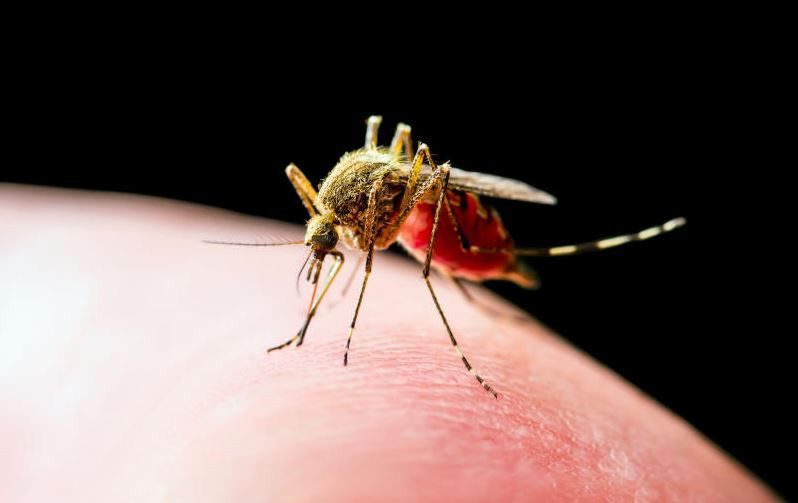
The Ministry of Health and the Kenya Meteorological Department have issued a malaria early warning for Kakamega County, projecting a high risk of an outbreak between November and December 2025.
According to the Malaria Epidemic Early Warning Prediction System for Western Kenya Highlands, the latest forecast shows that Kakamega faces elevated malaria transmission risks, while Kisii and Nandi are expected to remain stable with no epidemic threat.
The analysis is based on observed temperature and rainfall data, which are key indicators in malaria transmission.
In Kakamega, maximum temperatures increased from 28.1°C in September to 27.0°C in October, while rainfall rose significantly from 105.8mm to 248.7mm.
The model registered a 36.4 percent risk level—above the 30 percent epidemic threshold—signalling potential danger for the highlands region.
“Consequently, there is a high risk of a malaria epidemic in Kakamega in the months of November and December 2025,” the report notes.
In Kisii County, however, data indicated a decline in temperature and a rise in rainfall that did not meet epidemic conditions.
The October readings showed a maximum temperature of 25.6°C, slightly below the monthly average, and rainfall at 301.6mm.
The model recorded zero percent epidemic risk, meaning no outbreak is expected during the forecast period.
Similarly, in Nandi County, maximum temperatures dropped from 24.0°C in September to 23.0°C in October, while rainfall increased from 170.3mm to 238.1mm.
The overall epidemic risk was assessed at just five percent, far below the 20 percent threshold for concern.
The collaborative report highlights the importance of continuous climate monitoring in predicting and preventing malaria outbreaks.
It urges health authorities and local governments to strengthen preventive measures, especially in areas identified as high-risk.
The agencies also cautioned that the predictive data is subject to change depending on environmental variations.
“While every effort has been made to ensure the accuracy and reliability of the data, malaria transmission dynamics are influenced by multiple factors including temperature, rainfall, and human behaviour. Continuous monitoring and updates to the predictive models are essential for accurate assessments,” the report stated.
The bulletin, issued under reference number MET/7/58/11-2025, advises local health departments in Kakamega to prepare for potential outbreaks by enhancing surveillance and vector control measures.
The data, reflecting conditions as of August 2025, will be updated in subsequent advisories as new information becomes available.