The East African Community has unveiled the Preview Edition of the Lake Victoria State of the Basin Report 2025, presenting one of the clearest pictures yet of the conditions facing the region’s most vital water body.
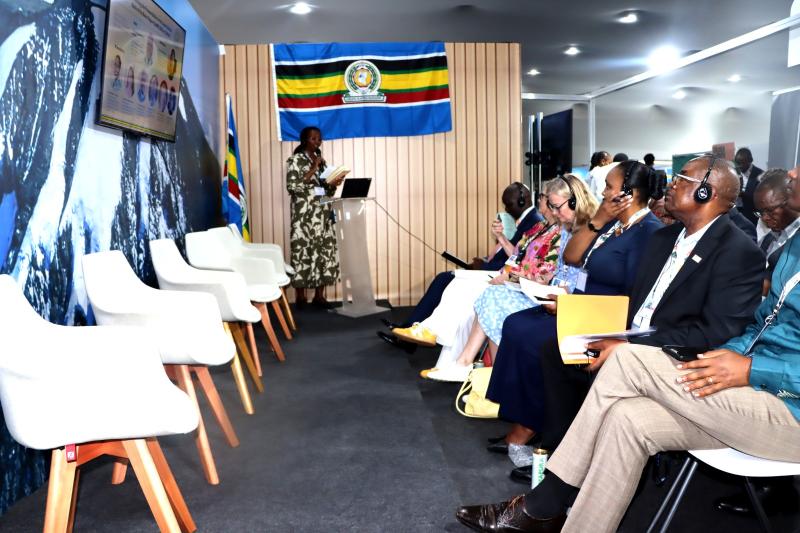
The launch took place during a side event at the United Nations Climate Change Conference, giving the report a global stage at a moment when climate pressures on the basin are rising. The document, put together by the Lake Victoria Basin Commission with support from GIZ, brings together wide-ranging data affecting the more than 45 million people who depend on the lake.
Regional leaders described the publication as a major step in understanding the environmental, social, and governance issues shaping the basin’s future.
The report gathers information on water quality, biodiversity, climate change, land use, population growth, and how the natural resources of the region are being managed. It is intended to guide decisions across all five EAC partner states, offering a shared evidence base to help direct investment and policy.
Speaking at the launch, EAC Deputy Secretary General for Infrastructure, Productive, Social and Political Sectors Andrea Ariik said, “Lake Victoria is more than the world’s largest tropical lake. It is the beating heart of East Africa — our water, our food, our energy, our livelihoods.” She added, “Yet despite its immense value, Lake Victoria is under serious threat. The findings of this report make that reality unmistakably clear.”
The report outlines several environmental pressures growing across the basin. Declining water quality is linked to untreated wastewater, industrial discharge, farm runoff, and soil washing into the lake.
These factors are causing eutrophication, reduced oxygen levels, and the collapse of some fish stocks. The report also warns of biodiversity losses driven by habitat destruction, pollution, and the spread of invasive species.
Ariik said the lake’s decline extends far beyond nature, explaining, “This is not just an environmental story but a human story. The degradation of the Lake Victoria Basin undermines food security, public health, economic growth, and social stability.” According to the report, climate change is making these pressures worse. Higher temperatures, unpredictable heavy rainfall, droughts, and floods are affecting farming, hydropower, and communities in Kenya, Tanzania, Uganda, Rwanda, and Burundi.
Even with these challenges, the report sets out practical actions that governments and partners can take. These include improved wastewater treatment, better farming practices, restoring catchments and wetlands, controlling erosion, and using nature-based solutions.
Strengthening governance and giving the Lake Victoria Basin Commission more authority to coordinate action across borders is seen as essential for long-term results.
Ariik cautioned that ignoring the warning signs will only raise the cost of recovery, saying, “A business-as-usual path will only deepen the crisis and escalate costs. But a sustainable investment pathway offers the promise of a resilient Lake Victoria Basin that continues to support livelihoods for generations to come.”
One of the main features of the report is the Water Information System, built with funding of EUR 60 million from Germany’s Federal Ministry for Economic Cooperation and Development through KfW under the Lake Victoria Basin Integrated Water Resources Management Program. The system provides tools for monitoring, collecting data, and supporting decisions that require clear and reliable information.
The launch brought together leaders and partners from across the region and beyond. Those present included Kenya’s Principal Secretary for EAC Affairs Caroline Karugu, GIZ Managing Director Ingrid-Gabriela Hoven, KfW Executive Board Member Christiane Laibach, and Uganda’s Director of Resources Management Callist Tindimugaya. Their presence underscored the importance placed on shared action to protect the basin.
Closing the event, Ariik called on all players to commit fully, stating, “The health of the Lake Victoria Basin is not a sectoral concern; it is a regional imperative, central to our shared prosperity and stability. Let this report be the turning point where knowledge drives action and political will is matched by investment.”