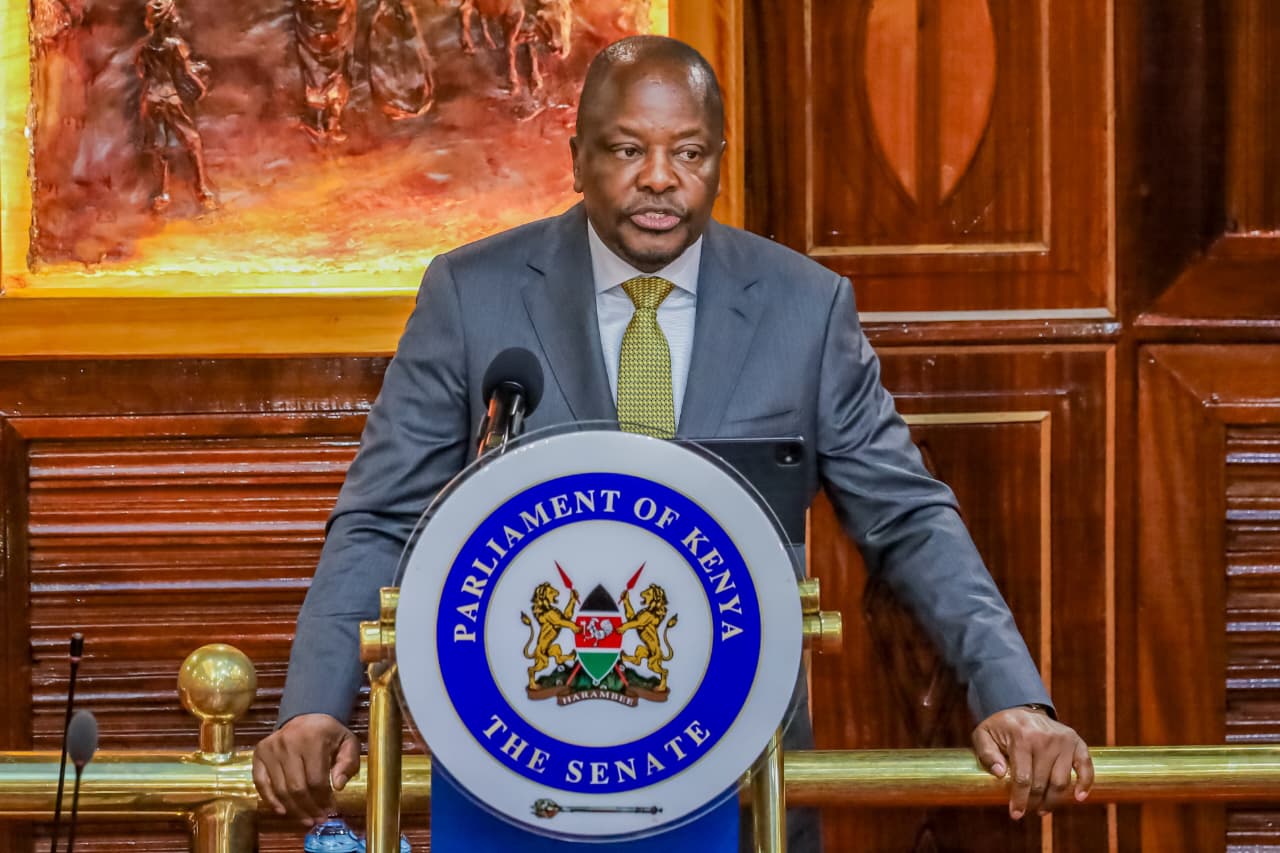
All investments made by private operators in the four leased state-owned sugar factories will revert to the government after the 30-year lease period, Agriculture Cabinet Secretary Mutahi Kagwe told Parliament on Wednesday.
He emphasised that the leasing model is intended to modernise operations, boost cane production, and benefit local farmers through bonuses, cane development, and infrastructure support, while regulatory safeguards under the Kenya Sugar Board and Competition Act ensure no single firm monopolises the sector.
The four factories — Sony, Nzoia, Chemelil, and Muhoroni — were handed over to private operators on May 10, 2025, under long-term concession agreements designed to improve efficiency, modernise operations, and increase sugarcane production.
The leases were awarded to Busia Sugar Industry Ltd (Sony), West Kenya Sugar Company Ltd (Nzoia), Kibos Sugar & Allied Industries Ltd (Chemelil), and West Valley Sugar Company Ltd (Muhoroni).
Under the agreements, investors will pay annual rent of Sh40,000 per hectare for Chemelil, Muhoroni, and Sony, and Sh45,000 per hectare for Nzoia. They are also required to pay concession fees of Sh4,000 per tonne of sugar and Sh3,000 per tonne of molasses, plus a one-off goodwill payment in the first year.
CS Kagwe said the agreements also require millers to invest heavily in cane development, rehabilitate and modernise factory equipment, adopt new technologies, and diversify into cogeneration, bioethanol, and related products.
“They must also maintain nucleus estates and out-grower systems to secure cane supply,” he added, noting that the government leased the entire factory ecosystem as a composite asset, meaning nucleus land and standing cane were not valued separately.
Addressing concerns about monopolisation, Kagwe said, “The Sugar Act, 2024, established the Kenya Sugar Board with powers to regulate milling operations, while the Competition Act bars any firm from controlling over 50% of the national market. No miller exceeds this threshold.”
The CS highlighted that lease proceeds will directly benefit farmers through bonuses, cane development, and infrastructure support, as the government shifts from running the mills to regulating them.
On the long-standing Miwani Sugar land dispute, he said conflicting court rulings have complicated ownership of LR No. 7545/3.
With the matter before the Court of Appeal, the Cabinet has directed the Ministry and Attorney General to pursue an amicable settlement with Crossley Holdings to protect public interest and unlock the land for development.
“The leasing model is designed to revive production, cut losses, attract investment, and protect farmers — with all assets and improvements returning to full government ownership at the end of the 30-year term,” Kagwe said.