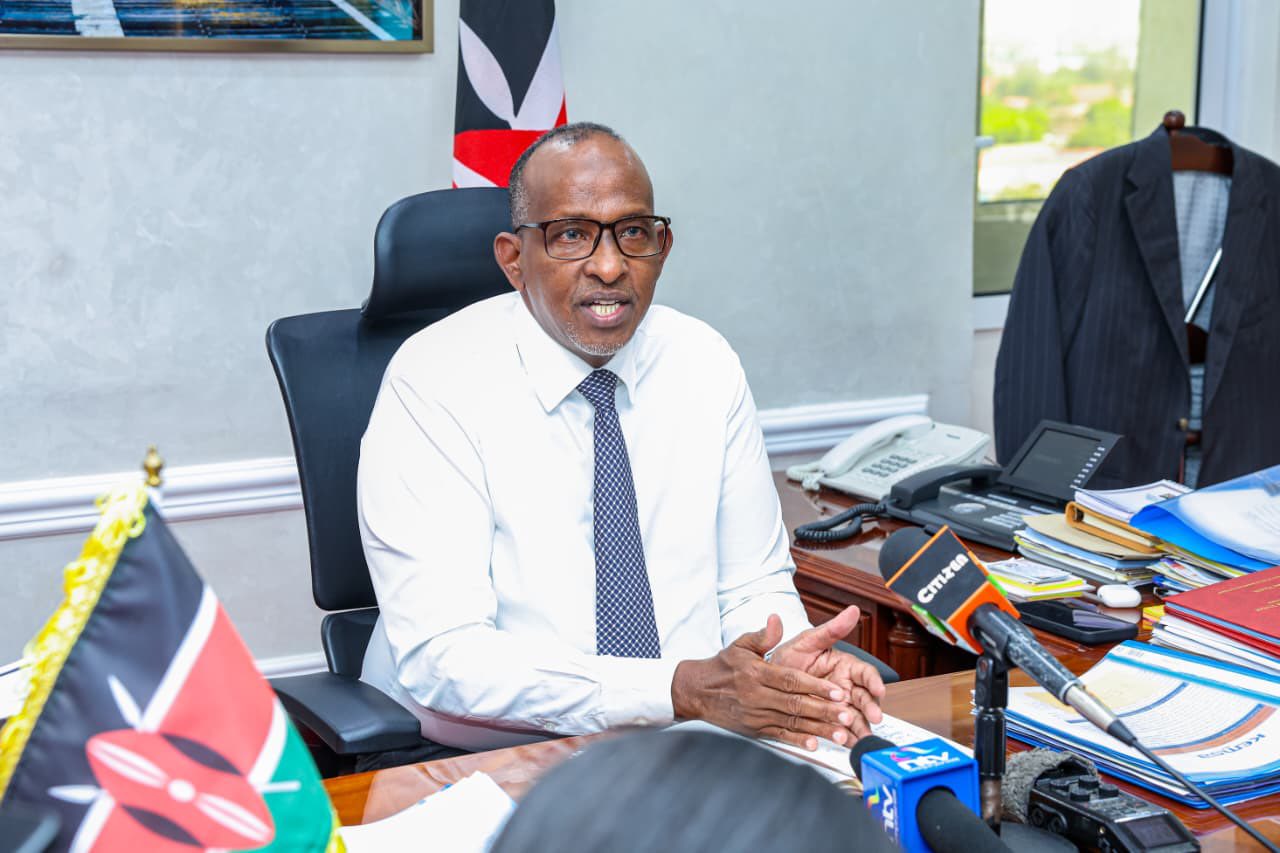
Health Cabinet Secretary Aden Duale has moved to clarify the status of the long-awaited Collective Bargaining Agreement (CBA) for clinical officers while outlining key policy shifts affecting Universal Health Coverage (UHC) staff and the engagement of foreign doctors.
In a detailed statement on Wednesday, Duale said the CBA currently ready for signing applies only to about 150 clinical officers employed directly by the Ministry of Health, a small fraction of the country’s clinical workforce.
“I wish to clarify the current status of the Collective Bargaining Agreement (CBA) for clinical officers serving under the Ministry of Health (MOH), as well as key matters affecting Universal Health Coverage (UHC) staff,” Duale said.
He noted that Kenya has approximately 33,000 clinical officers nationwide, the majority of whom work in county public hospitals, private and faith-based facilities, and national referral hospitals.
Duale cautioned that the existing agreement risks benefiting only a select group unless it is broadened.
“The CBA that is ready for signing applies specifically to approximately 150 clinical officers employed by the Ministry of Health,” he said.
“I have therefore urged the union leadership to engage all relevant stakeholders and ensure that the CBA becomes inclusive and applicable to all public sector clinicians, not a select few.”
On the contentious issue of risk allowance, Duale confirmed that the CBA proposes an increase from Sh3,000 to Sh7,000.
However, he stressed that the enhanced allowance currently applies only to the small group of Ministry of Health clinicians.
“Regarding risk allowance, the previous rate of Kenya Shillings (KSh) 3,000 has been proposed for enhancement to KSh 7,000 under the CBA,” he said.
“However, this increase currently benefits only the 150 Ministry of Health clinicians and reflects an agreement reached prior to my assumption of office.”
Turning to Universal Health Coverage staff, the Health CS said significant progress had been achieved following prolonged uncertainty over their terms of service.
According to Duale, UHC salaries have now been aligned with the rates set by the Salaries and Remuneration Commission (SRC), addressing a long-standing grievance among health workers.
He further revealed that a major breakthrough was reached at the 12th National and County Governments Coordination Summit chaired by President William Ruto.
“At the summit, it was agreed that the National Government will provide all required funding, to be transferred to county governments,” Duale said.
To ensure smooth execution of the agreement, Duale said a joint implementation committee has been established, bringing together the Ministry of Health, county governments, the Public Service Commission and the National Treasury.
In a policy shift, Duale announced tighter controls on the licensing of foreign doctors.
He said the Ministry of Health will no longer renew licenses for foreign practitioners, except those from East African Community (EAC) member states.
“With regard to foreign doctors, the Ministry of Health will no longer renew licenses except for practitioners from East African Community (EAC) member states,” he said.
“Other foreign practitioners will only be permitted where they possess specialized skills not available locally.”
Duale said the move is intended to prioritize employment opportunities for Kenyan health professionals while safeguarding the integrity and sustainability of the health system.
He reaffirmed the government’s commitment to dialogue with unions, counties and other stakeholders as reforms in the health sector continue.
“The Government remains committed to continued engagement with all stakeholders to strengthen the health workforce and deliver quality, accessible and equitable healthcare for all Kenyans, in line with the Universal Health Coverage agenda,” Duale said.
The remarks come amid growing pressure on the government to address health worker welfare and stabilize service delivery across the country.