3,452 Kenyan workers in distress in Middle East since 2023 - Mudavadi
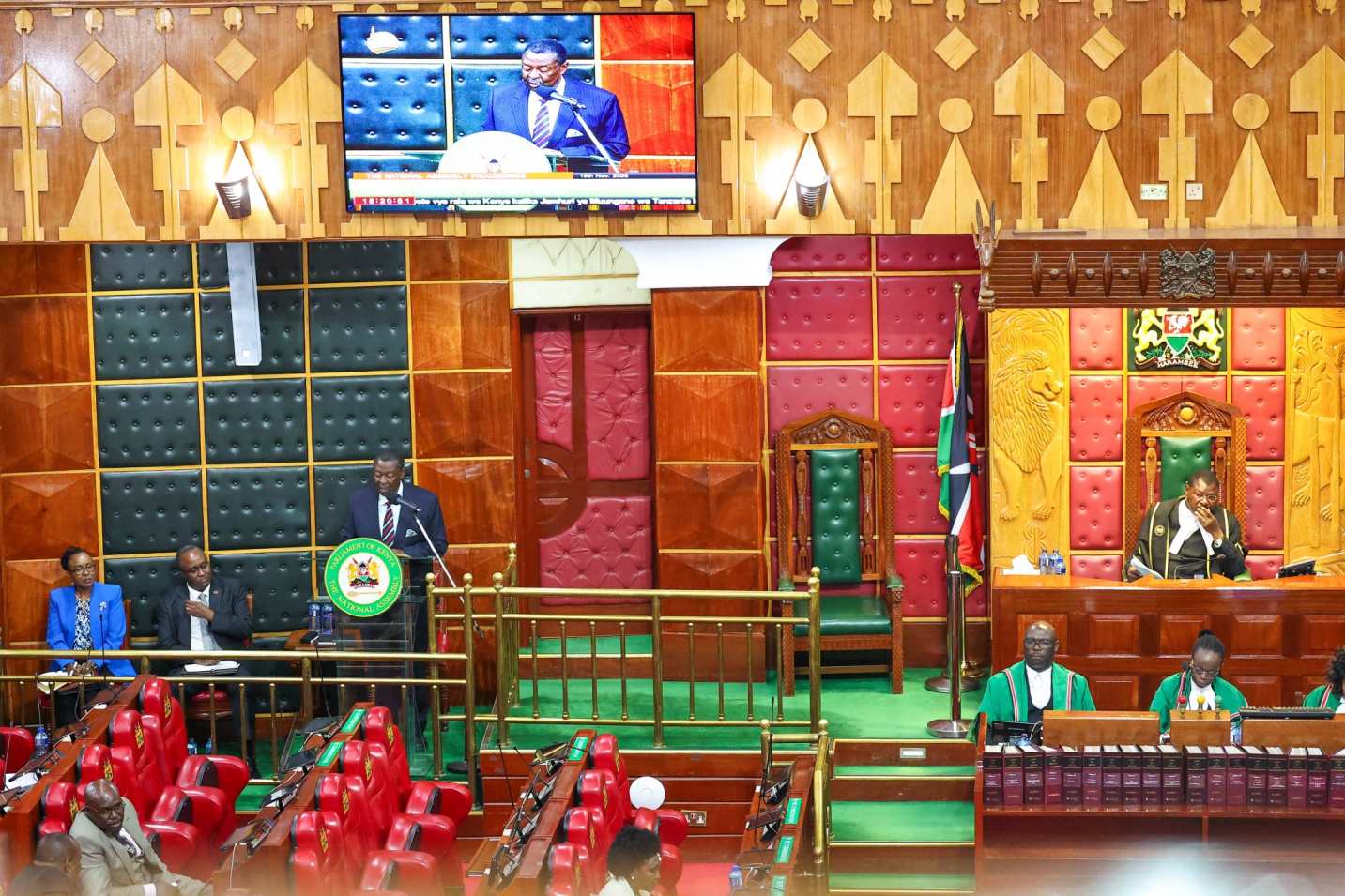
Mudavadi was responding to Samburu West MP Naisula Lesuuda, who asked about the measures in place to protect Kenyans heading to or already employed in Gulf countries. The Cabinet Secretary said the Ministry of Foreign and Diaspora Affairs has managed 3,452 cases of Kenyans in distress across the region since 2023.
The number of Kenyans encountering difficulties while working in the Middle East has surged, prompting government action to expand consular assistance and introduce safeguards for citizens abroad.
Since 2023, over 3,400 distress cases involving Kenyan workers have been recorded, highlighting the urgent need for enhanced government intervention.
Foreign Affairs Cabinet Secretary Musalia Mudavadi told Parliament on Wednesday that Kenya’s diplomatic missions are under growing pressure due to the rising population of Kenyans in Saudi Arabia, currently estimated at 350,000.
He emphasized that the government has increased staffing, opened new consular offices, and strengthened protections to ensure timely responses to emergencies affecting workers.
Mudavadi was responding to Samburu West MP Naisula Lesuuda, who asked about the measures in place to protect Kenyans heading to or already employed in Gulf countries. The Cabinet Secretary said the Ministry of Foreign and Diaspora Affairs has managed 3,452 cases of Kenyans in distress across the region since 2023.
“The number of Kenyans living and working in the Kingdom of Saudi Arabia has increased exponentially, now estimated at 350,000,” he said.
To improve support, the government recently opened a consulate in Jeddah, complementing the embassy in Riyadh.
“We will also be seeking more budgetary support to expand the capacity of our mission to serve Kenyans better. The government will be seeking funding for the establishment of a safe house for Kenyans in distress,” Mudavadi added.
Lesuuda questioned recruitment procedures and wage arrangements for Kenyan workers in Saudi Arabia. Mudavadi rejected claims that senior officials or their relatives have stakes in recruitment firms sending Kenyans abroad.
“Kenyans migrating abroad must have travel insurance cover. No single insurance company has a monopoly on covering Kenyans seeking jobs in the Gulf. Individuals and Kenyan private recruitment agencies are at liberty to choose their preferred insurance company,” he said.
The Cabinet Secretary noted ongoing discussions with Saudi authorities to create a broader labour framework for both skilled and semi-skilled workers.
“Just this week, we have received official communication on enhanced wage agreements for Kenyans employed in the Kingdom of Saudi Arabia,” he said.
Mudavadi explained that domestic workers’ minimum pay was set in 2019 at 850 Saudi Riyals, following agreements between Saudi manpower firms and Kenyan recruitment agencies.
He highlighted reforms, including Phase 3 of the Wage Protection System (WPS) launched on October 1, 2025, which requires all employers with two or more domestic workers to pay salaries via official digital channels through MUSANED. By January 2026, the system will cover all domestic workers. He called WPS a “landmark reform” enhancing protections, fair treatment, and trust between employers, agents, and workers.
On recruitment agency regulation, Mudavadi said the Multi-Agency Committee vets all firms according to the Labour Institutions Act of 2007 and the 2016 Private Employment Agencies Regulations. Agencies must have Sh5 million in capital, proper office facilities, qualified leadership, and a clean criminal record.
“There are currently 594 recruitment agencies with valid licenses. The government has deregistered over 600 other agencies on various grounds of malpractices,” he said.
Mudavadi highlighted that Kenyan workers are in global demand and assured that the government will continue protecting them abroad.
“Our citizens are not merely migrating for work; they are being actively recruited worldwide because of their skills, resilience and work ethic,” he said.
He also addressed undocumented children born to Kenyan mothers in Saudi Arabia, noting that mobile consular teams have conducted DNA testing on 707 children, enabling birth certificate issuance and safe repatriation of 59 mothers and 73 children.
State Department for Diaspora Affairs Principal Secretary Roseline Njogu urged Kenyans abroad to report any challenges, assuring that the Ministry responds quickly to service delivery concerns.




Comments
Sign in with Google to comment, reply, and like comments.
Continue with Google