Treasury calls for tax policy proposals ahead of 2026/27 budget
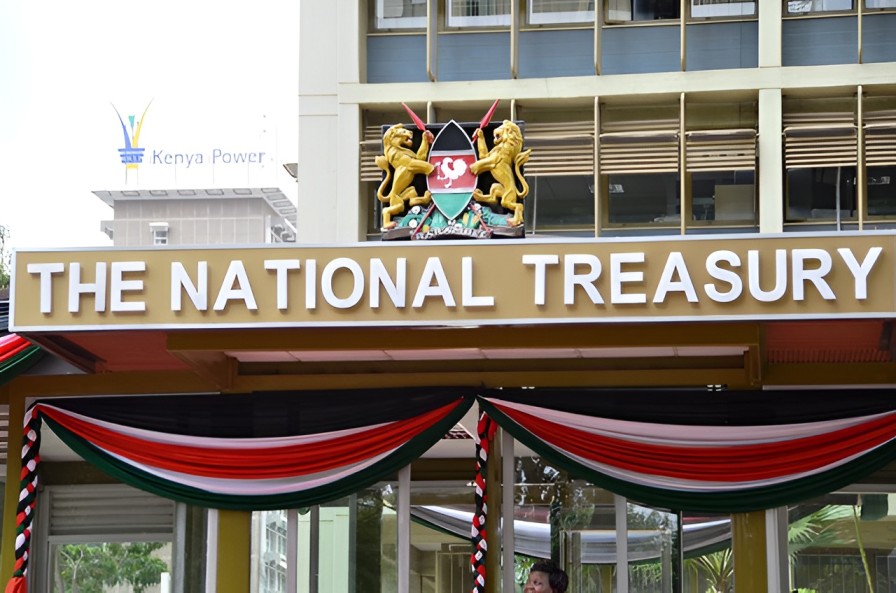
The National Treasury has invited Kenyans and key stakeholders to submit evidence-based tax amendment proposals for the 2026/2027 Budget and Finance Bill 2026, with submissions due by December 31, 2025.
The National Treasury has invited Kenyans and key stakeholders to submit tax policy proposals for the FY 2026/2027 Budget, citing constitutional requirements for openness, accountability, and public participation.
The ministry says proposals must outline specific tax laws, issues to be addressed, and evidence-based justification, with all submissions due by December 31, 2025.
In a public notice issued on Tuesday by Cabinet Secretary John Mbadi, the ministry emphasised that the invitation is grounded in the constitutional and legal obligations that guide Kenya’s public finance management.
The notice recalls that “Article 201(a) of the Constitution on the principles of public finance requires openness and accountability, including public participation, in financial matters.”
The Treasury further anchored the call for submissions on the broader governance principles enshrined in the Constitution, noting that “Article 232(1)(d) of the Constitution requires involvement of the people in the process of policy making.”
To reinforce the legal framework behind the exercise, the statement cited the Public Finance Management Act, stating that “section 35(2) of the Public Finance Management Act (Cap. 412A) requires participation by the public in the budget process.”
According to the notice, the invitation recognises the shared national responsibility in public finance and economic governance, with the statement highlighting the need to consider “the burdens and benefits of the use of resources, raising revenue and managing expenditure equitably.”
In keeping with these principles, the Treasury announced that it is now inviting a wide spectrum of stakeholders, including individuals, government institutions, private sector players, civil society groups, non-governmental organisations, religious institutions and professional bodies, to submit their views.
The notice states that “The National Treasury hereby invites the members of the public, the national government and county governments, non-governmental organisations, civil societies, professional bodies, private sector players, religious groups and other stakeholders to make submissions for consideration in the fiscal budget for the Financial Year 2026/2027.”
These submissions are expected to focus specifically on tax considerations for the next Finance Bill.
The Treasury clarified that “The proposals should focus on specific amendments to tax laws for inclusion in the Finance Bill 2026.”
It further directed that such proposals must be aligned with the Government’s economic plan, noting that they should fit within “the Government's Bottom-Up Economic Transformation Agenda, which seeks to achieve economic turnaround and inclusive growth through a value chain approach.”
To ensure coherence and clarity in the review process, the ministry outlined the structure required for each proposal.
It directed that every submission must include the specific tax law and the provision proposed to be amended, alongside a concise description of the issue to be addressed, and a clear justification supported by evidence or analysis.
The Treasury assured stakeholders that all proposals submitted will be central to shaping the tax measures for the next financial cycle.
As the notice states, “The proposals received will inform the formulation of tax measures for consideration in the Finance Bill 2026 to support ongoing efforts to strengthen revenue mobilisation and promote equitable and sustainable economic growth.”
The ministry provided clear submission channels for contributors, noting that “Hard copy submissions should be delivered to the undersigned, and soft copies sent to [email protected] not later than December 31, 2025.”
The public notice marks the start of a crucial phase in Kenya’s budget-making cycle, one where citizens and institutions are formally invited to influence the country’s tax trajectory through transparent and participatory engagement.




Comments
Sign in with Google to comment, reply, and like comments.
Continue with Google