Sakaja hails new pact with State House as turning point for Nairobi
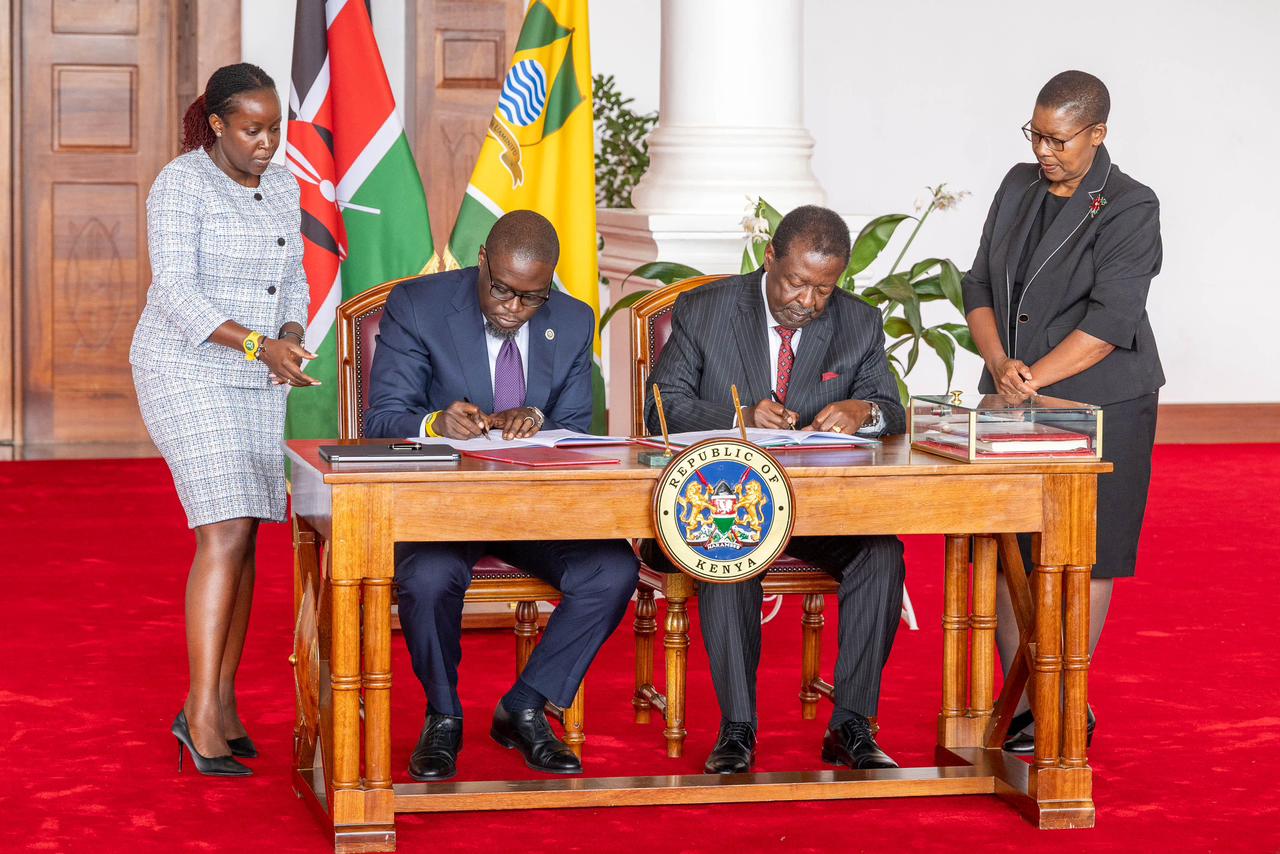
Framing the deal as a model of cooperative governance, Sakaja emphasised that the arrangement does not amount to a transfer of functions from the county to the national government, but rather a partnership consistent with the Constitution.
Nairobi Governor Johnson Sakaja has hailed a newly signed agreement between the Nairobi City County and the national government as a long-overdue framework designed to unlock special support for the capital, saying it will accelerate infrastructure development and service delivery.
Speaking at State House, Nairobi during the signing ceremony presided over by William Ruto, Sakaja described the deal as a milestone in strengthening intergovernmental collaboration under devolution.
“Today is a great day for the capital city of the Republic of Kenya,” Sakaja said.
He noted that in the 13 years since devolution, Nairobi had not fully leveraged its constitutional position as the country’s capital to secure targeted resources and support.
He cited Section Six of the Urban Areas and Cities Act, which recognises Nairobi as more than just one of the 47 counties.
The law designates it as the seat of the national government, host to diplomatic missions — including the only United Nations headquarters in the Global South — and a regional hub for commerce and industry, thereby requiring a special governance arrangement.
“This agreement is 13 years overdue,” Sakaja said, adding that while previous partnerships existed in areas such as the Nairobi Rivers Commission, water provision, school feeding programmes, roads, markets and housing, the new framework formalises and strengthens cooperation.
Under the agreement, a steering committee chaired by the Prime Cabinet Secretary will set overall policy direction, while an implementation committee led by the governor will oversee day-to-day execution of projects.
The committees will comprise senior national and county officials.
Sakaja said the framework would also bolster security coordination and infrastructure development ahead of the 2027 Africa Cup of Nations tournament, which Nairobi is set to host. He termed the event a historic opportunity for the city.
The governor pointed to ongoing gains in water supply as evidence of what collaboration can achieve.
He said water inflows had increased by 140 million litres per day through the Northern Collector Tunnel, with additional projects such as the Maragua IV Dam and upgrades at the Ngethu Water Treatment Plant expected to deliver close to 200 million more litres daily.
Framing the deal as a model of cooperative governance, Sakaja emphasised that the arrangement does not amount to a transfer of functions from the county to the national government, but rather a partnership consistent with the Constitution.
“Devolution is not a competition; devolution is a collaboration,” he said.
“For a bird to fly, which wing does it need? The right wing or the left wing? It needs both wings to fly — the national government and the county government.”
With Nairobi’s population nearing seven million, Sakaja argued that equitable share allocations and local revenue alone are insufficient to meet the demands of a capital city aspiring to global standards.
He pledged that the county would work with the national government to transform Nairobi into a city of “order, dignity, hope and opportunity.”


Comments
Sign in with Google to comment, reply, and like comments.
Continue with Google