EACC targets fake credentials in new anti-corruption strategy
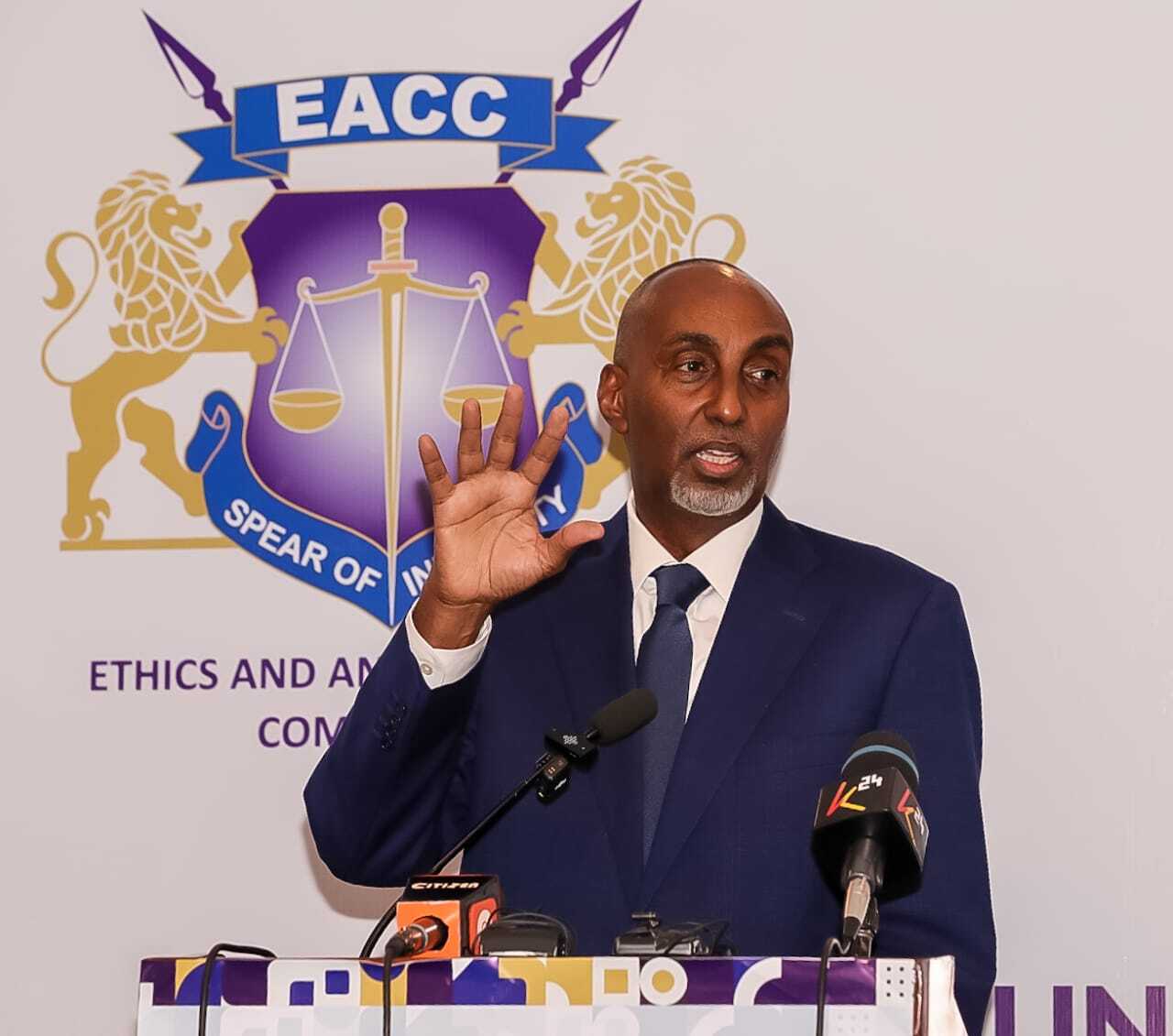
According to the EACC boss, forged and overstated credentials weaken fair competition and damage confidence in public systems.
Kenya’s anti-graft agency is shifting focus to the education and professional sectors in what it describes as a long-term strategy to curb corruption.
The Ethics and Anti-Corruption Commission (EACC) has unveiled plans to establish a specialised institution that will scrutinise academic and professional certificates while also reviewing how ethics and integrity are taught in training programmes.
Chief Executive Officer Abdi Ahmed Mohamud said the initiative is designed to stop corruption before it takes root by ensuring that qualifications presented in the job market are genuine and that ethical values are instilled early.
Speaking during a local radio interview on Wednesday, February 25, 2026, Abdi Mohamud linked the rise of questionable credentials in the workforce to broader governance challenges.
He noted that the presence of fake certificates has enabled some unqualified individuals to access positions of authority.
“To tackle corruption at its roots, we have established an organisation focused on verifying certificates and overseeing curriculum development. By ensuring integrity in education and professional qualifications, we aim to prevent fraudulent practices early,” he said.
He emphasised that the responsibility to fight corruption goes beyond institutions, calling on students, teachers, and professionals to uphold ethical standards in their respective roles.
“If the constitution allows politicians to sit in office even after being charged with corruption, there’s nothing any constitution can do,” Abdi Mohamud added.
According to the EACC boss, forged and overstated credentials weaken fair competition and damage confidence in public systems.
Allowing unqualified individuals to secure influential roles, he warned, creates systemic risks that affect governance and service delivery.
The planned agency will verify certificates before they are accepted for employment or professional registration, sealing gaps that have previously allowed fraudulent documents to pass unnoticed.
Abdi Mohamud said both state and private institutions must uphold strict integrity standards to protect the credibility of their workforce.
Beyond authentication, the commission intends to partner with learning institutions to ensure ethics, integrity, and anti-corruption content are properly integrated into school and professional curricula.
The aim is to nurture citizens and professionals who understand accountability and are less likely to engage in dishonest practices.
Abdi Ahmed Mohamud described the proposal as part of a broader effort to reinforce ethical leadership and restore public confidence by addressing corruption at its foundation.



Comments
Sign in with Google to comment, reply, and like comments.
Continue with Google