Weak controls, illegal payments flagged in county assemblies audit probe
The report further revealed that county assemblies are failing to meet the legal requirement that at least five per cent of public employees be persons with disabilities. Some assemblies were found to have no representation at all.
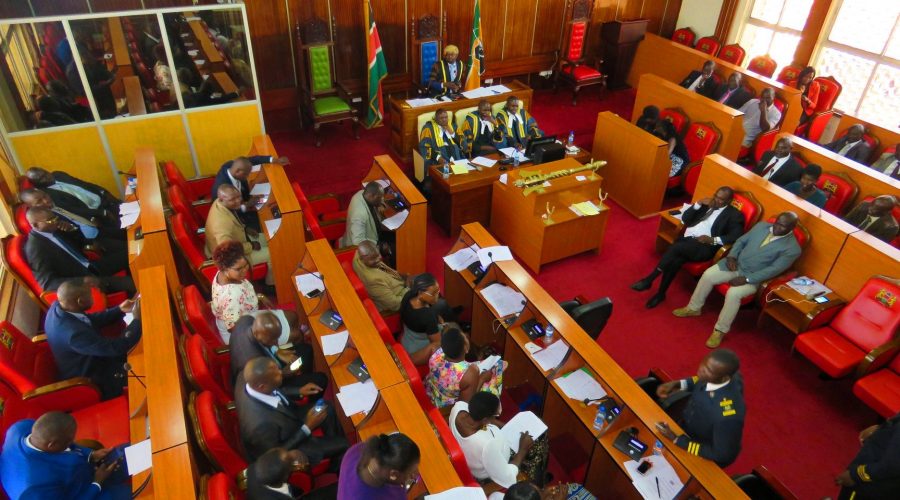
A new Senate investigation has laid bare long-running financial, governance and compliance failures in county assemblies, pointing to weak accountability systems that have allowed misuse of public resources to continue unchecked.
The Senate County Public Accounts Committee, in its review of the Auditor General’s report for the 2024-25 financial year, said county assemblies have repeatedly ignored audit recommendations, allowing the same problems to reappear every year without corrective action. The committee warned that this failure has weakened oversight structures meant to safeguard public funds.
The report noted that this persistent non-compliance reflects “systemic weaknesses in financial management, internal controls and compliance across county assemblies”. Chairperson Senator Moses Kajwang told the committee that accounting officers in many assemblies have consistently failed to act on audit instructions.
“This cyclical non-compliance undermines the entire accountability framework,” the report notes.
The committee raised concern over hiring patterns in several county assemblies, saying some have breached legal requirements on ethnic balance in public service. In extreme cases, Wajir county assembly was found to have 97 per cent of staff drawn from one ethnic group, while Siaya stood at 93.3 per cent.
Lawmakers said this violates the National Cohesion and Integration Act and points to unfair recruitment practices.
“This demonstrates a systemic lack of affirmative action and inclusivity in public service recruitment,” the report states.
The report further revealed that county assemblies are failing to meet the legal requirement that at least five per cent of public employees be persons with disabilities. Some assemblies were found to have no representation at all.
“There is a consistent failure to meet the statutory threshold for inclusion of persons with disabilities,” the report states.
Payroll management was also flagged, with the committee pointing to violations of the “one-third basic salary rule”. Many employees are left with net pay below the required threshold due to deductions and loan repayments, a situation linked to weak payroll monitoring systems.
“The lack of automated payroll systems has enabled illegal deductions to persist unchecked,” the report observes.
The Senate also questioned payments made to organisations that are not legally recognised, including the County Assemblies Forum (CAF) and the Society of Clerks at the Table (Socatt). The committee said such payments are not lawful use of public funds.
The committee was firm in its position, stating: “These bodies are not anchored in any Act of Parliament, and, therefore, public funds should not be directed to them.”
It further stressed that all public spending must comply with constitutional requirements on use of public money.
Cases of inflated and unsupported payments were also highlighted. In one instance, the Wajir county assembly was flagged for overpaying Sh52.3 million in mileage allowances, with concerns raised over missing documentation.
“There were cases of inflated and unsupported expenditure lacking proper documentation,” the committee noted.
Weak internal controls were also identified across most assemblies, including inactive audit committees, absence of risk management systems, and failure to insure public assets. The committee warned that these gaps expose public resources to possible loss and misuse.
While acknowledging delays in exchequer disbursements from the National Treasury, the committee maintained that internal inefficiencies within county assemblies remain a major contributor to the financial problems.




Comments
Sign in with Google to comment, reply, and like comments.
Continue with Google