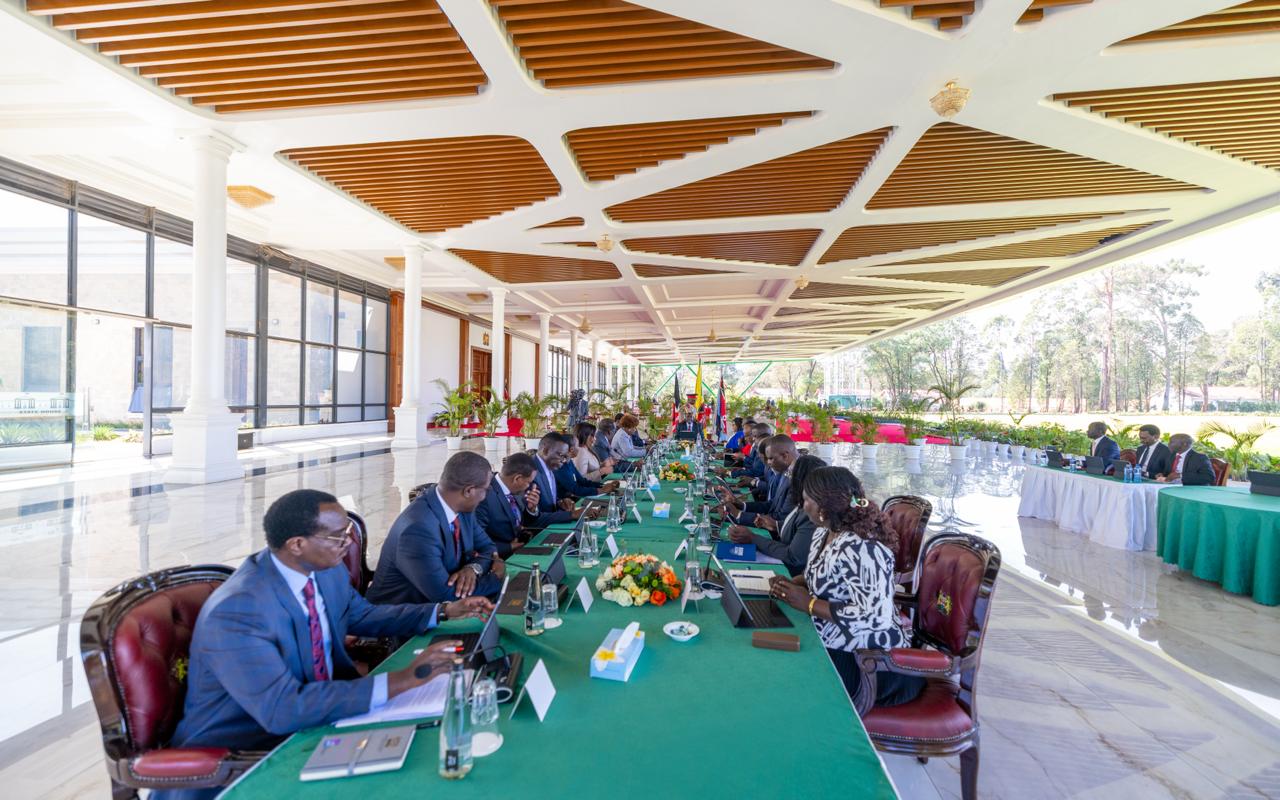
The Cabinet has adopted and forwarded to Parliament a comprehensive package of education reform Bills, setting the stage for the most far-reaching overhaul of Kenya’s education system in decades.
The reforms seek to align governance, curriculum, assessment, financing, teacher training and qualifications with the Constitution and the Competency-Based Education and Training framework.
According to Cabinet, the proposed legislative changes implement the recommendations of the Presidential Working Party on Education Reform and are designed to eliminate longstanding duplication, overlaps and inefficiencies that have constrained performance across the sector.
The Bills cut across basic, tertiary and teacher education, as well as assessment, qualifications and dispute resolution.
“Cabinet has further considered, adopted, and forwarded to Parliament a package of education reform Bills, marking a comprehensive overhaul of Kenya’s education system,” the Cabinet said, underscoring the breadth of the changes.
At the tertiary level, the Tertiary Education Placement and Funding Bill, 2024, proposes the consolidation of key student financing and placement agencies into a single authority.
The Higher Education Loans Board, the Universities Fund, the TVET Funding Board and the Kenya Universities and Colleges Central Placement Service (KUCCPS) would be merged to streamline student placement, loans, scholarships and career guidance, with the aim of improving efficiency and reducing administrative duplication.
The Cabinet also endorsed the Kenya National Qualifications Framework (Amendment) Bill, 2024, which seeks to clarify the mandate of the Kenya National Qualifications Authority and address overlaps with sector regulators.
Under the proposed law, the Authority will focus on setting national qualifications standards, while accreditation and equivalence of qualifications will remain the responsibility of respective regulators.
“Under the Bill, the Authority will focus on setting national qualifications standards, while accreditation and equivalence of qualifications remain with respective regulators,” the Cabinet noted.
In basic education, the Basic Education Bill, 2024, aligns the system with the Competency-Based Education structure and clarifies the respective roles of national and county governments.
The Bill also strengthens quality assurance mechanisms, rationalises school governance structures, and introduces a more coordinated framework for the administration of bursaries and scholarships.
Assessment reforms are addressed through the Kenya National Educational Assessments Bill, 2025, which replaces the examination-centric model administered by the Kenya National Examinations Council with competency-based assessments aligned to the new curriculum.
The shift is intended to better capture learners’ skills and competencies rather than narrow exam performance.
At the same time, the Kenya Institute of Curriculum Development (Amendment) Bill, 2024, narrows the Institute’s mandate to basic education and teacher education, and restructures its Board to eliminate functional overlaps with other agencies.
Teacher preparation and professional development are further addressed through the Pre-Service Education and In-Service Training in Basic Education Bill, 2025, which establishes a coherent framework for training, certification and continuous professional development.
Dispute resolution within the sector is covered by the Education Administrative Tribunal Bill, 2024, which proposes a dedicated mechanism for resolving education-related disputes, reducing reliance on the courts.
“These reforms aim to eliminate longstanding duplication, overlaps, and inefficiencies across the sector,” Cabinet said, adding that the legislative package is intended to support effective implementation of the Competency-Based Education and Training framework.
The Bills will now be considered by Parliament, where lawmakers are expected to debate their scope, cost and implementation timelines, before determining the future direction of Kenya’s education system.






























