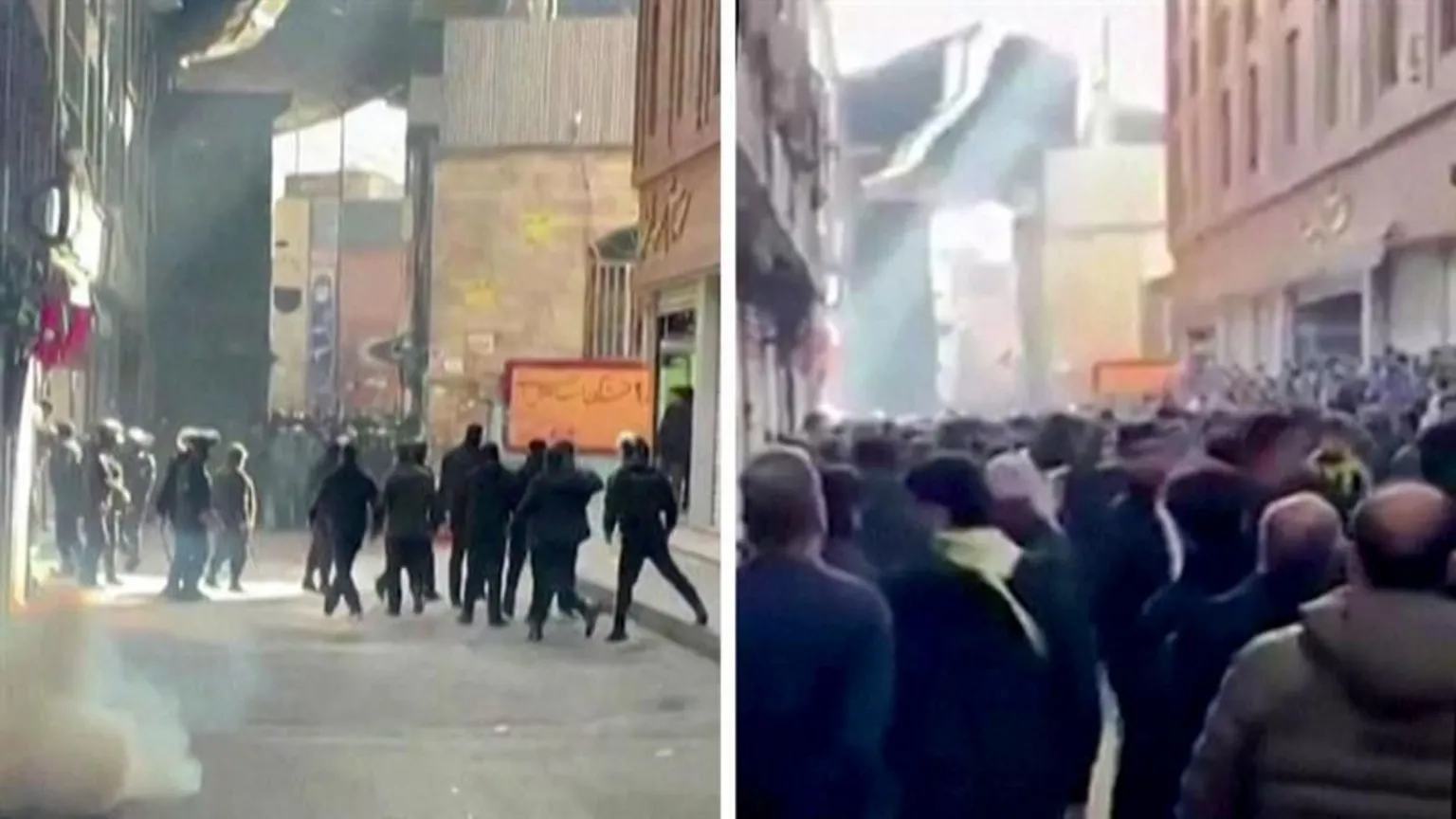
Iran is facing one of its largest waves of civil unrest in recent years, with at least 36 people reported dead as protests over economic hardship and currency collapse spread across the country.
The Human Rights Activists News Agency (HRANA) said 34 of the fatalities were protesters and two were linked to security forces. Iranian officials have not released an official death toll but have acknowledged that three members of the security forces have died.
So far, BBC Persian has confirmed 20 deaths and verified the identities of the victims.
According to HRANA, more than 60 protesters have been injured and over 2,000 arrested during demonstrations in 27 out of 31 provinces.
The unrest began after shopkeepers in Tehran reacted to a steep drop in the rial’s value against the US dollar, adding to growing frustration over inflation, which has reached 40%, and other economic pressures worsened by sanctions, mismanagement, and corruption.
On Tuesday, semi-official media reported that a policeman was killed in Malekshahi, Ilam province, by what authorities described as “rioters.” The area has been a hotspot for demonstrations and security crackdowns in recent days.
In Tehran, crowds gathered at the Grand Bazaar, chanting against the clerical leadership. Videos obtained by BBC Persian show demonstrators fleeing as tear gas was fired, shouting “Dishonourable” at police officers nearby.
Other protests were reported at Yaft Abad market, Caterpillar shopping mall, and the Azari junction in the capital.
In Ilam province, footage showed large groups of people moving through Abdanan, with some protesters throwing rice into the air in a symbolic gesture. Police were filmed on rooftops signaling to the crowds below. Earlier images from Malekshahi appeared to show burning banks, furniture, and papers, with men celebrating nearby.
The unrest has drawn sharp warnings from leaders abroad. President Donald Trump said: “We are locked and loaded and ready to go,” if Iranian security forces continued to target peaceful protesters. Supreme Leader Ayatollah Ali Khamenei responded that “rioters should be put in their place” and vowed not to “yield to the enemy.”
Judiciary chief Gholamhossein Mohseni Ejei emphasized authorities would heed those with “legitimate concerns about their livelihood” but would not tolerate “rioters.”
The UN also expressed concern. Secretary General Antonio Guterres, through his spokesman Stephane Dujarric, said he was “deeply saddened by the reported loss of life and injuries resulting from clashes between security forces and protesters” and stressed that measures must be taken “to prevent any further casualties.”
He added that everyone should be allowed to “protest peacefully and express their grievances.”
Amnesty International raised alarms over a raid on Imam Khomeini Hospital in Ilam, reporting that Revolutionary Guards and police forces “used shotguns and fired tear gas into the grounds, smashed glass doors to gain access, and beat those inside, including medical workers.”
The group said the attack “violates international law and exposes yet again how far the Iranian authorities are willing to go to crush dissent.”
Kurdish rights organization Hengaw reported that injured protesters had been shot during demonstrations outside a government compound in Malekshahi on Saturday, with five killed, including a retired brigadier-general. Semi-official media said three people, including a security officer, were killed when “rioters” tried to enter a security facility.
Norway-based Iran Human Rights said at least 27 protesters, including five children, had died in eight provinces. Mahmood Amiry-Moghaddam, the group’s director, warned: “The Islamic Republic has a well-documented record of bloody repression and mass killings of protesters in past uprisings. Now, as the regime is more unstable than ever and seriously fears for its survival, there is a grave concern that the scale of repression this time may be even more violent and widespread than before.”
The current demonstrations mark the widest unrest since 2022, following the death of Mahsa Amini, a young Kurdish woman detained for allegedly not wearing her hijab properly. That earlier uprising resulted in over 550 deaths and around 20,000 detentions, according to human rights groups.































Comments
Sign in with Google to comment, reply, and like comments.
Continue with Google