A heated confrontation is unfolding between Members of Parliament and officials from the National Transport and Safety Authority after a massive 21-year agreement with a private consortium came under scrutiny, with lawmakers warning that the deal could hand over a lucrative public revenue stream worth hundreds of billions of shillings on what they describe as deeply uneven terms.
At the centre of the storm is a Sh300 billion public-private partnership involving the National Transport and Safety Authority and a consortium led by Pesa Print Limited, tasked with producing smart driving licences and rolling out an automated traffic enforcement system across the country.
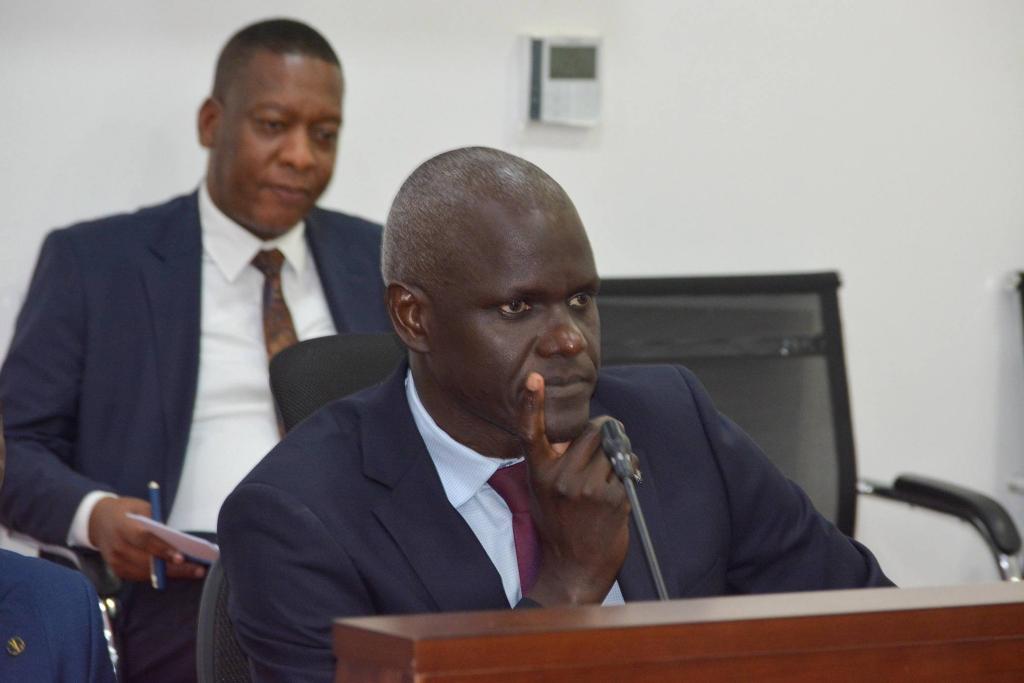
The National Assembly’s Public Debt and Privatisation Committee, chaired by Abdi Shurie, told NTSA officials on Thursday that the structure of the deal appeared to heavily tilt benefits toward private players, despite the system being developed and proven under public investment.
According to projections presented before the committee, the arrangement could generate about Sh900 billion over its lifetime, with nearly 76 per cent expected to go to the private partner, a breakdown MPs said raised serious questions about fairness and value for money.
Lawmakers argued that the government was effectively surrendering a high-performing revenue stream that had already shown strong returns when run publicly. Data shared in the session indicated that the smart driving licence system had earned Sh6.7 billion against an initial investment of Sh1.2 billion.
Ijara constituency lawmaker Abdi Ali Abdi questioned the logic behind moving away from a system already delivering strong returns, saying, “According to what you said this was generating some good amounts to the national treasury, why shift to a private partnership model for a system that was already delivering strong returns to the Exchequer?”
He further added, “This is one of the few projects where government put in Sh1.2 billion and got back Sh6.7 billion. Why abandon such a model?”
Concerns from legislators intensified over what they described as long-term loss of public revenue and limited accountability, especially given that the contract runs for more than two decades.
“For 21 years, you are giving away a revenue stream from Kenyan drivers to a private entity. Who in their right mind would do that?” Nominated MP Suleka Harun asked.
MPs also raised questions about whether proper procurement and transition procedures were followed when shifting from a government-run system to a PPP model, saying they would seek full contract documents and explanations from the Treasury’s PPP Unit.
The committee noted that while NTSA had managed to roll out smart licences, progress had been slow due to funding constraints, with only 2.7 million licences issued against a target of 5 million over nearly nine years.
Appearing before the committee, NTSA Director General Nashon Kondiwa defended the agreement, saying the shift to a PPP model was driven by limited funding from the National Treasury, which restricted expansion of the project despite its profitability.
“We were clearly disadvantaged in terms of ability to negotiate because we are not even negotiating our own money; we are negotiating our services and the revenue is going elsewhere,” Kondiwa told MPs.
He also explained that a large share of revenue collected under the current system is remitted directly to the Exchequer, leaving the authority with limited funds to reinvest in expansion.
“The revenue generated goes directly to the Exchequer, not NTSA. That created a funding gap for expansion,” Kondiwa said.
He told lawmakers that the PPP arrangement would help scale up operations significantly, including increasing enrolment centres from 30 to nearly 300 across the country, while also introducing new systems such as automated traffic offence management.
The consortium involved in the deal includes KCB Bank, following its acquisition of National Bank of Kenya, and is expected to support the financing and rollout of the system.
The project also includes installation of about 1,000 surveillance cameras aimed at strengthening automated traffic enforcement. MPs acknowledged the need to reduce road crashes, which are estimated to cost the economy Sh460 billion annually, but questioned whether the scale and structure of the deal matched the public interest.
Wajir East MP Aden Daudi criticized the financial arrangement, arguing that it overwhelmingly favours private investors at the expense of taxpayers.
“This is a PPP that is so unfair to the public and so fair to the private part of the equation. Over 21 years, projected revenues are about Sh900 billion against costs of Sh300 billion—that is a 300 per cent profit,” he said.
He also challenged the broader implications of handing over such systems to private control. “Who in their right mind negotiates away revenue from the Kenyan public? Seventy-seven per cent going to a private entity for 21 years makes no sense,” he added.
The committee has now directed that the full contract be tabled for review and that the PPP Unit under the National Treasury be summoned to explain how the agreement was structured and approved.
NTSA boss Kondiwa said he would revisit the agreement framework and engage stakeholders again, noting that parts of it may require reconsideration.