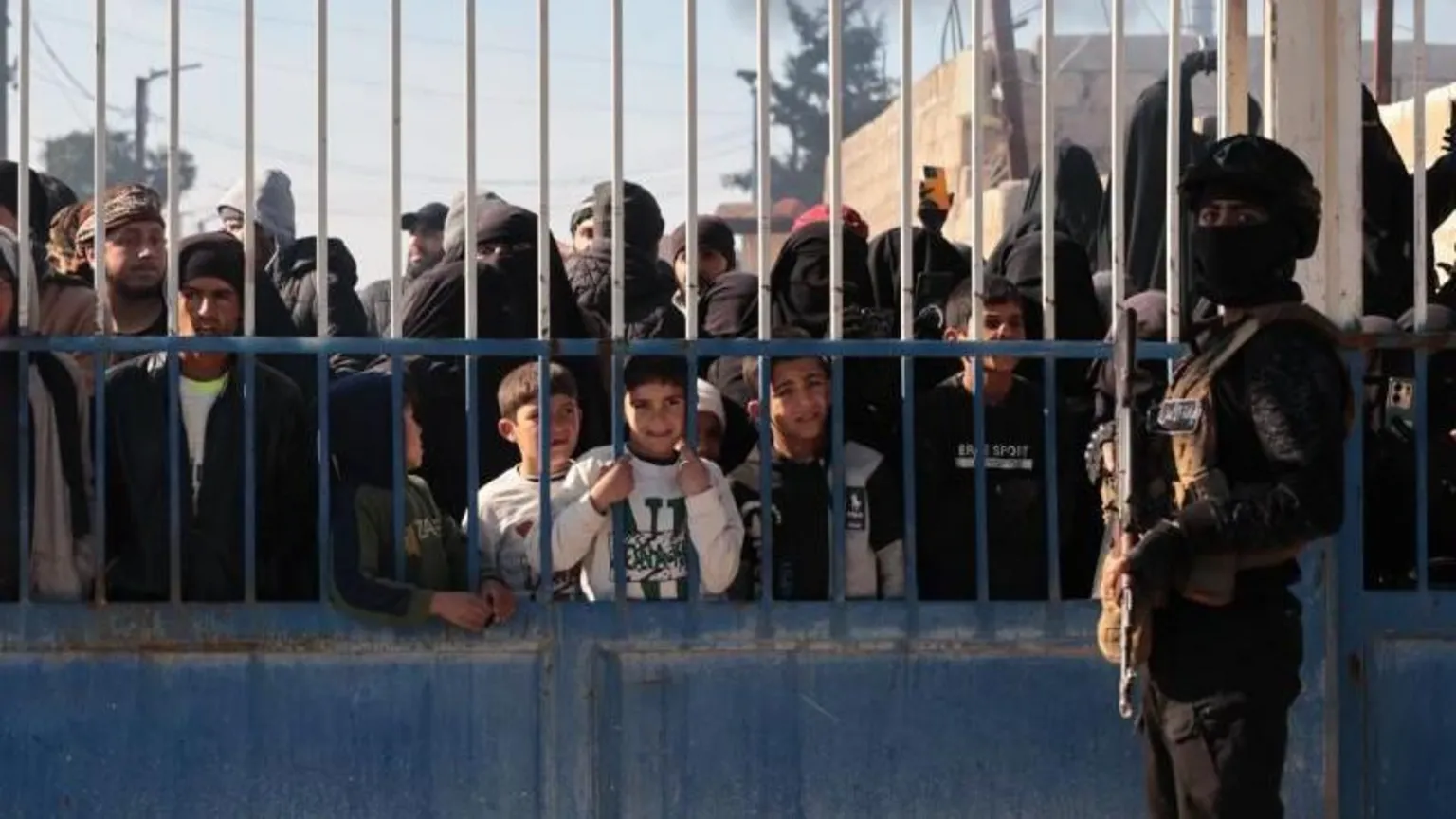
The United States has started moving Islamic State (IS) detainees from prisons in north-eastern Syria to facilities in Iraq, in a move aimed at preventing prison breaks and regrouping by the militants. The transfer comes as Syria’s new government consolidates control over areas that were long administered by Kurdish-led forces.
US Central Command (CENTCOM) said that 150 IS fighters from Hassakeh province had already been relocated to a secure site in Iraq. The operation is part of efforts to ensure a safe and orderly transfer of prisoners amid the shifting power dynamics in the region.
The prisoner movement follows a ceasefire that has allowed Damascus to take over much of Syria’s northeast, after the Kurdish-led Syrian Democratic Forces (SDF) pulled back from key towns, including locations holding thousands of IS detainees and their family members.
CENTCOM said its commander, Admiral Brad Cooper, discussed the transfers with Syria’s new president Ahmed al-Sharaa, emphasizing that Syrian forces must respect the ceasefire and avoid any actions that could disrupt the "orderly and secure transfer" of prisoners.
Rights group Reprieve expressed concern over the relocation, warning that some detainees could face torture or execution in Iraq. The organization urged the UK government to verify whether any British nationals were among those being moved.
Reprieve noted that it believes fewer than ten British men remain in the prisons, while around 55 to 60 British nationals, mostly children, are detained in camps and prisons across the region.
Despite the ceasefire, violence continues to flare. Syria’s defence ministry reported that seven soldiers were killed in a drone strike in Hassakeh on Wednesday, calling the attack a breach of the truce. The SDF denied involvement and accused Damascus of conducting strikes near the Turkish border town of Kobane.
Earlier tensions included the escape of suspected IS members from an SDF-controlled prison in Shaddadi, southern Hassakeh. Syria’s interior ministry said special forces and army units entered the town following "the escape of around 120 [IS] terrorists" and later recaptured 81 of them.
The SDF warned of broader security risks, stating that up to 1,500 IS members could have fled during clashes with "Damascus-affiliated factions," according to Reuters. They also accused government forces of attacking al-Aqtan prison north of Raqqa, another facility holding IS inmates and leaders.
The SDF, backed by the United States, had played a central role in defeating IS over Syria’s 13-year civil war, detaining around 12,000 IS members, including many foreigners, and managing camps for tens of thousands of relatives.
However, US special envoy Tom Barrack has said the alliance with the SDF "largely expired" and that the focus now is on securing IS prisons and facilitating talks between the SDF and al-Sharaa’s government.
"This moment offers a pathway to full integration into a unified Syrian state with citizenship rights, cultural protections, and political participation - long denied under Bashar al-Assad's regime," Barrack wrote on X.































Comments
Sign in with Google to comment, reply, and like comments.
Continue with Google