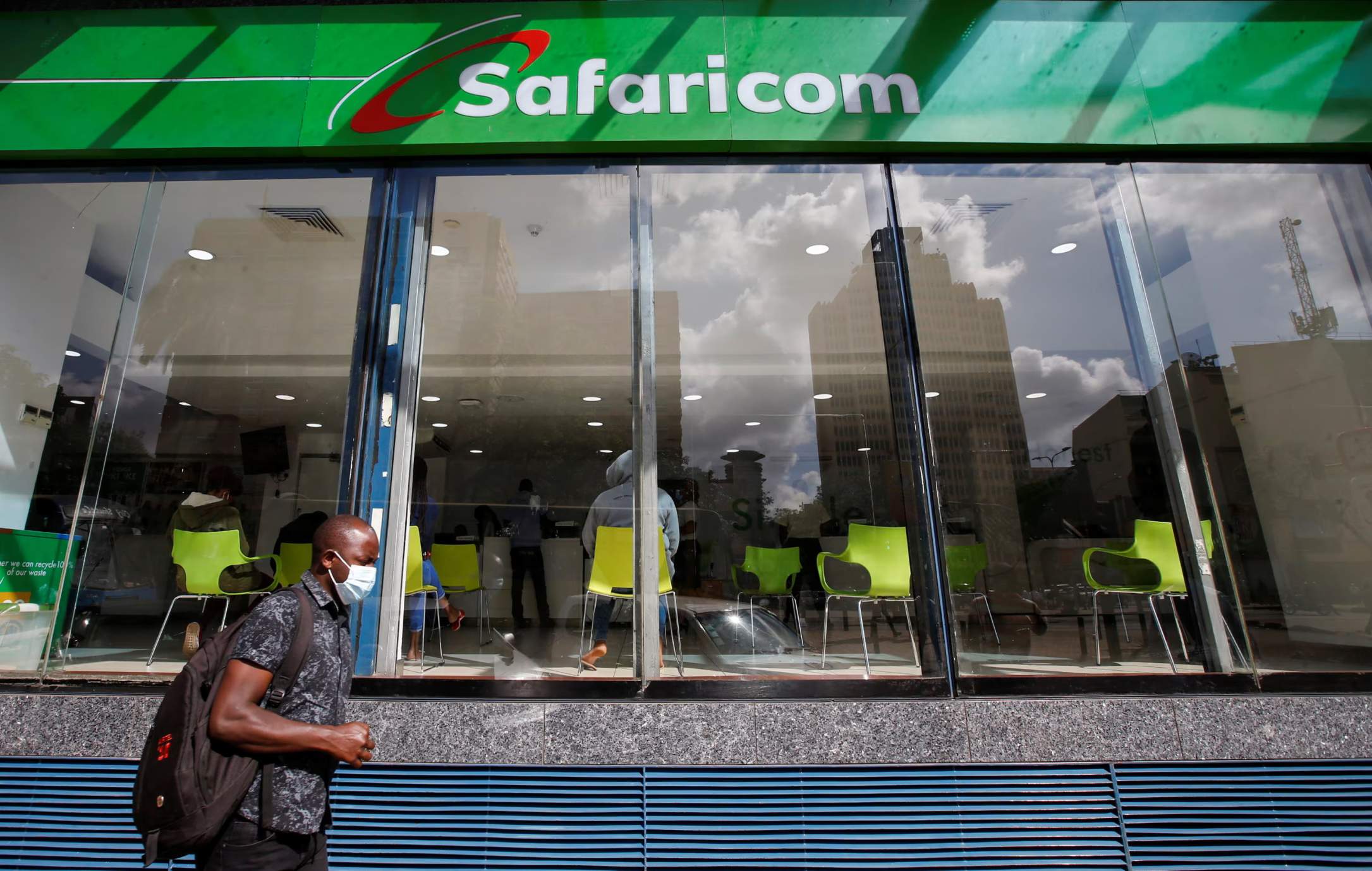
Safaricom has secured Sh20 billion from the first phase of its new corporate bond after investors rushed to take up the offer, pushing the subscription level far beyond the targeted amount.
The five-year bond, which closed on Friday, attracted bids worth Sh41.6 billion against a target of Sh15 billion, giving the company room to take an extra Sh5 billion through the green shoe option.
The bond will earn investors a fixed return of 10.4 per cent yearly and is set to list on the Nairobi Securities Exchange on December 16, 2025. Safaricom said the overwhelming response allowed it to take up the additional Sh5 billion within the Sh40 billion programme approved by the Capital Markets Authority.
“Following strong investor demand, Safaricom has exercised the Sh5 billion greenshoe option, thereby increasing the total allotment for Tranche 1 to Sh20 billion, which enables Safaricom to accommodate heightened investor demand and remains within the Sh40 billion programme limit approved by the Capital Markets Authority (CMA),” the company said.
The medium-term note programme was rolled out last month to help fund and refinance green projects. The offer marks the largest corporate bond by a listed company and has injected new life into the corporate debt market, which has seen little activity in recent years. Before this, the only notable issue had been EABL’s Sh16.7 billion bond.
The segment has struggled in the past due to failures by some issuers, including Imperial Bank and Chase Bank, which collapsed shortly after raising funds. Microlender Real People, with Sh1.63 billion still outstanding, also faced trouble after funds collected locally were moved to its parent company in South Africa.
Safaricom has in the past turned to green financing, including a Sh30 billion sustainability-linked loan from local lenders such as KCB, Absa Kenya, Standard Chartered Kenya and Stanbic Kenya. A green bond is a fixed-income instrument created to support climate and environmental projects.
The company’s finance costs have been rising, pushed up by spending on its Ethiopia rollout. In the current financial year, Safaricom expects to spend between Sh72 billion and Sh78 billion.
Out of this, Kenya’s share is projected at between Sh54 billion and Sh57 billion, while Ethiopia’s cost is estimated at between Sh18 billion and Sh21 billion.
“In Kenya, we remain focused on executing our strategy through segment-led execution and integrated solutions and our customer business will deepen partnerships to accelerate 4G+ devices access and availability alongside scaling content solutions,” said chief executive officer Peter Ndegwa.
The operator ended the half-year period to September 2025 with a debt load of Sh117 billion, split between Sh61.2 billion in long-term facilities and Sh55 billion in short-term borrowings.
Over the same period, it reported a 52.1 percent jump in profit to Sh42.7 billion, supported by lower losses in Ethiopia and strong growth in M-Pesa. Net profit rose from Sh28.11 billion recorded a year earlier.































Comments
Sign in with Google to comment, reply, and like comments.
Continue with Google