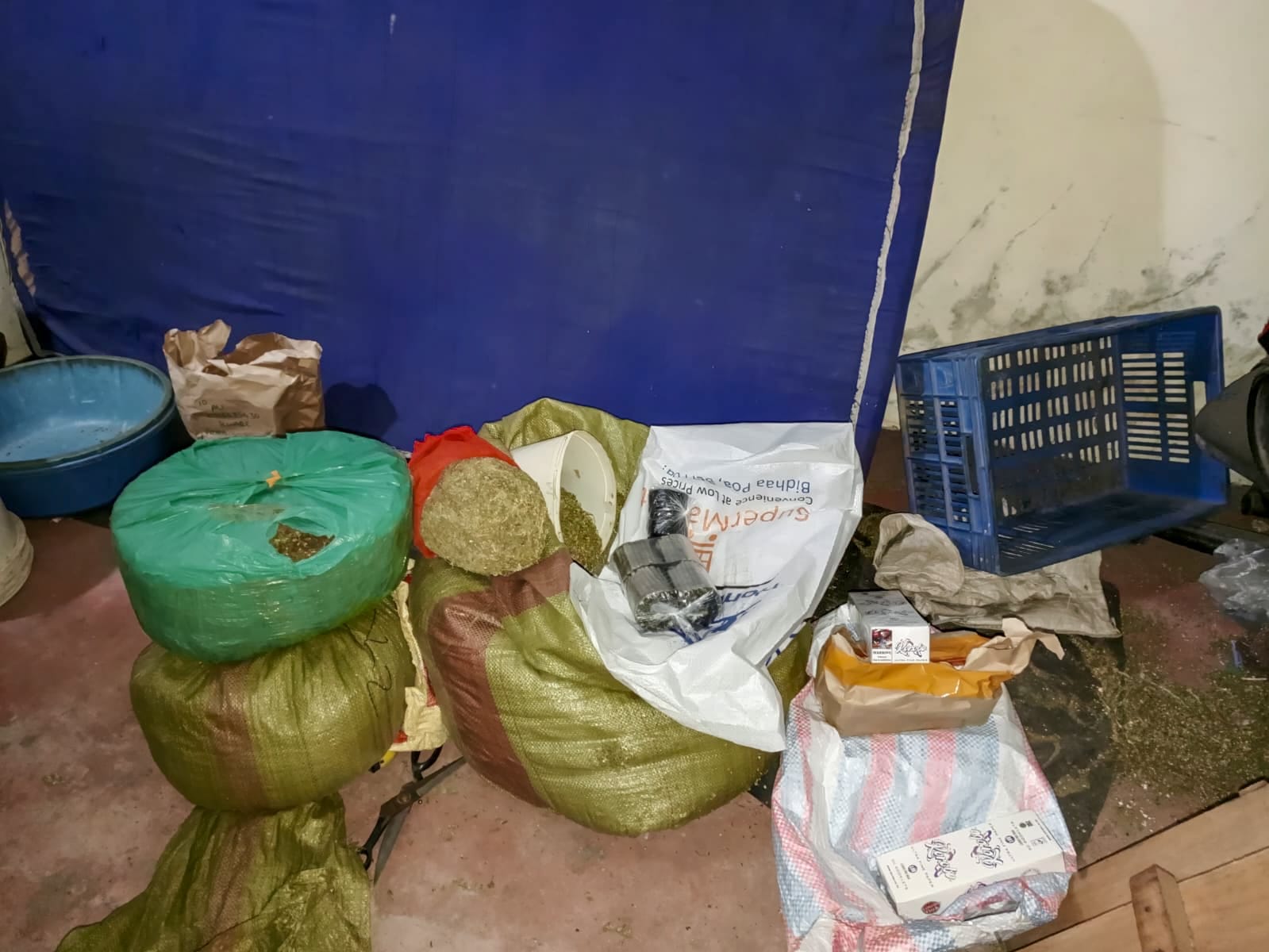
Police carried out major anti-narcotics operations in Nairobi and Lamu on Thursday, marking another step in the National Police Service’s push to disrupt growing drug networks across the country.
The two raids, conducted in Tasia–Mabatini and Mpeketoni, add to rising concerns about the spread of cannabis and other illegal substances in both urban and coastal areas.
In the Tasia–Mabatini operation, officers seized 20 kg of cannabis along with 500 rolls during a raid that left the main suspect on the run.
According to the NPS, “efforts are underway to trace and apprehend him,” and the recovered drugs have already been placed in custody at the station. The Service praised the officers involved, saying their actions show its renewed drive to intensify the fight against narcotics and crime in general.
At the same time in Lamu’s Mpeketoni area, police seized four large rolls of cannabis during a separate operation.
The NPS confirmed that “A female suspect was arrested and taken to Mpeketoni Police Station, pending her arraignment in court.” The Service noted that these actions are part of ongoing work to protect the public through steady and coordinated crackdowns.
These recent busts highlight the scale of the drug problem Kenya faces, especially the illegal trade and rising use of cannabis. The National Police Service annual crime report shows that 3,860 people were arrested for possession in a recent year, 722 were arrested for trafficking, and 164 were arrested for cultivation.
In the same period, police confiscated 126,429 cannabis rolls, 36,432 plants, and more than 13,000 kilograms of assorted illegal drugs.
Drug consumption has also been climbing. A NACADA policy brief revealed that 18.2 percent of Kenyans aged 15 to 65 had used at least one illegal drug. Over the past five years, cannabis use alone has risen by 90 percent, with more than 518,000 Kenyans estimated to be using it.
Court records reflect the same pattern, with thousands of drug-related cases still pending.
A Parliamentary report on national security pointed out the weight of unresolved cases, while a 2020 NPS crime report recorded 3,412 arrests related to drug offenses, including possession and trafficking, with Nairobi ranked among the regions with the highest numbers.
The high-volume seizure in Tasia–Mabatini stands out not only for the amount collected but also because drug distribution rings in cities tend to be well rooted and difficult to uproot.
The Mpeketoni recovery, on the other hand, shows how traffickers continue to spread operations to coastal areas, making the challenge nationwide.
Through these operations, the NPS appears focused on disrupting both the supply and distribution sides of the trade across multiple regions.
The Service has also urged the public to report anything suspicious, emphasising that community involvement is becoming a key part of this heightened campaign.
Investigations into the Nairobi and Lamu cases remain active, and the NPS says it is determined to pursue the suspect still at large in Tasia while preparing to present the Mpeketoni suspect before court.
These actions form part of a broader national effort to weaken illegal drug supply routes and reduce the profitability of trafficking. As the crackdown expands, the steady rise in cannabis use and growing seizure numbers may push Kenya to deepen its intelligence-led approach in tackling the narcotics trade.































Comments
Sign in with Google to comment, reply, and like comments.
Continue with Google