City Hall gives 100 acres as Ruto launches Sh2bn annual waste plan for Nairobi
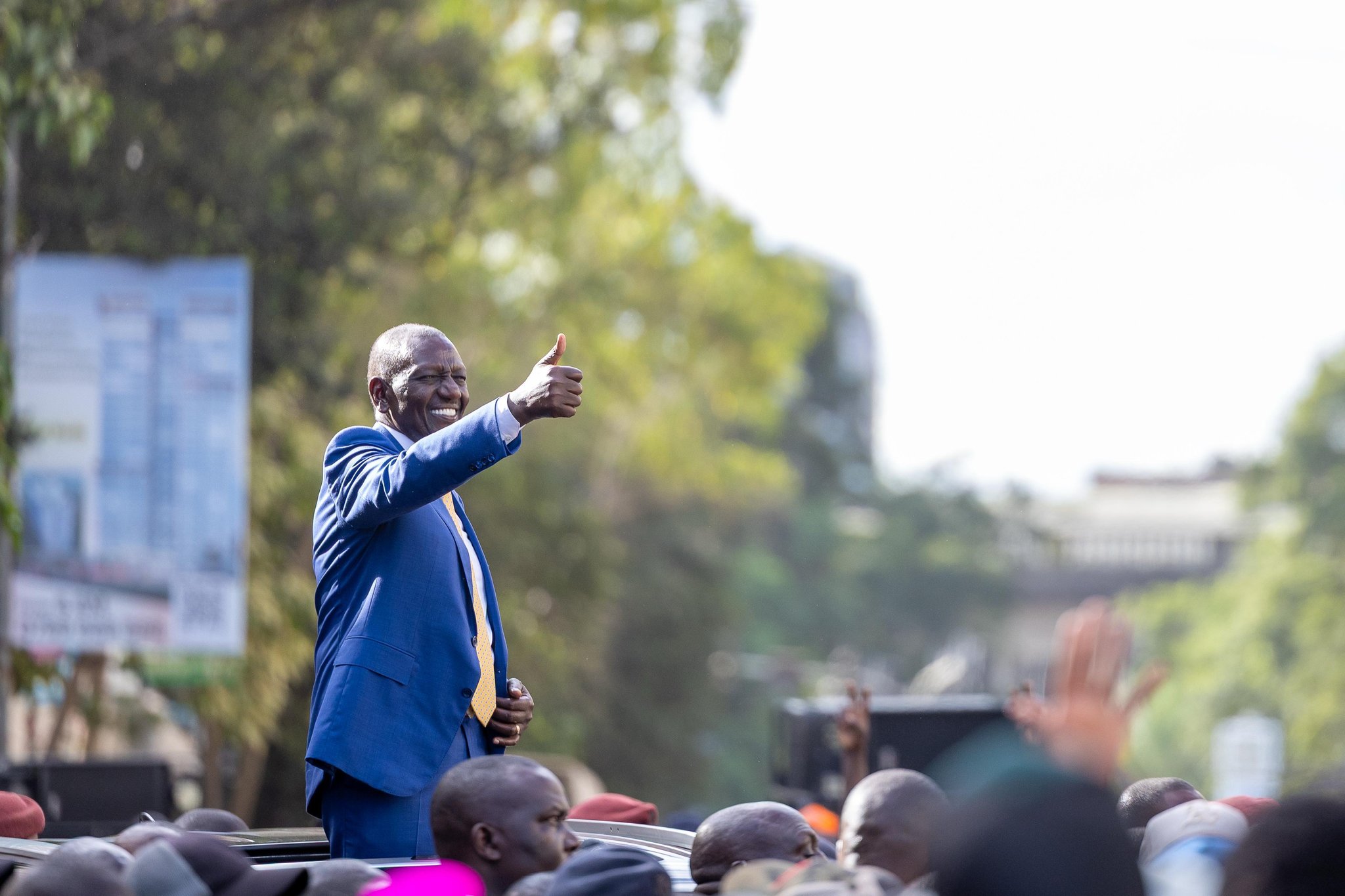
Speaking during a Special Address to the Nairobi City County Assembly on Thursday, April 9, Ruto said the plan will rely on new infrastructure, including a Material Recovery Facility and transfer stations distributed across different parts of the city.
Nairobi is staring at a major shift in how it handles basic services after President William Ruto rolled out a broad city upgrade plan targeting waste collection, roads, lighting, water supply, and sanitation, with both county and national governments committing to work together on delivery.
At the centre of the plan is a push to finally address the capital’s long-standing garbage crisis, with the county government required to release land for new waste processing facilities meant to change how rubbish is collected and treated across the city.
Speaking during a Special Address to the Nairobi City County Assembly on Thursday, April 9, Ruto said the plan will rely on new infrastructure, including a Material Recovery Facility and transfer stations distributed across different parts of the city.
"Solid waste management, one of the clearest symbols of Nairobi’s disorder, is also being fundamentally overhauled. The Nairobi City County Government will provide 100 acres of land for a Material Recovery Facility and multiple transfer stations across the city," he said.
He pointed to ongoing work at the Dandora dumpsite, where clean-up operations have already begun as authorities move to deal with waste that has piled up over many years.
"Work is already underway at Dandora, where 40 trucks are on site clearing legacy waste and additional capacity is being mobilised. Within three months, we expect the core system to be operational. Within six months, Nairobi should begin to experience the kind of functioning waste management system that any serious capital city should already have," he added.
The national government also confirmed it will provide annual financial support to keep the programme running, describing it as a shared responsibility between the two levels of government.
“And let me say this clearly: the National Government is not standing at the sidelines. We are backing this effort in a real and practical way, including support to the tune of Sh 2 billion annually to strengthen solid waste management and accelerate delivery. Because this is not just a county issue. It is a public health issue, an environmental issue, a dignity issue, and a national image issue," he continued.
Beyond waste management, the plan also includes a major upgrade of street lighting aimed at improving safety and visibility across the city. The programme combines repairs of existing lights with installation of new solar and smart systems.
"We are delivering a safer city through the installation of 50,000 street lighting points, including the revival of 40,000 existing lights and the installation of 10,000 new solar and smart streetlights.
"Fabrication is already underway. Installation begins this month. By the end of May, Nairobi will begin to see visible improvements across key corridors and neighbourhoods, and within six months this city will be markedly brighter, safer, and more secure," he stated.
In informal settlements, a separate electricity expansion programme will begin under a last-mile connectivity plan aimed at areas that have lacked reliable power for years.
"We are also extending safe electricity through last-mile connectivity in informal settlements, beginning this month with Hospital Ward, and moving into Kibra, Korogocho, Mathare, and Kamukunji within the next 90 days. This is not just about power. It is about dignity, safety, enterprise, and inclusion," he further said.
Water supply is also set for expansion through new infrastructure projects designed to increase daily output and stabilise distribution in high-demand areas.
"We are expanding water supply through strategic interventions, including the Ng’ethu-Gigiri waterworks, which will add 50,000 cubic metres of daily water supply. The Gigiri–Shauri Moyo evacuation corridor is also being advanced to stabilise supply in high-demand zones, including areas supporting affordable housing development," he noted.
Sanitation infrastructure will also be upgraded through the construction of major trunk sewer lines and a treatment plant along the Nairobi River corridor, aimed at improving wastewater management.
"On sanitation, we are undertaking what should have been done years ago. We will build two parallel 27-kilometre trunk sewers along the Nairobi River Corridor, develop a 60,000 cubic metre per day treatment plant, expand last-mile sewer connectivity, and support the long-term expansion of sewerage systems for this city," he said.
At the same time, a large roads and drainage programme has been launched to improve transport flow and reduce flooding in vulnerable areas. The project will be rolled out in phases across the city.
"On roads and drainage, we are implementing a 247-kilometre urban roads programme. The first phase of 63 kilometres is already ongoing and expected to be completed by June 2026.
"Another 58 kilometres commenced this month, and subsequent phases are being funded to begin without delay. This will be complemented by drainage interventions in identified flood hotspots so that we stop managing floods as annual surprises and start treating them as infrastructure failures that must be fixed," he noted.
The plan brings together multiple major projects aimed at reshaping Nairobi’s basic services, with several already underway and others set to begin immediately.


Comments
Sign in with Google to comment, reply, and like comments.
Continue with Google