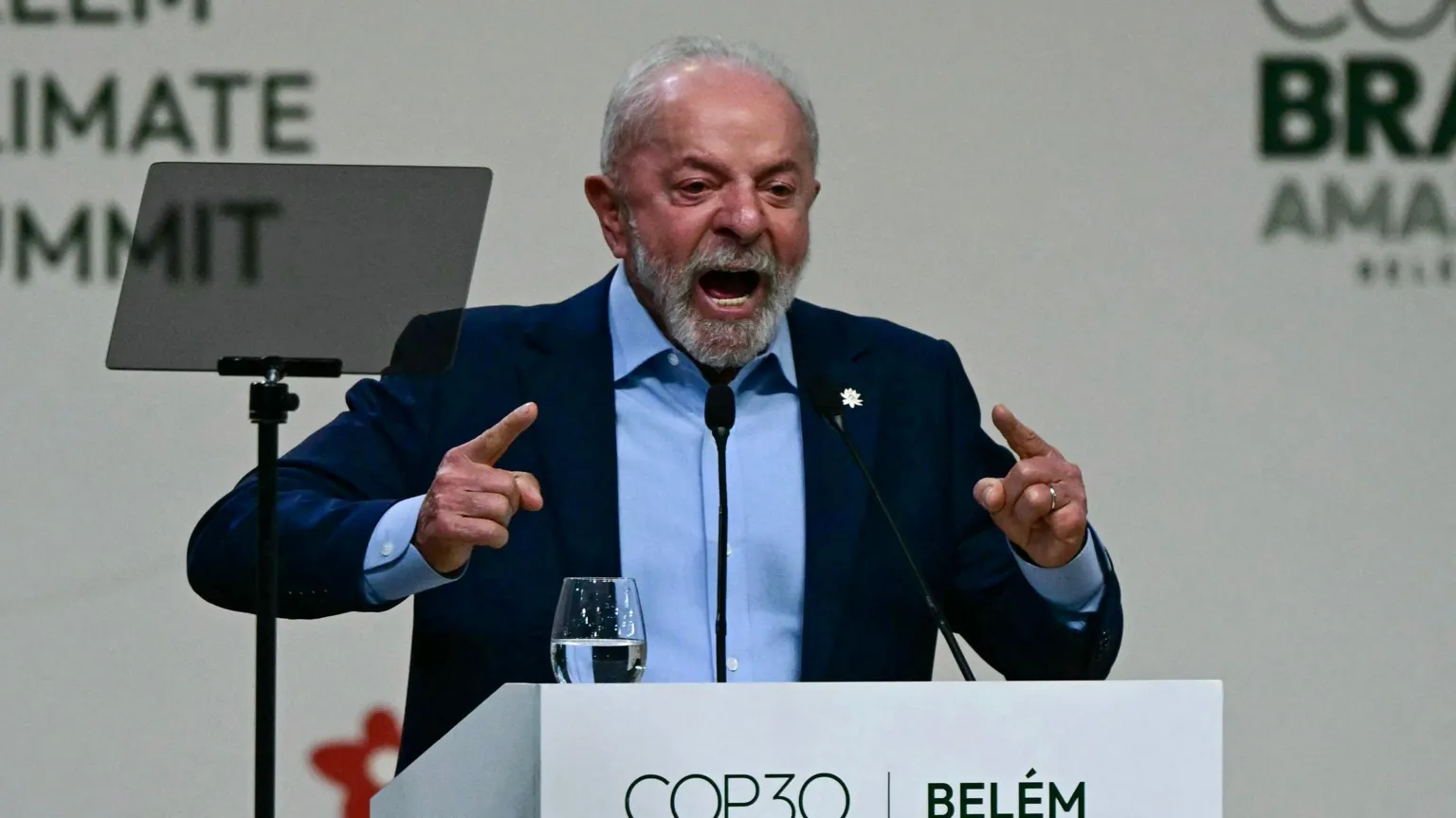
The COP30 climate summit in Belém, Brazil, opened under a tense atmosphere as world leaders condemned US President Donald Trump for dismissing climate change as a global hoax. Trump’s absence from the conference did little to silence criticism, with several heads of state accusing him of spreading lies and undermining international climate cooperation.
Brazil’s President Luiz Inácio Lula da Silva cautioned against “extremist forces that fabricate fake news,” warning that such denialism would doom future generations to a planet “altered forever by global warming.” Without directly naming Trump, Lula’s message targeted politicians he said were obstructing progress for political gain.
The presidents of Colombia and Chile went further, openly branding Trump a liar. Chile’s Environment Minister Maisa Rojas told the BBC that it was “very important not to falsify the truth,” stressing that climate science left no room for denial or misinformation.
At the centre of the criticism were Trump’s earlier comments made at the UN, where he dismissed climate change as “the greatest con job ever perpetrated on the world.” He argued that wealthy industrial nations should reject what he described as “a globalist agenda” that forces them to “inflict pain on themselves and radically disrupt their societies.”
Although leaders from major economies such as China, India, Russia, and the United States skipped this year’s meeting, Trump’s influence remained a recurring theme in speeches.
UK Prime Minister Keir Starmer also weighed in, lamenting the decline in global unity over the climate agenda.
“It had been a unity issue internationally and in the UK, but today sadly that consensus is gone,” he said. Despite reaffirming the UK’s commitment by saying “the UK is all-in,” Starmer’s government faced backlash for pulling out of the $125 billion Tropical Forests Forever Facility, a key COP30 initiative designed to channel funds into rainforest conservation.
The UK’s withdrawal shocked many delegates, including the Brazilian hosts, who had expected strong financial backing.
Brazil had hoped to raise $25 billion from developed nations to support efforts to protect the Amazon and other critical tropical forests, which absorb billions of tonnes of carbon and are home to half of the planet’s biodiversity.
Former UK Environment Minister Lord Zac Goldsmith said the decision left Brazil “frustrated and furious,” adding that the UK had played a major role in designing the fund before abruptly walking away.
Meanwhile, Prince William used his address to urge leaders to overcome political differences and act with “urgent optimism.”
“Let us rise to this moment with the clarity that history demands of us,” he said. “Let us be the generation that turned the tide—not for applause, but for the quiet gratitude of those yet to be born.”
The two-week conference is expected to focus on climate financing and supporting vulnerable nations already facing the harshest effects of global warming.
The urgency of the talks has been amplified by a string of extreme weather events, including Hurricane Melissa, which devastated parts of the Caribbean and killed more than 75 people.
According to research by Imperial College, the storm’s rainfall was intensified by 16% due to climate change, a stark reminder of the consequences of inaction.































Comments
Sign in with Google to comment, reply, and like comments.
Continue with Google