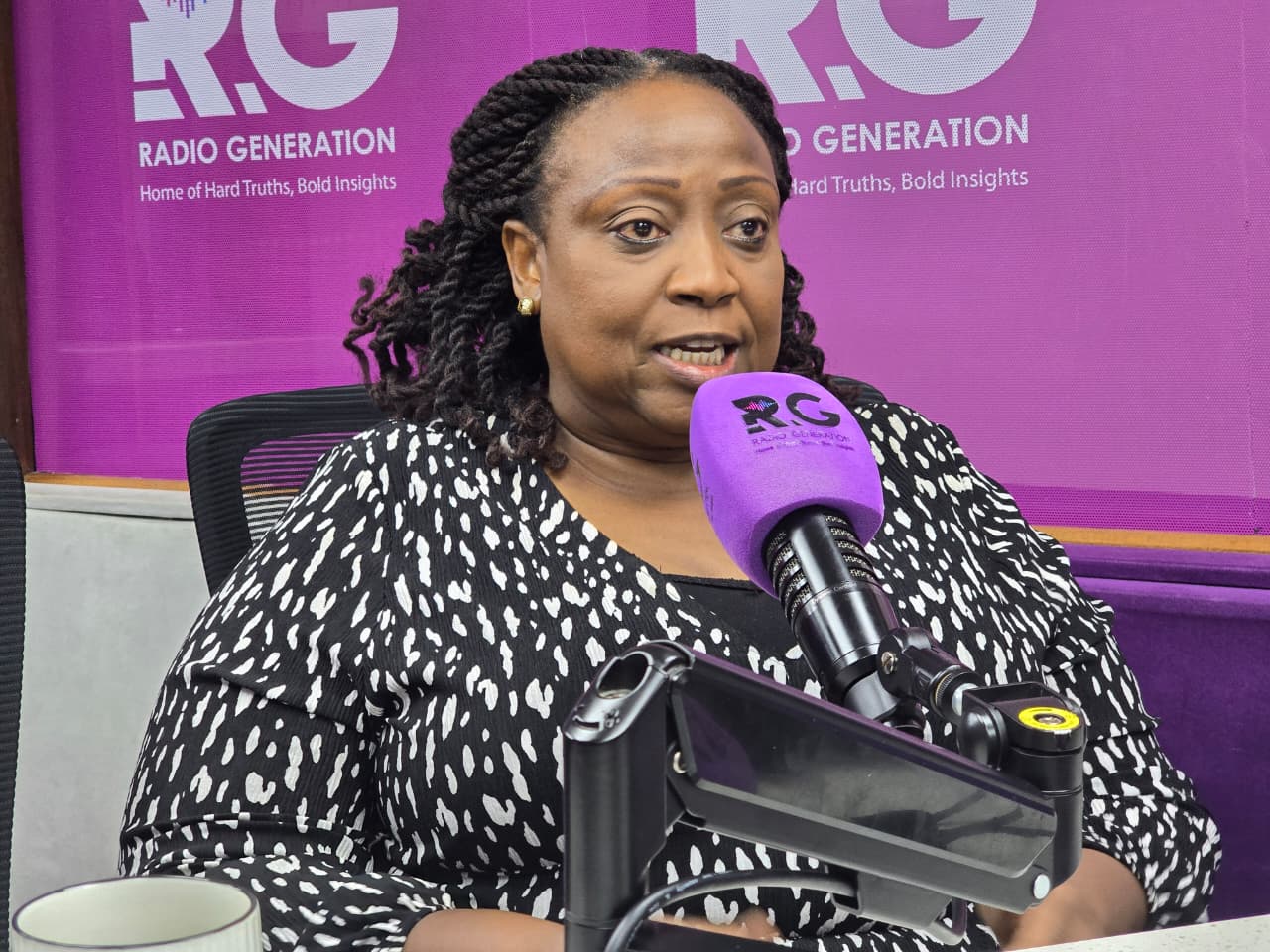
Women’s participation in leadership continues to face barriers, but advocates stress that the challenges are not about gender alone, but also about personal choices and accountability, according to Daisy Amdany, Executive Director of Community Advocacy and Awareness (CRAWN).
Speaking on women’s inclusion in leadership during an interview with Radio Generation, Amdany said, “Leadership, political leadership and power, has been a very male-dominated space. Yes, because there are certain barriers that really just don’t allow for women to easily access those spaces.”
She noted that while structural obstacles exist, women who reach leadership positions are as capable as men and their performance depends largely on personal choices rather than gender.
“Now these are personal choices. There is an idea that women will lead better, or that they will govern better, because we know that women are generally suited to more nurturing, more gentle, more kind way of doing things… But the truth of the matter is that we have bad mothers, bad wives. Just the same way you can have good male leaders, you can also have bad female leaders," Amdany explained on Tuesday.
Amdany highlighted that leadership outcomes are often influenced by the political and social environment.
She cited the example of Tanzania’s President Samia Suluhu, noting that her role reflects the machinery of her long-established political party.
“She is simply the face of this machinery. She has agreed that she’s willing to be in power under those terms and conditions. Ultimately, it boils down to personal choices, the choices that we make.”
Samia is the first woman to serve in the position and previously served as vice-president of Tanzania from 2015 to 2021, from which she ascended to the presidency following the death of her predecessor, John Magufuli.
A native of Zanzibar, Suluhu served as a minister in the semi-autonomous region from 2000 to 2010.
Other African countries that have female presidents include Netumbo Nandi-Ndaitwah (Namibia).
Going further, the activist warned against judging all women leaders based on the actions of a few.
“One woman’s misdeed becomes every woman’s misdeed. We have good examples of female leadership, and there are others who are charting the path of wickedness. Women must not allow themselves to be painted into that corner,” she explained.
Amdany called for a system of accountability among women in leadership, saying, “There should be a league of female presidents and prime ministers. When one of them is messing up, they can hold each other accountable. How you operate in these spaces determines how other women will access the space.”
She stressed that the push for women’s inclusion is about fairness and justice.
“Men and women are 50/50, almost equal. Our leadership must manifest who we are and it should represent who we are. We need to demand good leadership across the board, whether male or female,” she said.
By linking women’s participation in leadership to both personal responsibility and systemic fairness, Amdany’s remarks underline that the future of inclusive governance depends not only on access but also on integrity and accountability































Comments
Sign in with Google to comment, reply, and like comments.
Continue with Google