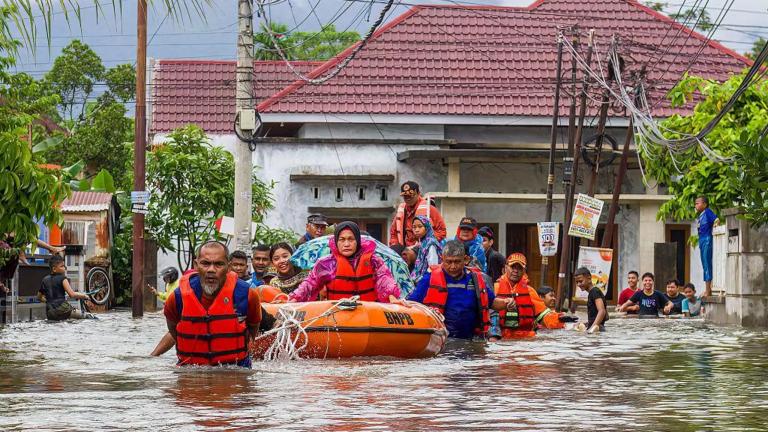
A trail of destruction is stretching across southern Asia after several days of heavy storms pushed rivers over their banks and unleashed deadly landslides, leaving close to 600 people dead and millions facing crisis conditions.
The severe weather, intensified by the monsoon and fuelled by rare cyclones, has battered Indonesia, Thailand, Malaysia and Sri Lanka, cutting off towns and overwhelming emergency responders.
Indonesia has been hit hardest, especially on Sumatra, where rainfall that began mid-week quickly turned into sweeping torrents. In Aceh province, a resident from Bireuen described how fast the disaster struck.
“During the flood, everything was gone,” she told Reuters. “I wanted to save my clothes, but my house came down.” With entire neighbourhoods inundated, officials say hundreds of people are still missing.
By Saturday, November 29, 2025, Indonesia had counted more than 300 fatalities, while Thailand’s latest report put the number at 160 across its hardest-hit provinces. Malaysia has recorded a smaller number of deaths, but extensive flooding in northern Perlis has forced thousands from their homes.
Sri Lanka, still reeling from Cyclone Ditwah, has also suffered heavy losses. Authorities there say more than 130 people have died and around 170 are missing. The storm has damaged tens of thousands of houses and left large parts of the island without power or water.
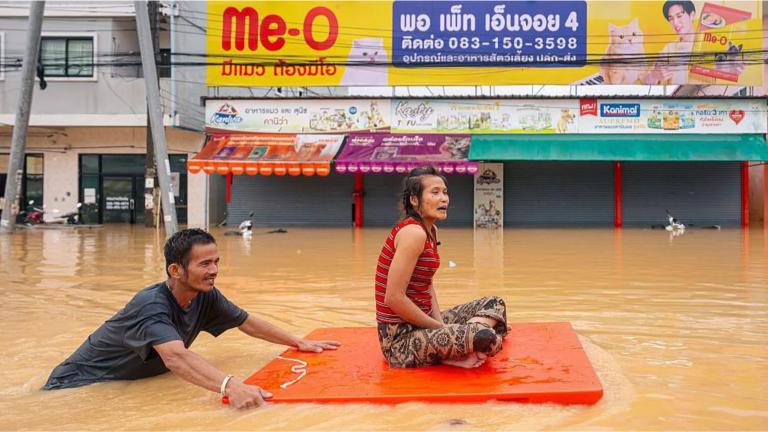 Tens of thousands of people have taken refuge in shelters in Thailand. PHOTO/GETTY IMAGES
In Sumatra, Cyclone Senyar brought unusually violent conditions, sparking landslides that swept away homes and flooded entire districts. Indonesia’s disaster agency said almost 300 people remain unaccounted for after the storm moved across the island.
Arini Amalia from Aceh told the BBC she watched the water race through her street.
“The current was very fast, in a matter of seconds it reached the streets, entered the houses,” she said. She and her grandmother fled to higher ground and returned later only to find their home gone. “It’s already sunk,” she said.
In West Sumatra, Meri Osman said he survived after the water carried him away from his home. He managed to cling to a clothesline until help arrived.
Search teams are struggling as bad weather continues, slowing down rescues even as tens of thousands have been evacuated. Many families in isolated areas remain unreachable.
Thailand is facing the worst flooding it has seen in roughly ten years. Songkhla province recorded water levels reaching 3m, leading to at least 145 deaths.
Across ten affected provinces, the toll has passed 160, and more than 3.8 million people have been impacted. Hat Yai saw 335mm of rain in a day, the highest in three centuries. As the water receded, the number of bodies recovered rose sharply.
At a local hospital, workers moved bodies to refrigerated trucks because the morgue could not cope, AFP reported. Resident Thanita Khiawhom said, “We were stuck in the water for seven days and no agency came to help.”
The Thai government has announced compensation packages for affected families, including payments of up to two million baht ($62,000) for those who lost loved ones.
In Malaysia, flooding has plunged parts of Perlis under water, forcing thousands into shelters and damaging property.
Sri Lanka has declared a state of emergency as it deals with the widespread destruction. Officials say more than 15,000 homes have been lost and around 78,000 people are living in temporary shelters, with nearly one-third of the country lacking basic utilities.
Weather experts say the interaction between Typhoon Koto in the Philippines and the rare arrival of Cyclone Senyar in the Malacca Strait likely worsened the storms.
While the region is used to heavy monsoon rains from June to September, changing climate conditions are contributing to stronger storms, faster flooding and harsher winds.































Comments
Sign in with Google to comment, reply, and like comments.
Continue with Google