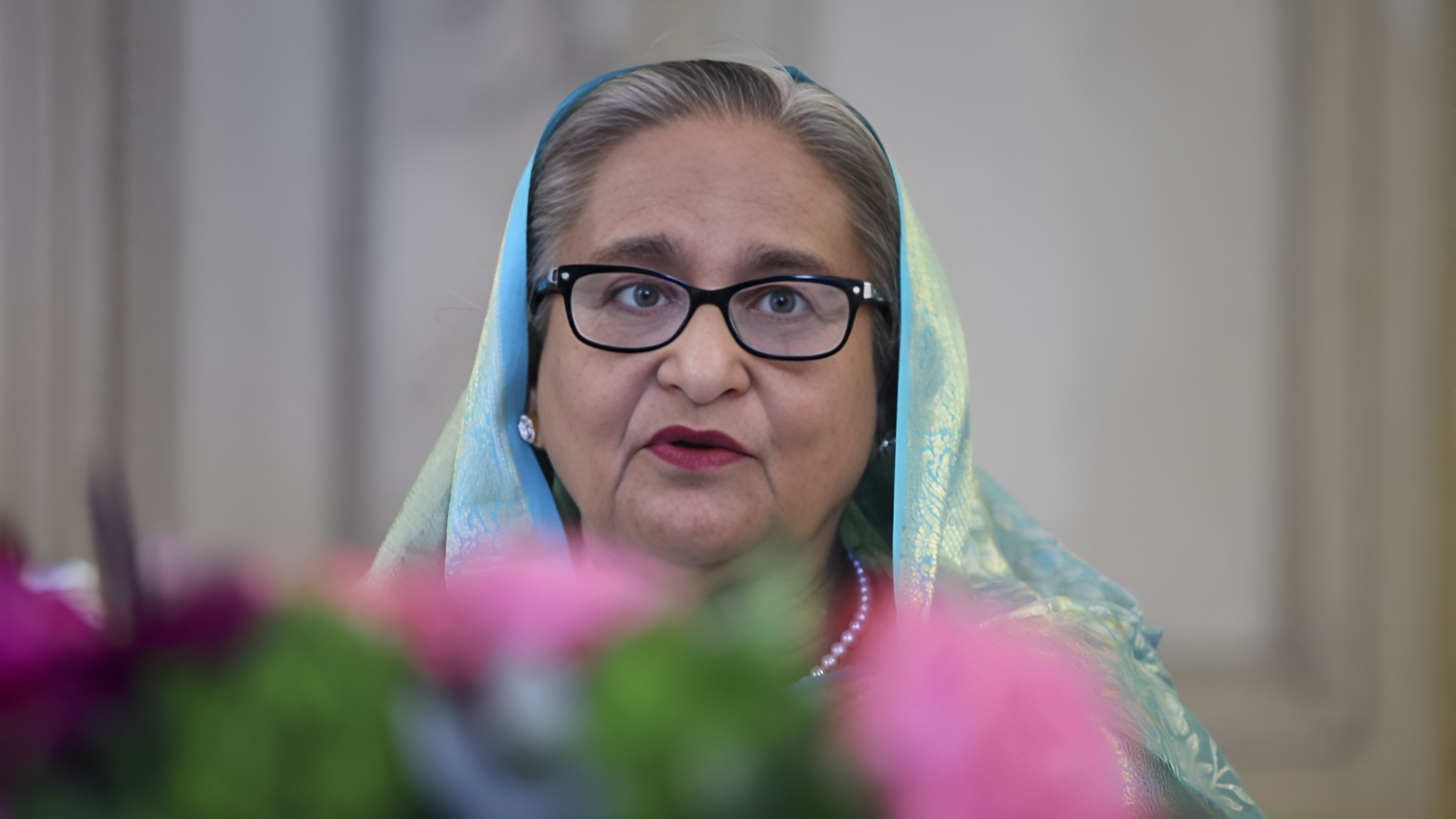
Bangladesh has sentenced former prime minister Sheikh Hasina to death for her role in violent protests that shook the nation last year. The International Crimes Tribunal (ICT) found her responsible for actions that led to the deaths of roughly 1,400 demonstrators during student-led rallies against government policies.
Hasina, 78, faced the tribunal while in exile in India, after being removed from office in July 2024. Prosecutors argued that she had ordered the use of lethal force against protesters, a claim she denies, describing the proceedings as “biased and politically motivated.”
The ruling has drawn international attention and highlights a turning point in Bangladesh’s political landscape. The verdict has also created a diplomatic dilemma, as Dhaka seeks her extradition from India, which has so far shown no willingness to comply, leaving the execution of the sentence uncertain.
During her 15-year leadership, Hasina oversaw significant economic growth, yet her later years in office were marked by attempts to suppress dissent.
The protests that erupted in 2024 began with opposition to government job quotas but escalated into widespread anti-government demonstrations, forcing Hasina to flee and leading to the installation of Nobel laureate Muhammad Yunus as interim leader.
In response to the court’s decision, Hasina stated, “The death penalty is the interim government's way of nullifying [her party] the Awami League as a political force. I am proud of my government's record on human rights. I am not afraid to face my accusers in a proper tribunal where the evidence can be weighed and tested fairly.”
Judge Golam Mortuza Mozumder confirmed that Hasina was found guilty on three counts: incitement, ordering killings, and failing to prevent atrocities. “We have decided to inflict her with only one sentence - that is, sentence of death,” he said.
The interim government called the verdict “historic” while urging calm, as Dhaka braced for possible unrest. Security was heightened following several bomb explosions and incidents of vandalism in the capital ahead of the announcement.
Families of victims welcomed the ruling, some demanding immediate enforcement. Ramjan Ali, who lost his brother during the protests, said he wanted “exemplary punishment” for Hasina and her associates. Lucky Akther, who lost her husband, added, “Only then the families of those killed [in the protests] will find peace in their hearts.”
The United Nations noted the verdict as an “important moment for victims” but reiterated opposition to the death penalty. Evidence presented in court included leaked audio in which Hasina appeared to authorize “lethal weapons” during the crackdown, verified by the BBC earlier this year.
Analysts warn that while the sentence provides closure for some families, it could further polarize the nation. Shireen Huq, a Dhaka-based activist, said, “The anger against Sheikh Hasina and the Awami League has not subsided. Neither she nor the party has apologised or shown any remorse for the killings of hundreds of people.”
The Awami League was banned in May by the interim government, and parliamentary elections are scheduled for February 2026, leaving Bangladesh’s political future uncertain.































Comments
Sign in with Google to comment, reply, and like comments.
Continue with Google