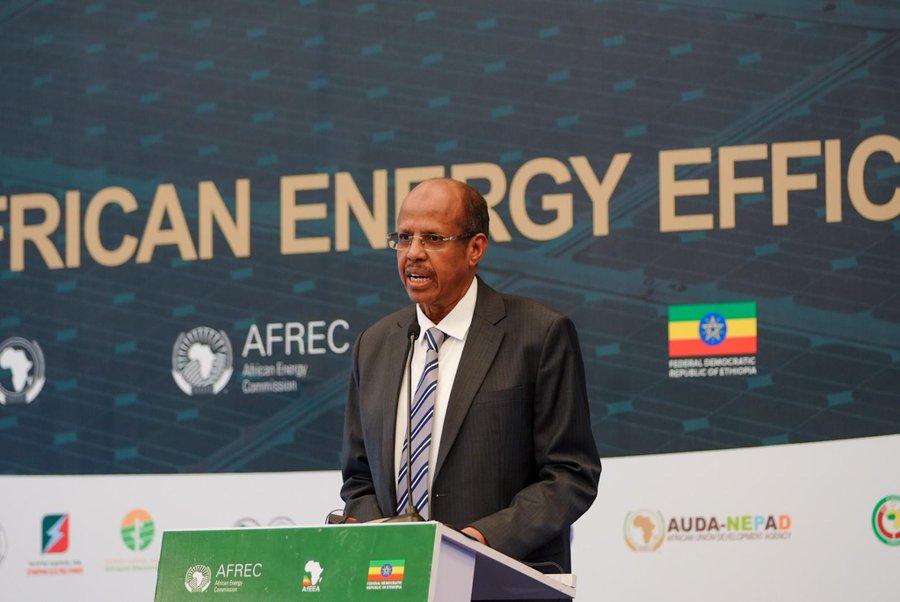
The African Union has reaffirmed its firm stance against recognising Somaliland as a sovereign country, stressing that the region remains part of Somalia. The statement comes shortly after Israel became the first nation to formally recognise the breakaway region, igniting diplomatic tensions in the Horn of Africa and beyond.
AUC Chairperson Mahmoud Ali Youssouf said he was “deeply concerned” by the recent debates and developments surrounding Somaliland’s status. He reminded member states that the AU’s position is anchored in its founding principles, which uphold the integrity of borders inherited at independence.
“The Chairperson of the Commission unequivocally reaffirms the longstanding and consistent position of the African Union, grounded in the principles enshrined in the Constitutive Act of the African Union,” Youssouf said.
“In particular the respect for the intangibility of borders inherited at independence, as affirmed by the 1964 decision of the Organization of African Unity.”
He added that the AU “firmly rejects any initiative or action aimed at recognizing Somaliland as an independent entity,” reiterating that it “remains an integral part of the Federal Republic of Somalia.” Youssouf warned that efforts to change Somalia’s internationally recognised borders would violate AU rules and could destabilise the continent.
“Any attempt to undermine the unity, sovereignty and territorial integrity of Somalia runs counter to the fundamental principles of the African Union and risks setting a dangerous precedent with far-reaching implications for peace and stability across the continent,” he said. The Commission also pledged full support for Somalia’s efforts to strengthen governance, consolidate peace, and build strong state institutions.
The AU position contrasts sharply with Israel’s recent recognition of Somaliland. Prime Minister Benjamin Netanyahu announced on Friday that Israel would formally recognise the region and immediately expand cooperation in agriculture, health, and technology. Somaliland’s president, Abdirahman Mohamed Abdullahi, described the announcement as “a historic moment.”
Abdullahi said Somaliland would join the Abraham Accords, calling the move a step toward regional and global peace. He added that Somaliland is committed to building partnerships, boosting mutual prosperity, and promoting stability across Africa and the Middle East.
The decision drew widespread condemnation. The foreign ministers of Somalia, Egypt, Turkey, and Djibouti jointly stated their “total rejection” of Israel’s recognition. Somalia’s Prime Minister Hamza Abdi Barre said his country “categorically and unequivocally rejected what he called a deliberate attack by Israel on its sovereignty.”
Israeli Foreign Minister Gideon Saar said the two nations had agreed to establish “full diplomatic ties, which will include the appointment of ambassadors and the opening of embassies.” He added, “I have instructed my ministry to act immediately to institutionalise ties between the two countries across a wide range of fields.”
Egypt’s foreign minister held separate talks with counterparts from Somalia, Turkey, and Djibouti to address Israel’s announcement. According to Egypt’s ministry, the ministers reaffirmed their support for Somalia’s unity, sovereignty, and territorial integrity, while cautioning against unilateral actions that could undermine stability or create “parallel entities” to Somalia’s state institutions.
The ministers also argued that recognising regions within sovereign states could set a dangerous precedent under international law and the United Nations Charter. They reiterated their rejection of any plans that could displace Palestinians outside their homeland.
Israel has long sought to expand its influence across Africa and the Middle East, despite conflicts including the war in Gaza and tensions with Iran. In 2020, Israel signed the Abraham Accords, normalising relations with countries such as the United Arab Emirates and Morocco, with others joining later.
Somaliland occupies a strategic location on the Gulf of Aden and maintains its own currency, passports, and police. The self-declared republic emerged in 1991 after a war against Somalia’s government under General Siad Barre and has largely remained isolated internationally.
With a population of nearly six million, Somaliland has recently been involved in regional disputes involving Somalia, Ethiopia, and Egypt. Last year, a deal allowing Ethiopia to lease part of Somaliland’s coastline for a port and military base sparked anger in Somalia and heightened regional tensions.































Comments
Sign in with Google to comment, reply, and like comments.
Continue with Google