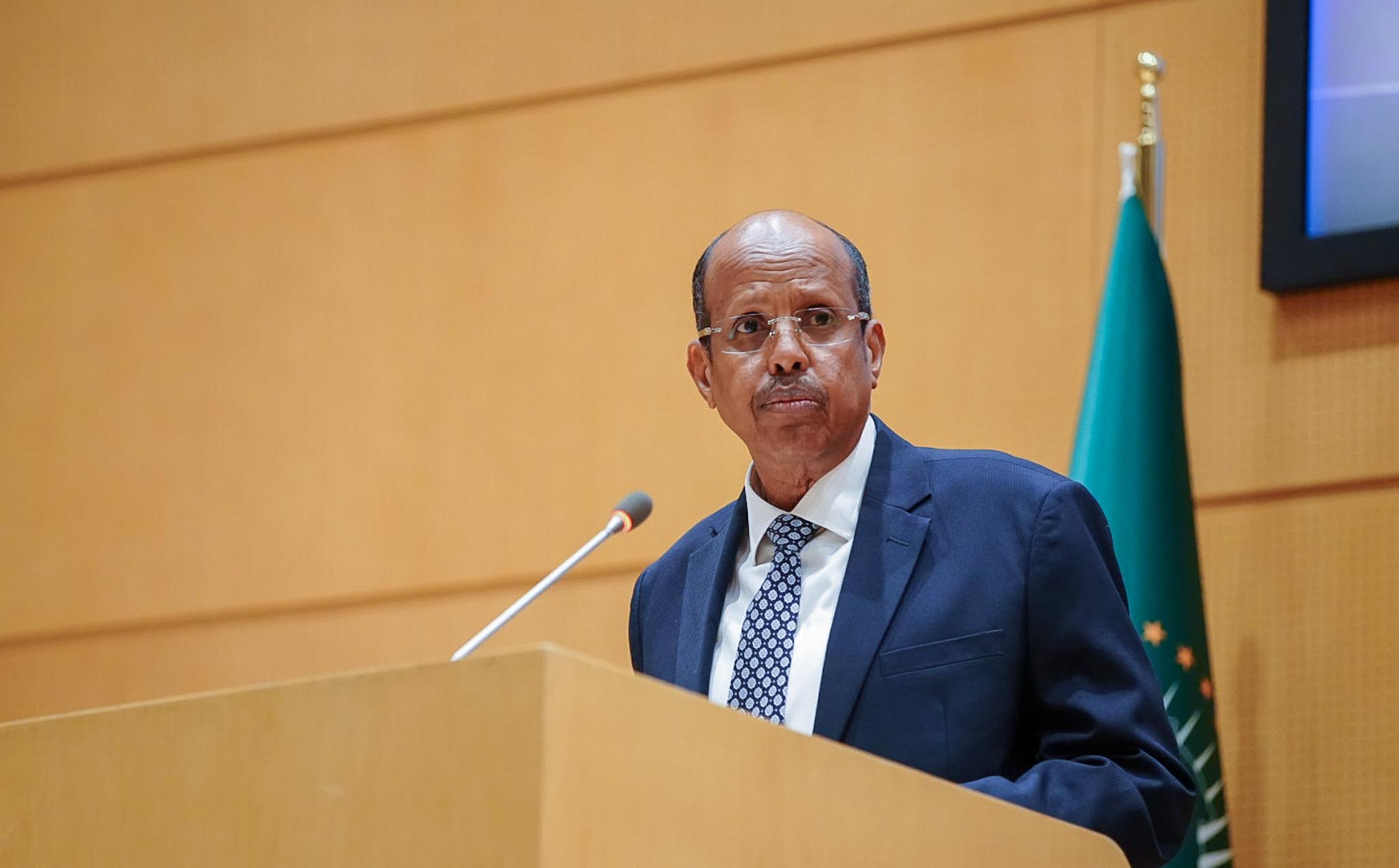
The African Union has welcomed a China–Pakistan five-point initiative aimed at easing tensions in the Gulf and Middle East.
AU Commission Chairperson Mahmoud Ali Youssouf described the proposal as timely, highlighting its focus on ceasefire, civilian protection and maritime security amid growing global concerns over economic and energy disruptions affecting Africa.
In a statement issued on Friday from Addis Ababa, the Chairperson of the African Union Commission, Mahmoud Ali Youssouf, described the five-point proposal as a constructive step towards restoring stability.
The initiative, jointly advanced by the two countries, seeks to de-escalate ongoing tensions and promote a political and diplomatic pathway to resolving the crisis.
“The Initiative constitutes a timely and constructive contribution to ongoing international efforts to de-escalate tensions and advance a political and diplomatic pathway,” Youssouf said.
He noted that the proposal emphasises key priorities necessary to contain the situation, including “an immediate cessation of hostilities, the protection of civilians, respect for international humanitarian law, and the safeguarding of maritime security.”
The African Union’s endorsement comes amid growing concern over the escalation of conflict in the region, which has far-reaching implications beyond the Middle East.
Youssouf expressed “deep concern over the continued escalation in the region,” warning that its effects are already being felt globally.
He pointed to disruptions in “energy supply chains, food systems, and economic stability,” with Africa particularly vulnerable due to existing challenges facing the continent.
The AU’s position reaffirms the interconnected nature of global crises, where instability in one region can have cascading effects on others, especially in areas such as trade, energy, and food security.
In his remarks, the AUC Chairperson called for restraint from all parties involved in the conflict, stressing the importance of urgent action to prevent further deterioration of the situation.
He urged “restraint, urgent de-escalation, and sustained engagement,” emphasising that all actors must adhere to international legal frameworks.
“All parties must act fully in accordance with international law and the United Nations Charter to safeguard international peace and security,” he said.
The statement also highlighted the need for long-term solutions grounded in diplomacy rather than military confrontation.
“A durable resolution can only be achieved through dialogue and negotiated solutions,” Youssouf added.
The five-point initiative by China and Pakistan is part of broader international efforts to address the crisis, as global and regional actors seek ways to stabilise the situation through diplomatic means.
While details of the proposal’s implementation remain under discussion, its emphasis on ceasefire, humanitarian protection, and secure trade routes reflects widely recognised priorities in conflict resolution.
The African Union’s support signals its willingness to play an active role in global peace efforts, particularly where developments have direct or indirect consequences for its member states.
Youssouf reiterated that the AU stands ready to collaborate with international and regional partners to support de-escalation measures.
“The African Union’s readiness to work with international and regional partners in support of efforts aimed at de-escalation and the promotion of peace and stability in the region,” he said.
The statement reflects the AU’s broader commitment to multilateral cooperation and its recognition of the importance of collective action in addressing complex global challenges.
As tensions persist in the Gulf and Middle East, the AU’s endorsement of the China–Pakistan initiative adds to the growing calls for dialogue and diplomatic engagement as the primary means of resolving the crisis.
With economic and security implications already being felt worldwide, the push for de-escalation is likely to remain a priority for international stakeholders in the coming weeks.