Auditor General FCPA Gathungu told Parliament that revenue shortfalls and delayed procurement have slowed budget implementation and caused pending Bills to pile up.
She recommended stricter fiscal discipline and reforms to ensure individual accountability for accounting officers, noting that these changes are necessary to prevent further strain on government spending. The Committee will use these findings to guide future budget cycles as it continues examining the state of public finance management.
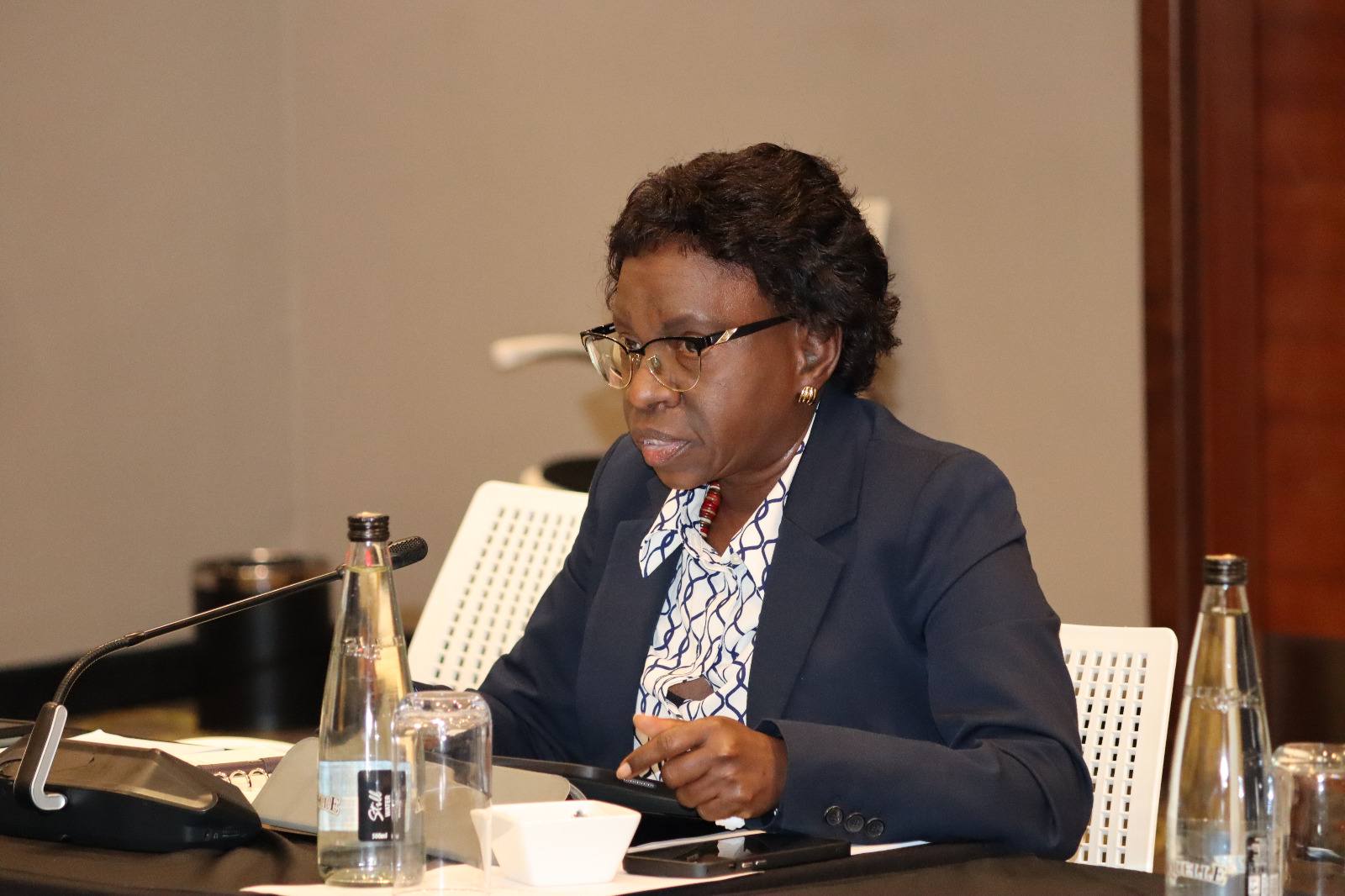
The Auditor General appeared before the Budget and Appropriations Committee in Machakos County on Thursday, November 20, 2025, where she presented the audit outcomes for the FY 2024/25 Budget and the first quarter of FY 2025/26.
She explained that both the National and County Governments fell short of their revenue targets, a gap that made it difficult to fully implement planned programs and left many bills unpaid.
Gathungu attributed the low absorption of 56.5% of the development budget by County Governments to unrealistic budget projections and delays in procurement processes.
She said several other factors also disrupted implementation, including delays in exchequer releases, poor alignment between budget plans and cash flow, cuts introduced in Supplementary 1 Estimates, and instances of IFMIS downtime that affected operations.
To address these challenges, she advised strengthening fiscal discipline, improving revenue forecasting, and ensuring transparency in how funds are managed. She also emphasized the importance of limiting public debt and enforcing accountability to curb the accumulation of pending Bills.
In addition, she proposed boosting foreign exchange reserves and diversifying exports to improve economic stability.
Reporting on her office’s performance, the Auditor General revealed that her office absorbed Ksh. 8.084 billion, equivalent to 98% of the actual budget of Ksh. 8.174 billion for FY 2024/25. For the current financial year, she said the office had already utilized Ksh. 2.5 billion out of a total of Ksh. 8.689 billion.
Committee chairperson Samuel Atandi praised the Auditor General for the office’s high absorption rate and leadership in modernizing procurement. “The Office of the Auditor General has shown exemplary fiscal discipline in budget absorption.
It was also the first public entity to embrace the Electronic Government Procurement,” he said. He also commended her push for amendments to the Public Finance Management Act, 2012, and the Public Audit (Amendment) Bill, 2025, which aim to improve enforcement of audit and parliamentary recommendations.
Members of the Committee questioned the Auditor General on pending Bills, audit timelines, and the performance of the e-GP system. Gathungu reiterated the need to amend the PFM Act to introduce personal responsibility for accounting officers, explaining that most pending Bills stem from fiscal indiscipline.
She recommended that Ministries, Departments, and Agencies begin submitting financial records monthly rather than quarterly to speed up audits.
Defending the lower budget absorption in the first quarter for FY 2025/26, she pointed to procurement delays linked to the e-GP system, an issue affecting government entities across the board.
The Committee will complete its work after engaging the Controller of Budget, Margaret Nyakang’o, and will then develop a report to inform Parliament and shape future budget processes.