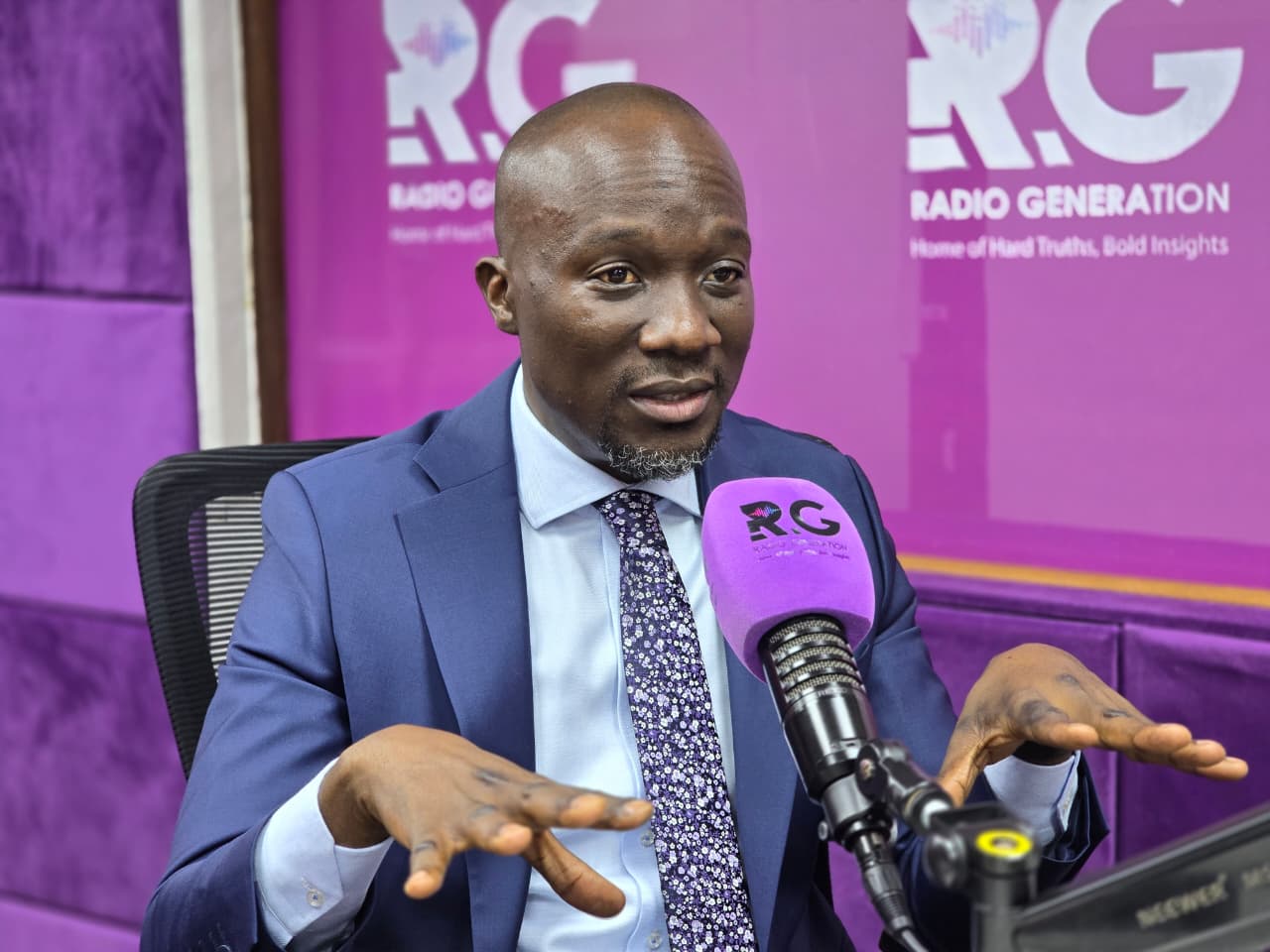
Campaigning for Raila Odinga was unlike any other political experience, according to Dennis Onsarigo, the former press secretary of Raila’s 2022 presidential campaign.
Onsaringo, speaking during an interview with Radio Generation on Wednesday, said life around Raila’s campaigns was intense, layered with strategy, emotion, and a sense of constant rebuilding after every disputed election.
He recalled that every time Raila “lost” an election, his team would gather and start again from scratch.
“You know, every time Baba, every time Baba, quote unquote, lost an election, because as far as we are concerned, they never lost any election in this country. His elections were stolen from him,” Onsarigo said.
“Every time he lost an election, we would sit in a room and start building again.”
Onsarigo said Raila always believed in strength through numbers and the power of alliances.
“Raila Odinga was a believer in coalition building. He believed that safety is in numbers and that bringing together political figures and players mattered,” he said.
He described Raila as a master strategist who built campaigns quietly, block by block. Raila would meet religious leaders, lawyers, and political experts privately to shape his next move.
“We would leave here, go to Nakuru and meet some religious leaders in some house… then meet lawyers in Westlands. You’d start seeing that he’s building something,” he said.
According to Onsarigo, Raila’s method was deliberate and meticulous.
He would raise legislative issues, direct letters to key institutions, and quietly prepare for reforms long before the public noticed.
“You will not see it, but at the appointed time, you’ll start understanding that he’s building something,” he said.
Raila also avoided relying on a single central team.
“Because of his past political journey, Raila never believed in having one team. One team is a fortress, and it’s easier for you to attack a fortress,” Onsarigo explained.
Instead, Raila ran several teams working simultaneously, each handling specific tasks but united in purpose.
These teams, he said, stretched beyond Nairobi and even outside Kenya.
“We had many satellite offices, not in Nairobi, not in Kampala. We had many offices across in Africa,” he recalled.
Onsarigo described the campaign atmosphere as both “humbling and chaotic.”
“There was a place for chaos in Raila Odinga’s campaign, there was place for calmness, and there was a serious place for pushing for what is right for the country,” he said.
Raila Odinga was among Kenya’s most prominent and enduring political leaders, despite five failed bids for the presidency.
For decades, the charismatic politician was a fierce advocate of multi-party democracy—admired by devoted supporters and often criticized by a wary political elite.
Affectionately called “Baba,” meaning father, the veteran opposition leader passed away on October 15, 2025, at the age of 80 in India, where he had been receiving treatment for an undisclosed illness.
His death not only closes a chapter in Kenya’s political history for a leading pan-Africanist but also leaves a substantial gap in the opposition as the nation prepares for the 2027 elections.
Though Raila hailed from a prominent Kenyan family, the ultimate political prize eluded him throughout his long career, just as it had his father, who served as vice-president after independence from Britain.
In 2022, Raila pursued the presidency for the fifth time, having come closest to power in 2008 when he was appointed prime minister in a coalition government.
Earlier this year, he lost his bid to head the African Union Commission to Djibouti’s foreign affairs minister.
Despite these setbacks, Raila remained a formidable political figure whose influence often shaped the ability of successive Kenyan presidents to govern effectively.
Last year, President William Ruto negotiated a political arrangement with Odinga that saw opposition leaders integrated into the cabinet.
As part of this deal, four members of Odinga’s Orange Democratic Movement (ODM) joined what is now referred to as a “broad-based” government.
Mourning a mentor
Reflecting on Raila’s death, Onsarigo said Kenya had lost a great man and mentor.
“To be honest, I’ll need 15 years, and then I worked for him to explain every single day what kind of a person he was,” he said.
He remembered Raila as sentimental, patient, and deeply thoughtful.
“Baba was a very pragmatic human being, very sentimental as well. If Baba was not a politician, then he should have become a poet and a musician,” he said.
To those close to him, Raila was more than a political leader.
“He was a father to us. We never used to call him Your Excellency or Prime Minister. We used to call him Mzee. He was Baba,” Onsarigo said.
He spoke warmly of Raila’s personal touch.
“Odinga is one guy who you go see in his house with your family, and after two or three months, he’ll ask you how the kids are doing. And he remembers exactly,” Onsarigo said.
“Raila was a man with the memory of an elephant and the heart of a dolphin.”
Onsaringo said Raila’s passing had deeply shaken those who worked closely with him.
“Personally, I lost a very good friend and confidant,” he said. “The extended Odinga family got a very big hit because he was an economic mainstay for many of us across the country. For those who worked for him, we still mourn.”































Comments
Sign in with Google to comment, reply, and like comments.
Continue with Google