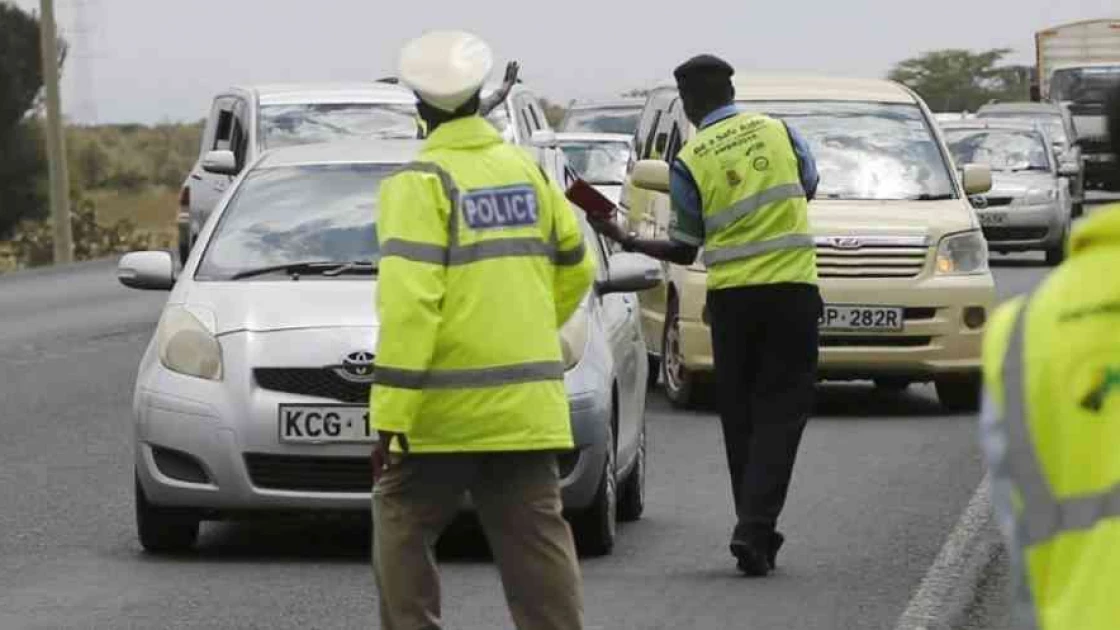
The Ethics and Anti-Corruption Commission (EACC) has exposed widespread corruption within Kenya’s traffic police, recommending a complete restructuring of the unit and regular rotation of officers to stop entrenched bribery and exploitation.
The move follows a detailed audit that found the department riddled with practices that undermine public trust in the National Police Service (NPS).
The investigation, carried out between February and June 2025, revealed that traffic officers routinely demand “protection fees” from Public Service Vehicle operators and boda boda riders.
Some officers were reported to create false charges against those who refused to pay, with the illicit gains often reaching senior officials, embedding a culture of corruption throughout the unit.
“They expose all PSVs to routine daily extortion. There were also allegations of targets given to these officers by their seniors,” said EACC Director of Preventive Services Vincent Okongo during the report’s unveiling at the National Police Leadership Academy in Ngong.
“For boda boda and matatu SACCOs, they also collect protection fees — and if you don’t give, they fabricate charges against you."
EACC Secretary and CEO Abdi Mohamud described the audit as a clear signal by the NPS to address historic governance weaknesses.
“This was not a fault-finding exercise, but one geared towards strengthening governance systems and making them more resilient to corruption vulnerabilities,” he said, commending Inspector General Douglas Kanja and his team for their collaboration throughout the process.
The audit assessed policies, procedures, and daily practices across multiple NPS departments, including the Kenya Police Service, Administration Police, Directorate of Criminal Investigations, Internal Affairs Unit, and training institutions.
It highlighted irregularities in recruitment, promotions, and transfers, as well as manipulation of disciplinary systems and violations of the NPS Act.
Other problems documented include inconsistent bail processes, collection of fees from businesses, unsanitary conditions in detention facilities, and politically driven or punitive transfers.
Okongo noted, “There were many issues to do with recruitment — interference from senior police, and officers bribing to be transferred. Transfers were also used to punish some officers.”
Weak oversight structures, delays in reforms like establishing a Service Examination Board, understaffed Internal Affairs Unit, mismanaged police resources, and lack of proper land ownership records were also flagged.
To tackle these challenges, the EACC suggested full enforcement of the NPS Act, adoption of anti-corruption frameworks, automation of recruitment and bail systems, regular audits, sting operations, and introduction of body-worn cameras to enhance transparency.
EACC Chairperson David Oginde urged all stakeholders to take the findings seriously: “Let this report not gather dust on shelves. Let it mark a renewed commitment by leadership, officers, and citizens to rebuild this vital institution.”
Inspector General Kanja confirmed that action will be taken. “We have received the report that we had requested EACC to investigate in February. We are going to form the necessary committees, and whoever will be found culpable will face the law,” he said.
The EACC has directed the Inspector General to develop a 30-day implementation plan for the recommendations, with progress expected to be monitored regularly.
“Systems are frameworks for accountability. By exposing weak links and redundant processes, an honest examination is the only way to prove we are worthy of public trust,” Mohamud concluded.































Comments
Sign in with Google to comment, reply, and like comments.
Continue with Google