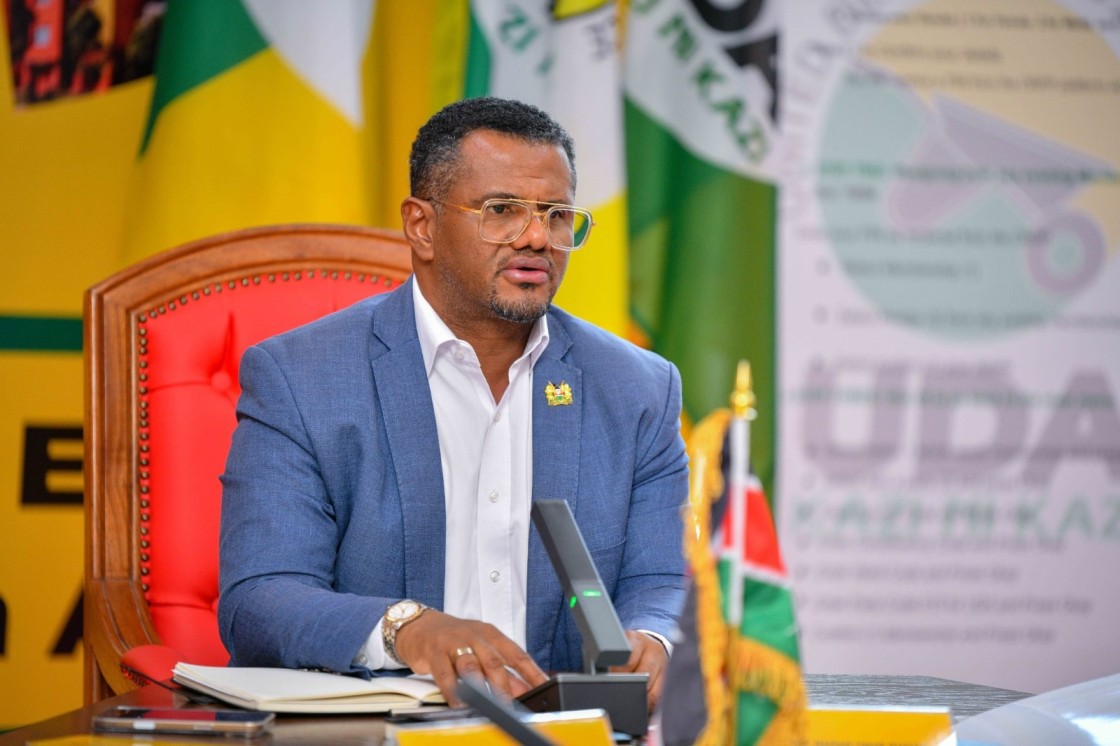
The United Democratic Alliance has announced repeat grassroots elections in selected polling centres across 42 counties after resolutions by its top organs.
The party says fresh polls will be held in March, with registration opening immediately. The move follows concerns arising from recently concluded grassroots elections.
In a notice issued on Thursday by the UDA National Elections Board, the party said the decision was reached after a resolution by the National Executive Committee and the Elections and Nominations Dispute Resolution Committee.
The move affects Phase II and Phase III grassroots elections and will see fresh voting conducted in select centres across 42 counties.
According to the notice, the party resolved that it shall conduct repeat elections in select polling centers across the 42 counties on March 7, 2026 for Phase III elections and on March 28, 2026 for Phase II elections”.
The polling centres affected by the decision have been published on the party’s official digital platform.
The party said registration for the repeat grassroots elections opened on Wednesday, January 21, 2026 and will close on Saturday, February 21, 2026.
The registration exercise applies to both Phase II and Phase III repeat polls and is being coordinated by the party’s National Elections Board from its headquarters at Hustler Plaza along Ngong Road.
The announcement provides the clearest indication yet of the scale of the reruns, which span several regions and counties.
Among the wards scheduled for fresh grassroots elections on March 7, 2026 are Evurore and Muminji wards in Embu County, as well as West Kabras ward in Kakamega County.
In addition to the ward-level reruns, the party listed counties that will conduct repeat Phase III grassroots elections on March 7, 2026.
These include Meru, Tharaka-Nithi, Embu, Nyandarua, Nyeri, Kirinyaga, Murang’a, Kiambu, Samburu and Trans Nzoia.
Other counties slated for the same phase of repeat elections are Uasin Gishu, Elgeyo Marakwet, Nandi, Baringo, Laikipia, Nakuru, Kericho, Bomet, Kakamega and Vihiga.
The wide geographical spread reaffirms the national scope of the disputes that followed the initial grassroots elections.
While the notice does not detail the specific nature of the complaints, the involvement of the Elections and Nominations Dispute Resolution Committee signals that the party received and reviewed formal petitions challenging the outcome or conduct of the earlier polls.
Grassroots elections are a key component of UDA’s internal structure, determining leadership at the lowest levels of the party and shaping mobilisation ahead of national elections.
The reruns are therefore likely to be closely watched by party members and political observers, particularly in counties where competition within the ruling party has been intense.
The party emphasised that the registration window would be strictly observed, noting that registration “opens today Wednesday, January 21, 2026 and closes on Saturday, February 21, 2026”.
It also directed members to official party communication channels for further details, including the list of affected polling centres.
UDA has in recent years positioned itself as a mass-based political movement, with grassroots structures forming the backbone of its national reach.
The decision to order repeat elections reflects ongoing efforts by the party leadership to manage internal disputes and maintain organisational cohesion.
The repeat elections are expected to take place under the supervision of the National Elections Board, which is mandated to oversee party polls and ensure compliance with UDA’s electoral rules and procedures.
Party officials say the process is intended to bring closure to contested outcomes and allow grassroots leaders to assume office through a process recognised by all sides.































Comments
Sign in with Google to comment, reply, and like comments.
Continue with Google