Land fragmentation threatens Kenya’s food security - CS Kagwe

He argued that mechanised and climate-smart agriculture cannot thrive on highly fragmented land holdings, warning that the trend risks weakening commercial farming viability and long-term sustainability.
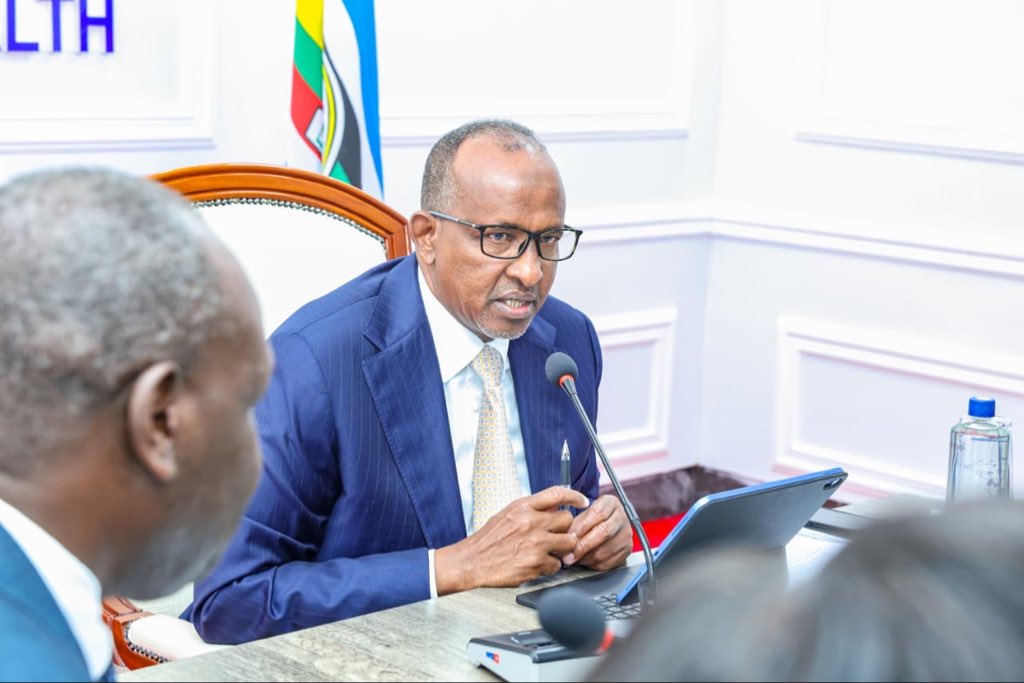
Agriculture Cabinet Secretary Mutahi Kagwe has warned that excessive land subdivision is undermining food security and modern farming, calling for a national debate on land use.
Speaking on Tuesday in Malindi, he urged consolidation, investor-friendly policies, and value chain reforms to unlock the Coast’s agricultural potential.
“In some cases, a single acre has been divided among six children. We cannot afford to continue this fragmentation. Large, consolidated farms are critical for mechanization, investment, and building a resilient agricultural economy. Many successful agricultural nations avoid excessive land subdivision; Kenya must consider a similar approach,” Kagwe said.
He argued that mechanised and climate-smart agriculture cannot thrive on highly fragmented land holdings, warning that the trend risks weakening commercial farming viability and long-term sustainability.
The Cabinet Secretary also urged government officials and stakeholders to adopt what he described as a pro-investment mindset, saying private capital is essential to agricultural transformation.
“Investors do not come here to earn stones. They come to make money, and that is exactly why they should come. Private profits drive job creation, stimulate local economies, and enable broader agricultural transformation,” Kagwe said.
He called on both national and county governments to streamline regulatory approvals and remove bureaucratic bottlenecks that discourage long-term agricultural and industrial investments. Predictable policy frameworks, he said, are key to de-risking major projects.
Highlighting the Coast region’s agricultural potential, Kagwe pointed to opportunities in structured value chains, climate-smart farming, and modern technology adoption.
“Why export raw cashew when we can export branded, processed kernels? Why sell raw coconuts when we can produce coconut oil, desiccated coconut, and animal feed locally? Every stage of value addition creates jobs and jobs are what our young people need,” he said.
The six counties under Jumuia ya Kaunti za Pwani, Lamu County, Tana River County, Kilifi County, Kwale County, Taita Taveta County, and Mombasa County, possess ecological advantages including suitability for tree crops, drought-tolerant cash crops, livestock systems, and access to a strategic coastal export corridor.
Despite these advantages, the region continues to face high unemployment, declining legacy cash crops, and vulnerability to climate change.
Kagwe outlined five pillars to drive transformation: climate-smart agriculture, modern technology and data, youth-led agripreneurship, structured public-private partnerships, and deliberate county-national collaboration.
He emphasised the importance of community-managed irrigation, water security, and building complete value chains from certified seedlings to market linkages.
Organised county-level cooperatives, aggregation centres, and farmer producer organisations, he said, would help de-risk private investment and attract processors seeking predictable supply volumes.
Kagwe also reaffirmed that policy reforms alone would not deliver prosperity.
“This is not about projects. It is about building a durable agricultural economy for the Coast — climate-resilient, youth-driven, globally competitive, and capable of feeding Kenya while generating wealth for farmers,” Kagwe said.
He called for frank discussions around investor support and institutional alignment, raising several key questions.
“How will counties actively support agricultural renewal?” he asked. “What do business people require from county and national governments to invest confidently? How can research institutions ensure innovation reaches farmers? How can county extension officers be professionalized and strengthened through the Justice Sector County Coordination Mechanism (JASCCOM)?”
National institutions, including KALRO, KEPHIS, AFA, AFC, NCPB, KADIC, KEVEVAPI, and KAGRC, he said, are aligned to support research, regulatory oversight, structured markets, livestock genetics, and skills development.
Concluding his remarks, Kagwe issued a call to action focused on land use, investment, and agricultural organisation.
“We must confront difficult questions on land use, investment, and agricultural organization. The Coast can rise again and together, we shall make it rise,” he said.



Comments
Sign in with Google to comment, reply, and like comments.
Continue with Google