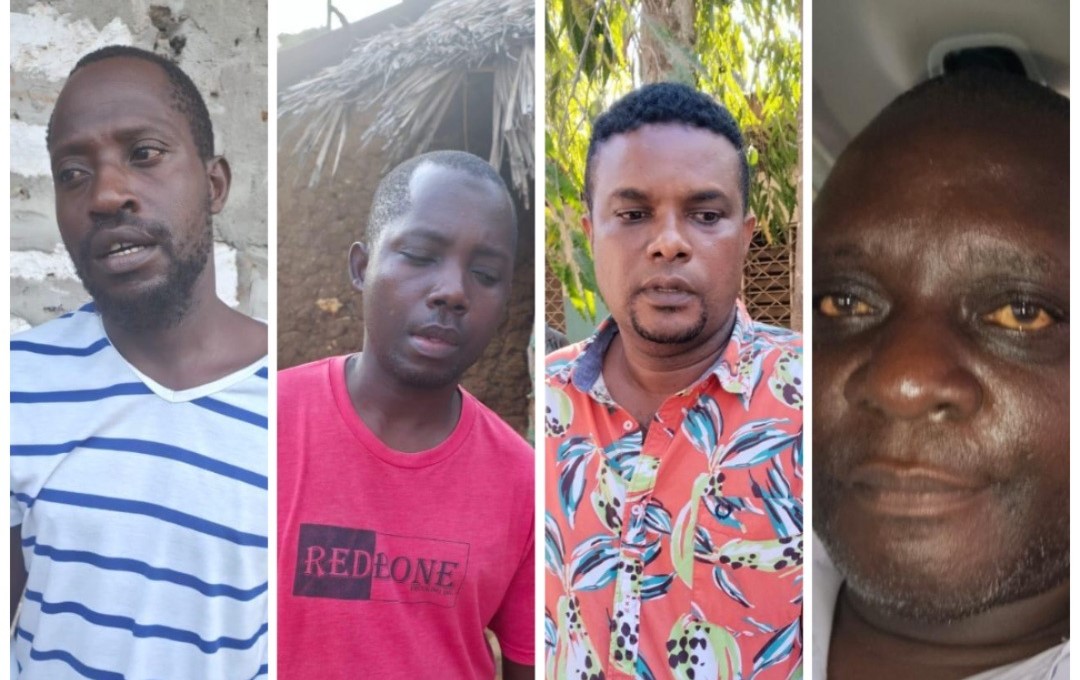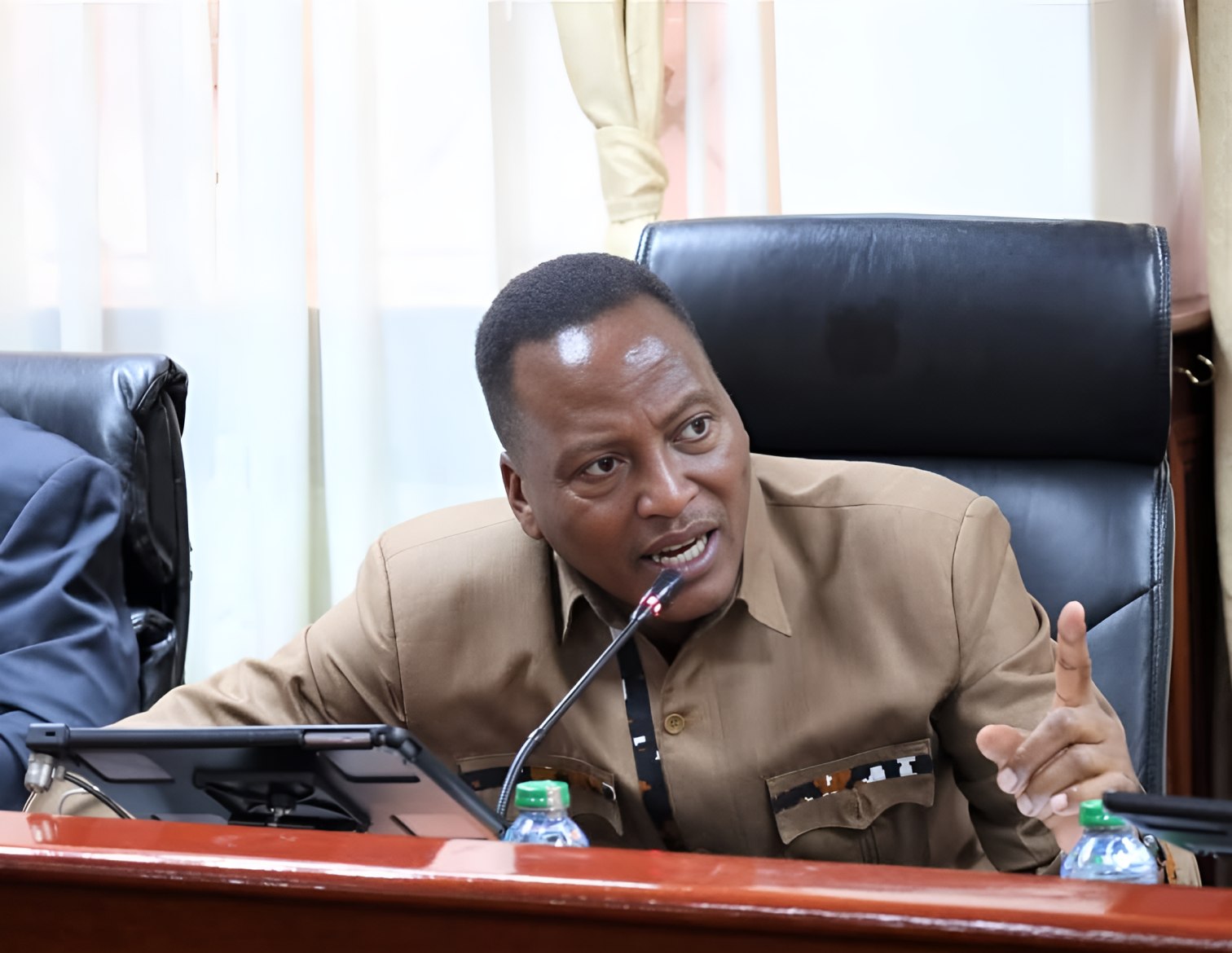
Kisii Senator Richard Onyonka criticised a breakdown in accountability after chaotic scenes at Parliament involving Samburu Governor Jonathan Lati Lelelit and Nairobi Governor Johnson Sakaja.
Onyonka was speaking on Thursday following a confrontation in which senators attempted to enforce compliance with a Senate summons, amid growing tensions between county governments and the Senate’s oversight role.
In the incident, both governors were seen outside Parliament addressing the media rather than formally appearing before the Senate’s County Public Accounts Committee (CPAC).
“They called the media and they started talking how they are around and in fact they don’t understand why the Senate is claiming that they have not come,” Onyonka said.
According to the senator, lawmakers viewed the governors’ presence near Parliament as an opportunity to compel them to appear before the committee and face questioning over audit queries.
However, the situation escalated when Governor Lelelit reportedly realised he could be detained. “When he came to the gate and realized, you’re going to be put in the cells, that’s when he took off and ran away,” Onyonka said.
The confrontation reflects a broader standoff between governors and the Senate over accountability for public funds.
The Senate’s County Public Accounts Committee, (CPAC), chaired by Moses Kajwang’, has been summoning governors to respond to Auditor-General reports examining billions of shillings in county expenditure.
Recent Senate action shows the scale of the standoff. A total of 11 governors were fined Sh500,000 each for failing to appear before the committee, the maximum penalty allowed under parliamentary powers.
Those cited include Gladys Wanga,(Homa Bay County), Anne Waiguru,(Kirinyaga County), Susan Kihika,(Nakuru County).
These are among the named governors publicly reported; the full official Senate list includes 11 county chiefs.
Each of them was fined Sh500,000 for contempt of Parliament after repeatedly ignoring summons to account for county spending.
Separately, Governor Sakaja was also fined Sh500,000 and faced an arrest directive after failing to honour summons over audit queries.
Governor Lelelit had earlier been fined the same amount and an arrest warrant issued after he repeatedly failed to appear before the committee.
The Senate had issued summons to at least 29 governors, warning that failure to appear could lead to fines, arrest warrants, or even declarations of unfitness for office.
However, compliance has remained low, with multiple governors either skipping sessions or openly boycotting proceedings.
The crisis escalated earlier in 2026 when the Council of Governors resolved that governors would boycott CPAC sittings, citing intimidation, harassment, and political witch-hunts by senators.
This boycott has contributed to what political analysts describe as one of the most serious institutional standoffs between devolved units and the Senate since the 2010 Constitution.
Onyonka strongly criticised what he described as defiance and public theatrics around legal processes.
“It’s crazy how in Kenya we love to moralize some of our ineptitude,” he said.
He argued that leaders facing legal or parliamentary action should comply with due process rather than stage public confrontations.
“You have an arrest warrant. Go and report to the police station. Say I’m here and tell me what I need to do,” he said.
The senator added that adherence to the law is essential for maintaining institutional credibility. “If it means you put me in the cells that’s what I would do as Senator,” he said.
Beyond the immediate standoff, Onyonka pointed to deeper systemic failures in governance and financial oversight.
“This is the stuff we’ve been talking about that the system we operate is so broken down,” he said.
He cited questionable expenditure patterns as evidence of weak accountability.
“You go into the books and find somebody has utilized 70 million to buy condoms and you are being asked give us the receipts,” he said.
The Senate is constitutionally mandated to oversee county governments, including reviewing audit reports and summoning officials to account for public spending.
However, repeated defiance by governors has raised concerns about the effectiveness of these oversight mechanisms.
Onyonka warned that continued non-compliance risks eroding public trust in institutions tasked with accountability.
As scrutiny of county finances intensifies, the standoff at Parliament reaffirms the growing struggle between political authority and institutional oversight in Kenya.