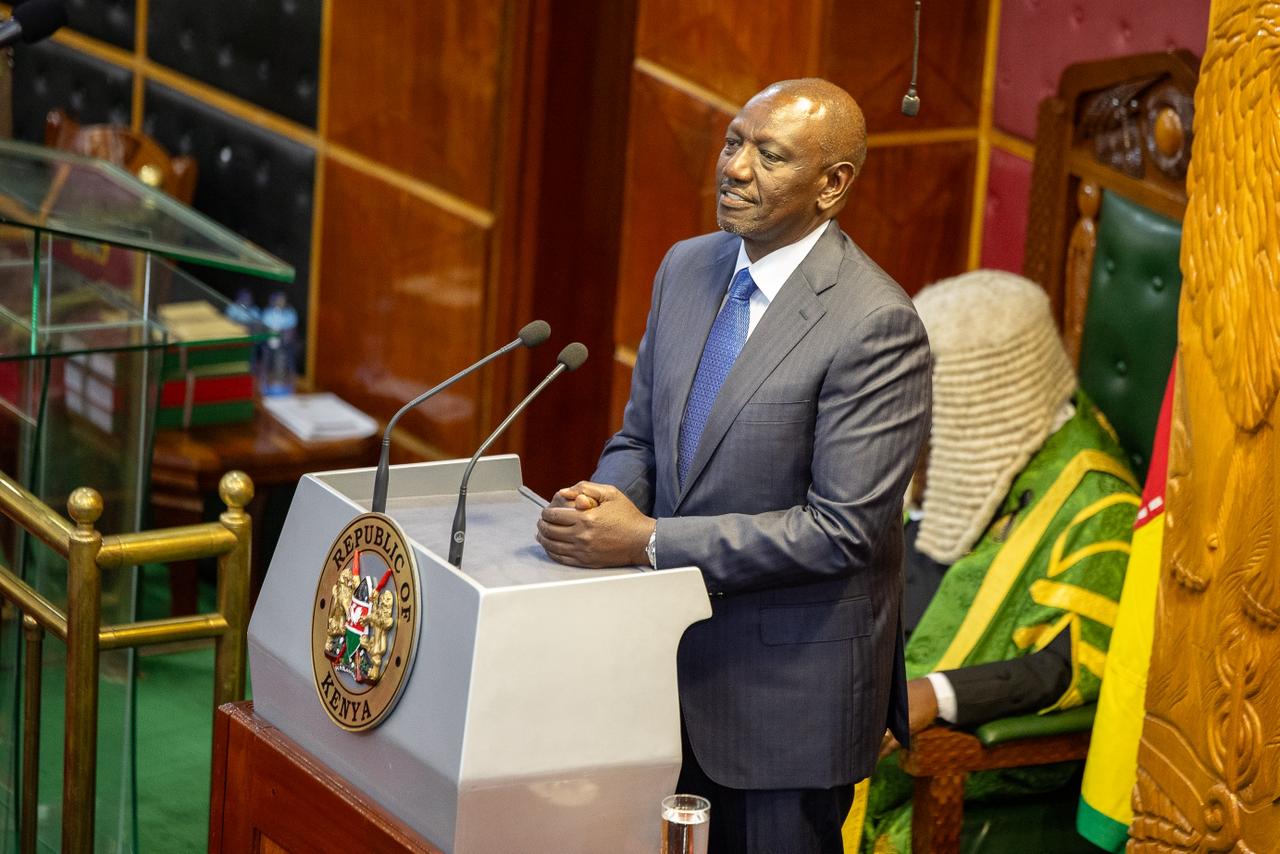
President William Ruto has said the government will bring on board 24,000 more teachers by January 2026, marking the next phase of his plan to ease shortages in schools.
He made the announcement during the State of the Nation Address on Thursday, where he outlined the steps his administration has taken to stabilise the education sector.
Ruto noted that the country had been grappling with a serious shortage of teachers and a difficult transition under CBC, a situation he said was made worse by the financial struggles in universities.
“We then tackled the teachers’ crisis head-on. We have hired 76,000 teachers, with 24,000 more expected to be hired by January next year. That will translate to 100,000 teachers in three years,” he said.
The President said the move forms part of his broader push to ease pressure in classrooms, address long-standing gaps in staffing, and support learning outcomes nationwide.
“When I assumed office, our education sector was in distress with a strained CBC transition, a chronic teacher deficit, universities on the edge of insolvency,” he said.
He stressed that the upcoming recruitment, combined with recent hires, reflects the administration’s commitment to restore order and ensure schools have the workforce needed to meet growing demand.
Ruto also highlighted the rapid growth of Technical and Vocational Education and Training (TVET), noting that student enrollment has jumped from 341,000 in 2022 to 718,000.
He described TVET as “the engine of practical skills,” pointing out that young Kenyans are increasingly pursuing careers in engineering, ICT, modern agriculture, hospitality, design, and other technical trades that support a modern economy.
The President’s remarks come as tension builds among Junior Secondary School (JSS) teachers on internship contracts.
The teachers, employed for one year as interns, have threatened to disrupt classes in January 2026 unless their positions are made permanent and pensionable.
They argue that their contracts were intended as a pathway to full employment, but that the current system, where confirmation only comes after two years—disadvantages them, with low pay of Sh17,000 per month described as “discriminatory and unsustainable.”
At least 20,000 JSS interns, from Nairobi, Laikipia, Kiambu, and other counties, have voiced concerns over the government’s approach to confirming teachers, citing claims of favouritism and inconsistent treatment of previous cohorts.
They warn that without a change in policy, they will not report back to schools in January.
During a recent tour of Ukambani, President Ruto reiterated the government’s policy, stating that interns will only be confirmed after two years of service.
He framed the education reforms, including classroom expansion, laboratory construction, and TVET growth, as part of a broader strategy to provide equitable opportunities and foster national values across all learning institutions.
According to the President, the dual focus on infrastructure and skills development is essential to ensure every child has a fair chance, while also preparing young Kenyans with practical abilities to contribute to the country’s economic development.
The government says these initiatives aim to build a stronger, more capable generation that can thrive in the modern economy.































Comments
Sign in with Google to comment, reply, and like comments.
Continue with Google