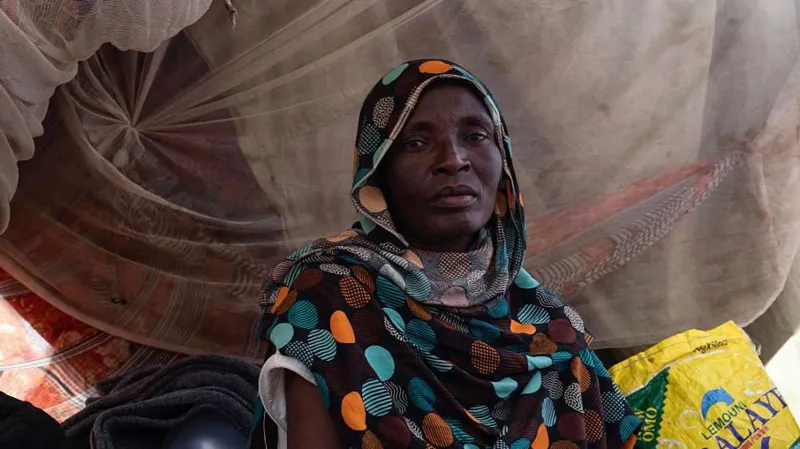
The United Nations announced on Friday it will send a fact-finding team to investigate alleged mass killings in Sudan’s city of el-Fasher, promising accountability for those responsible.
Volker Türk, the UN human rights chief, said at an emergency session in Geneva, "There has been too much pretence and performance, and too little action" from the international community in responding to Sudan's civil war.
He added, "It must stand up against these atrocities - a display of naked cruelty used to subjugate and control an entire population," and issued a warning to anyone "fuelling and profiting" from the conflict.
Sudan’s war has killed over 150,000 people and forced nearly 12 million to leave their homes. The UN team will examine evidence to identify perpetrators and ensure they face justice.
El-Fasher, previously held by the army and its allies, was seized last month by the Rapid Support Forces (RSF) after an 18-month siege. The RSF denies accusations of targeting non-Arab communities in Darfur, but reports suggest widespread attacks on civilians.
A particularly grim aspect of the conflict is the abundance of videos and photographs of atrocities circulating online, sometimes recorded by the attackers themselves. This material will be analyzed to support future prosecutions.
Mona Rishmawi, a member of the UN fact-finding team, said, "The people of Sudan, particularly now in el-Fasher, are facing a situation that I never saw before." She told BBC’s Newsday programme that the suffering today in Darfur surpasses the violence inflicted by the Janjaweed militia twenty years ago.
According to Rishmawi, while past attacks mainly targeted villages, the current conflict sees paramilitary forces assaulting entire cities and large refugee camps. She said, "[There have been] devastating mass killings, rape and torture, disappearances, missing people - and this comes against the background of 18 months of siege and starvation." The RSF has roots tracing back to the Janjaweed.
The G7 recently issued a statement condemning the escalation of violence, calling it "the world's largest humanitarian crisis." The United States, along with the UAE, Egypt, and Saudi Arabia, forms the Quad bloc working to halt the conflict, proposing a three-month humanitarian truce, a permanent ceasefire, and a nine-month transition to civilian rule.
US Secretary of State Marco Rubio criticized countries he said are providing weapons to the RSF, although the UAE denied supporting the paramilitary group and blamed the Sudanese army for "starvation tactics, indiscriminate bombardment of populated areas, and the reported use of chemical weapons." Both the RSF and Sudan’s military rejected allegations of wrongdoing.
Fighting continues despite the proposed truce, and only a small portion of el-Fasher’s population has managed to escape. Satellite images reveal piles of bodies and blood-stained land, showing the scale of the violence.
Amnesty International has documented weapons from Serbia, Russia, China, Turkey, Yemen, and the UAE being used in the conflict, often routed through the UAE and Chad into Darfur. The RSF is also accused of using the UAE to trade illicit gold. Rubio highlighted that the supply is not just financial, but includes countries allowing weapons to be transported through their territories. All parties continue to deny these claims.
Recently, British lawmakers raised concerns that UK-made weapons were ending up in the hands of the RSF. Foreign Secretary Yvette Cooper defended the nation’s controls, saying the UK "has extremely strong controls on arms exports, including to prevent any diversion," and will maintain strict enforcement.
Although Darfur has been under a UN arms embargo since 2004, the restriction has not been applied nationwide, despite repeated appeals from human rights organizations.































Comments
Sign in with Google to comment, reply, and like comments.
Continue with Google