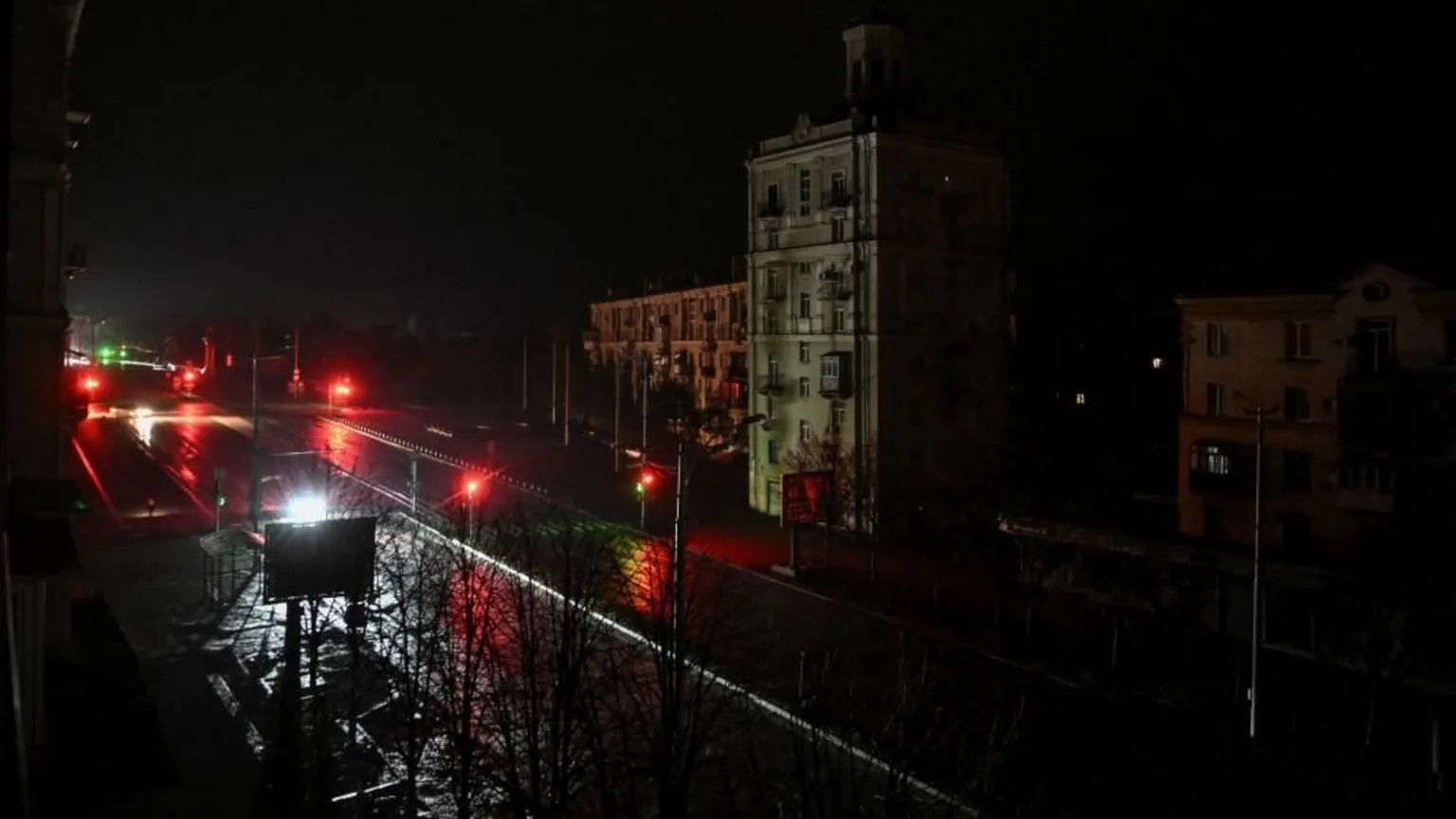
Residents in Ukraine’s south-eastern regions faced hours of freezing conditions without heat and water after Russian attacks struck critical infrastructure, officials reported.
The strikes affected Dnipropetrovsk and extended into Zaporizhzhia, leaving millions without essential services in the middle of harsh winter weather.
Ukraine has accused Russia of deliberately targeting energy networks to cause widespread disruption during the cold season.
The energy ministry said hospitals, water stations, and other essential facilities in Dnipropetrovsk had to switch to backup power, while citizens were urged to conserve electricity to prevent further outages.
President Volodymyr Zelensky described the strikes as “mockery” and warned of the threat of “a new massive Russian strike” as heavy snow and frost were expected across the country. He stressed that Russia was attempting to exploit winter conditions to deepen the humanitarian impact.
DTEK, Ukraine’s largest private energy company, said the repeated attacks on the grid had forced the company into continuous emergency response mode. CEO Maxim Timchenko told the BBC that the intensity of the strikes made it impossible for repair teams to fully restore power, leaving 5.6 million people dependent on the company’s services at risk.
Timchenko said the company had faced “waves of drones, cruise and ballistic missiles” repeatedly targeting energy infrastructure over the past months. As the fourth anniversary of Russia’s full-scale invasion approaches, he said recovery efforts have been stretched to the limit.
Zelensky condemned the attacks, stating, “There is no military sense in such strikes on the energy sector, on infrastructure.” He urged Ukrainians to remain “resilient” despite Russia’s attempts “to break Ukraine,” emphasizing that peace negotiations should not slow Western support for air defence systems.
The president has been engaging in diplomatic talks with international allies, including members of the Coalition of the Willing and US envoys associated with Donald Trump.
Following a meeting in Paris with European leaders, the UK and France signed a declaration expressing readiness to deploy troops in Ukraine if a peace deal is reached. Moscow responded by warning that foreign forces would become “legitimate targets.”
Despite this, Zelensky said he did not receive solid guarantees from European partners that Ukraine would be protected in case of further Russian aggression.
He remained optimistic, however, predicting that the conflict could end in the first half of 2026. Speaking during the opening of Cyprus’s EU presidency, he emphasized that negotiations with the US and Europe had entered a new stage and insisted the EU must play a central role in any settlement.
President Trump has led proposals for ending the war, which were later adjusted by Ukraine and European partners. These plans involve possible territorial concessions in areas not fully controlled by Russia, but Zelensky has so far rejected giving up any land.
Final approval would still require Russia’s agreement, though President Vladimir Putin continues to demand full control over the Donbas region, where Russian forces have made slow advances in recent months.