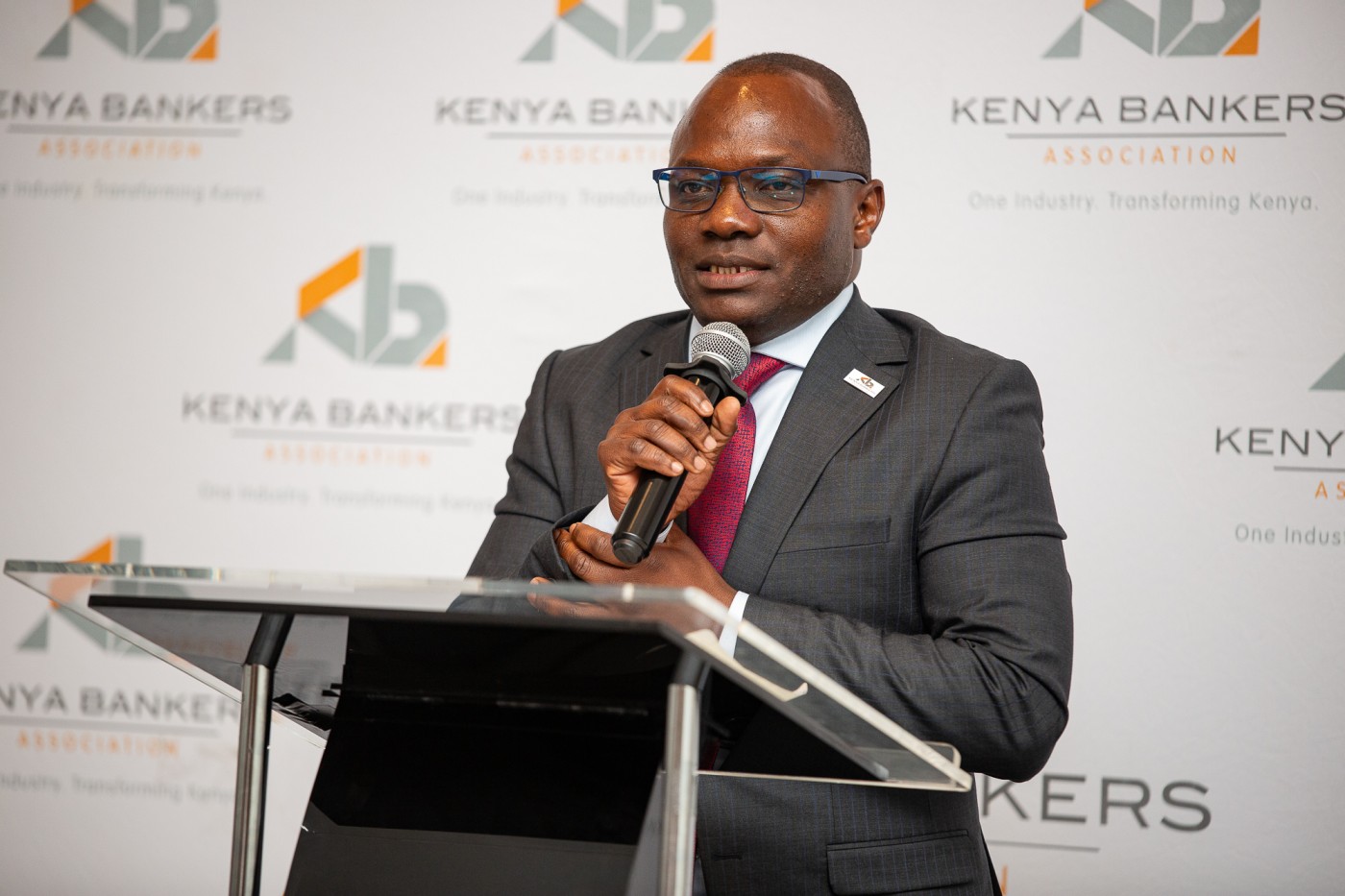
The Kenya Bankers Association (KBA) has thrown its weight behind the government’s proposal to partially divest its stake in Safaricom PLC, describing the move as a timely alternative funding strategy to ease mounting public debt and pressure on tax revenues.
In submissions to the National Assembly’s Committee on Finance and National Planning, the banking industry said it has no objection to the proposed 15 per cent partial divestiture outlined in Sessional Paper No. 3 of 2025.
KBA noted that while domestic taxes and borrowing have traditionally funded government expenditure, rising public spending and weak revenue growth have led to unsustainable debt levels.
In a submission signed by the association's Chief Executive Officer, Raimond Molenje, before the lawmakers, the association admitted to Kenya’s public debt, which is currently standing at 64 percent of Gross Domestic Product (GDP), exceeding the global benchmark of 55 percent.
''We have no objection to the proposal of partial divestiture of Safaricom Plc by the Government. We support this form of alternative funding to alleviate pressure on tax revenue mobilization and ease public debt accumulation, which has reached concerning levels," Molenje said.
In addition, Molenje said that the banking sector has been at the forefront in voicing concerns on the reduction of the country’s taxes. “The banking sector has been at the forefront in advocating for the reduction of taxes, especially on personal taxes and levies, to enhance disposable incomes and spur credit growth, which will in turn stimulate consumption and aggregate demand, production, and economic growth,” Molenje stated.
The bankers said proceeds from the sale should be ring-fenced and directed towards infrastructure development and the sovereign wealth fund, arguing this would reduce budgetary pressure while limiting further borrowing.
‘’We are of the view that budgetary constraints of the Government, which is a significant shareholder, have led to limited investment in Safaricom effectively undermining financial innovation and transformation,’’ Molenje noted.
The submission notes that Kenya has become a global leader in financial innovation, especially through mobile money usage, with penetration reaching about 91 percent of the population as of mid-2025, saying that it’s a transformation that has been significantly driven by Safaricom innovation and adoption of M-Pesa, which is intricately integrated with the banking sector payment channels and ecosystem.
The banking sector supported the divestiture because it could allow Vodacom to become the majority shareholder, enabling Safaricom to mobilise more capital for technological innovation and expansion.
''Banks support the divestiture of Safaricom by the government, as it will present an opportunity for Vodacom to become the majority shareholder of the company. This change will enable the company to mobilize and access more capital for deployment in financial innovation and technological development that will, in turn, support the expansion and growth of Safaricom,’’ Molenje advised.
KBA observed that government budgetary constraints, despite being a significant shareholder, have limited investment in Safaricom, potentially undermining innovation and digital transformation.
“We are of the view that budgetary constraints of the Government, which is a significant shareholder, have led to limited investment in Safaricom effectively undermining financial innovation and transformation,” the submission noted.
On capital markets, KBA said Safaricom remains the largest listed firm on the Nairobi Securities Exchange (NSE), with a market capitalisation of about Sh1.17 trillion, accounting for roughly 40 per cent of the bourse’s total value.
''The banking sector supports capital market development and deepening. This divestiture is aligned with the goal of the government exiting from mature state-owned enterprises. Although banks support the divestiture.’’
A reprieve for the public now, as the association supports the recommended sale, it has recommended that at least five per cent of the shares earmarked for sale be reserved for public participation to broaden ownership of the strategic national asset.
"The sector recommends that 5 percent of the shares under divestiture be reserved to the public to broaden public ownership and participation in this national key asset,’’ Molenje said.
"Vodacom majority shareholding is expected to instill global best practice in Network design and optimisation, cybersecurity and data privacy, digital platforms and accelerate technology transfer and adoption of proven solutions, lowering execution risk.’"






























