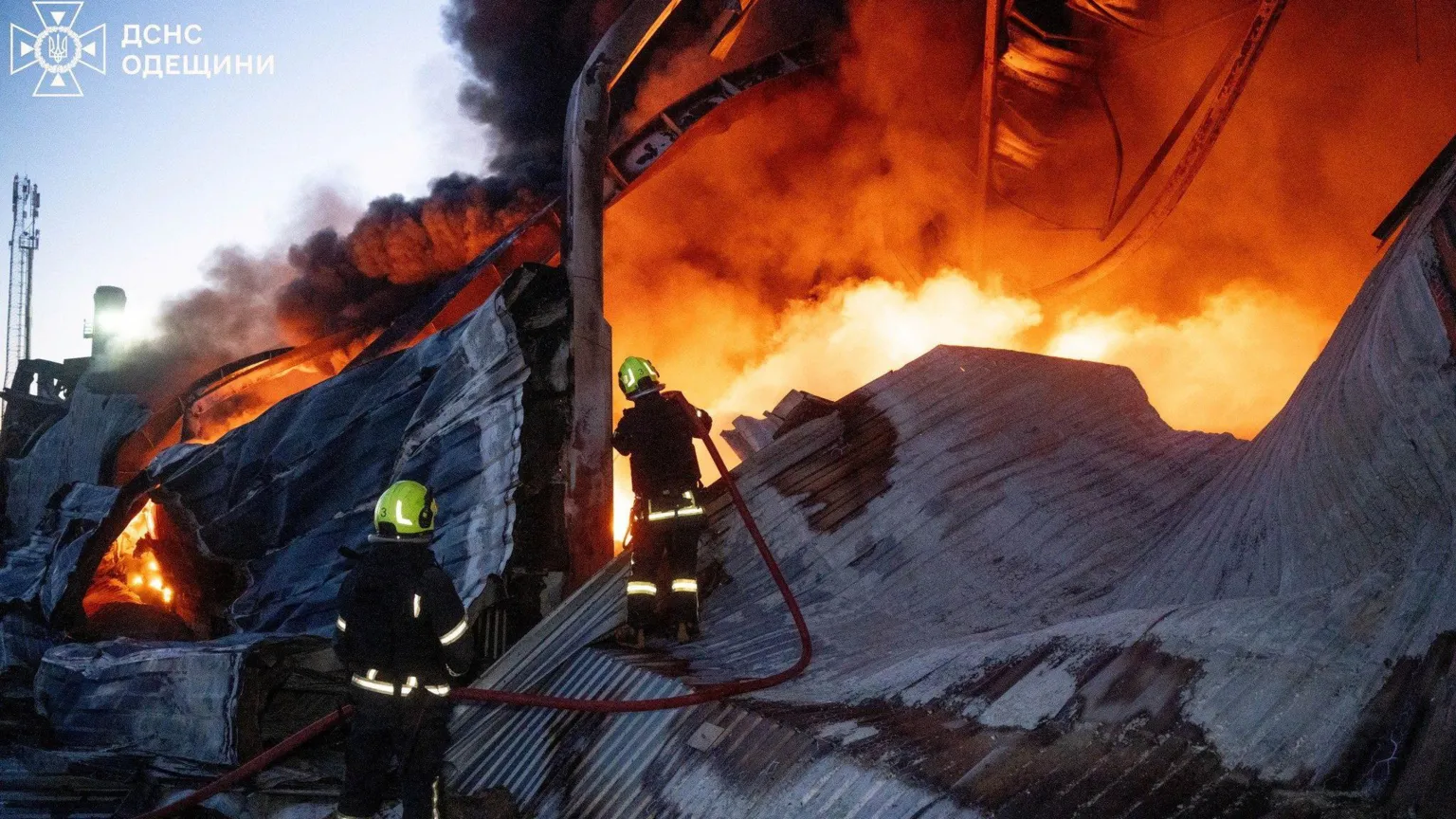
Russia has stepped up military strikes on Ukraine’s southern Odesa region, leaving large areas without electricity and putting key port facilities under growing pressure, Ukrainian officials say.
The latest attacks underline rising concern that Moscow is now targeting Ukraine’s remaining access to the sea.
Deputy Prime Minister Oleksiy Kuleba said the strikes were part of what he described as “systematic” attacks on Odesa. He warned last week that the direction of the war “may have shifted towards Odesa”, pointing to the steady rise in bombardment across the region.
President Volodymyr Zelensky said the repeated assaults were aimed at cutting Ukraine off from maritime routes that are vital for trade and supplies. He said Moscow was trying to block the country’s use of sea-based logistics by hitting ports and nearby infrastructure.
Earlier this month, Russian President Vladimir Putin warned that Ukraine could lose access to the sea. The threat followed drone strikes on oil tankers linked to Russia’s so‑called “shadow fleet” in the Black Sea. The term is used to describe hundreds of tankers that Russia relies on to move oil and bypass Western sanctions imposed after the full invasion of Ukraine in 2022.
On Monday evening, Russian strikes hit port facilities in Odesa, damaging a civilian vessel, according to the regional governor. The attack was the latest in a long series that has disrupted power supply across the region for several days and caused deaths and injuries.
On Sunday night, strikes left about 120,000 people without electricity and sparked a fire at a major port. Dozens of containers filled with flour and vegetable oil were destroyed in the blaze. Last week, a ballistic missile strike on the Pivdenniy port, east of Odesa, killed eight people and injured at least 30 others.
Another strike earlier in the week killed a woman who was travelling in a car with her three children. The attack also briefly cut off the only bridge linking the Odesa region with Moldova, further disrupting movement and trade.
Zelensky said a new air force commander for the region would be named soon, following the removal of Dmytro Karpenko over the weekend. The leadership change comes as Ukraine seeks to strengthen air defence in the face of continued attacks.
Odesa’s port has long been central to Ukraine’s economy. The city is the country’s third largest after Kyiv and Kharkiv and has taken on added importance as other ports in the Zaporizhzhia, Kherson and Mykolayiv regions remain out of reach due to Russian occupation.
Despite the war, Ukraine remains among the world’s leading exporters of wheat and corn. Since August 2023, Odesa has served as the starting point of a key export corridor. The route follows the coastlines of Romania and Bulgaria before reaching Turkey, allowing grain shipments to continue.
Zelensky, who has previously accused Russia of “sowing chaos” among the people of Odesa, said that “everyone must see that without pressure on Russia, they have no intention of genuinely ending their aggression”.
His remarks came as the latest round of US-led diplomatic talks concluded in Miami. The United States held separate meetings with Ukrainian and Russian delegations. While both sides issued hopeful comments, there was no clear step forward towards ending a war that is now nearing its fourth year.
US President Donald Trump’s special envoy, Steve Witkoff, said he and Ukraine’s defence minister Rustem Umerov had worked on “aligning positions” around a 20-point peace plan proposed by Ukraine earlier this month. The plan was put forward as an alternative to a US proposal presented in November that Kyiv viewed as favouring Moscow.
Even before Russian envoy Kirill Dmitriev returned to Moscow from Florida, Kremlin foreign policy aide Yuri Ushakov said changes suggested by European and Ukrainian officials would not improve the chances of reaching peace.
On Monday, Russian Deputy Foreign Minister Sergei Ryabkov accused European Union countries of having a “firm aspiration” to derail possible Russia-US agreements on Ukraine and to “in general prevent Russia-American relations getting healthier”.
Ryabkov also said European countries were driven by what he called a “maniacal” fear of a Russian attack. He said Russia was ready to put into a legal agreement that it had no plans to attack the EU or Nato, repeating earlier comments by Putin.
“We’ve never planned to [attack Europe], but if they want to hear it from us, well, let’s do it, we’ll put it in writing,” Putin said in November.































Comments
Sign in with Google to comment, reply, and like comments.
Continue with Google