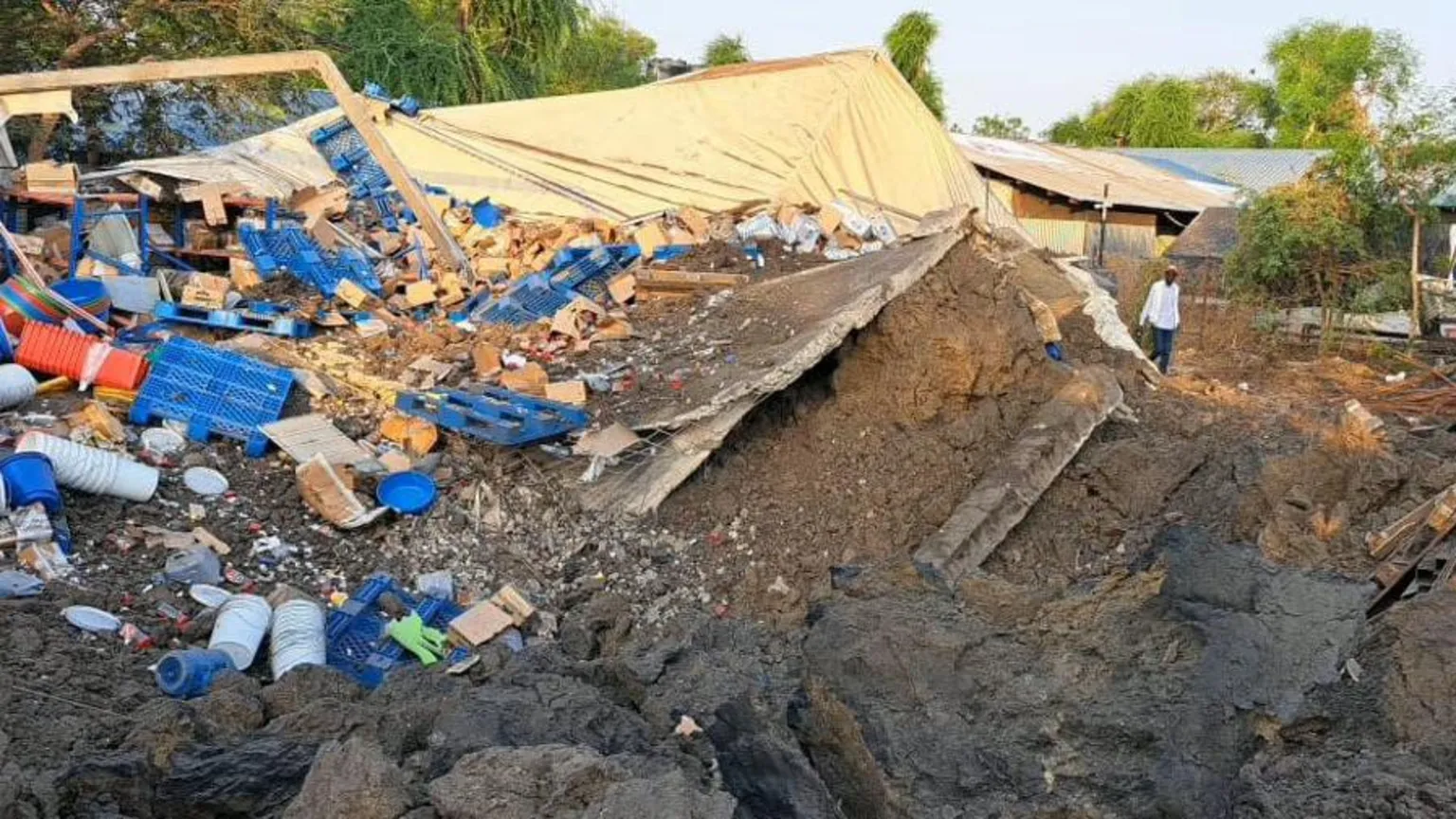
Aid workers have gone missing after a hospital operated by Doctors Without Borders in Jonglei state, South Sudan, was struck by air attacks, the medical charity reported, highlighting the dangers faced by humanitarian staff as violence surges in the region near the Ethiopian border.
Doctors Without Borders said the Lankien hospital was hit late Tuesday night in an attack carried out by South Sudan government forces, though the government has not commented.
On the same day, another MSF facility in Pieri was broken into and looted by unknown assailants, making it impossible to provide care for the surrounding communities.
“Our colleagues had to flee with the community and their fate and whereabouts are still unknown,” the charity said, emphasizing the human cost of the ongoing conflict.
The attacks come amid renewed clashes in Jonglei state between government troops and forces loyal to First Vice-President Riek Machar. Machar was suspended from his position after being accused of plotting to overthrow President Salva Kiir, fueling tensions and instability in the country.
Observers fear the recent fighting could reignite a larger civil conflict in South Sudan, a country already devastated by years of war. According to the United Nations, roughly 280,000 people have been displaced in Jonglei alone since December, a region known for extreme food insecurity and high medical needs.
MSF said it had advance notice of a potential strike on the Lankien hospital, allowing staff to evacuate the building and discharge patients before the attack.
“One staff member was injured, and the hospital's main warehouse was destroyed along with medical supplies,” the organisation said.
Lankien has been at the center of intense clashes in recent weeks, with the destruction of the hospital’s main warehouse leaving vital medical services crippled.
“The hospital's main warehouse was destroyed during the attack, and we lost most of our critical supplies for providing medical care,” MSF added.
Although the attackers have not been officially identified, Doctors Without Borders noted: “The government of South Sudan armed forces are the only armed party with the capacity to perform aerial attacks in the country.”
The charity warned that the attacks threaten health services for roughly 250,000 people across Lankien and Pieri.
“While we are aware of the enormous needs in the country, we find it unacceptable to be a target for attacks,” said Gul Badshah, MSF operations manager.
MSF also reported experiencing eight targeted assaults in South Sudan last year, which led to the closure of two hospitals in Greater Upper Nile and forced a suspension of healthcare activities in Jonglei, Upper Nile, and Central Equatoria states.
In December, the government restricted humanitarian access to opposition-controlled areas in Jonglei, limiting MSF’s ability to deliver essential care.
Conflict first erupted between forces loyal to Kiir and Machar in 2013, two years after South Sudan gained independence. While a peace deal in 2018 officially ended the civil war that claimed nearly 400,000 lives, its provisions have not been fully implemented, and ethnic tensions and sporadic violence continue.
Machar is currently standing trial on charges including murder, treason, and crimes against humanity, which he denies.































Comments
Sign in with Google to comment, reply, and like comments.
Continue with Google