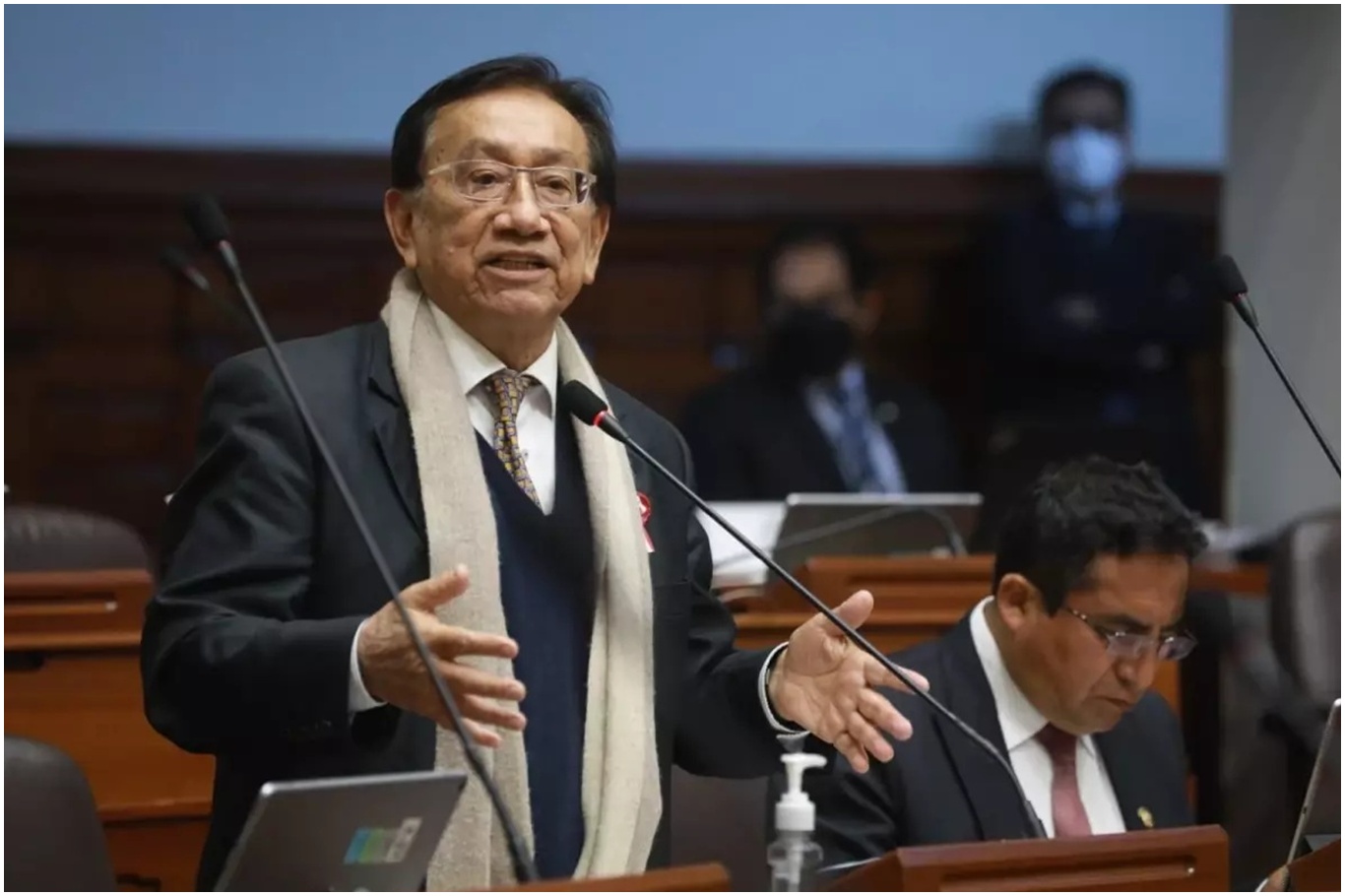
Peru’s Congress on Thursday elected José María Balcázar, 83, as interim president following the ouster of José Jerí, who has denied allegations of influence peddling that prompted lawmakers to remove him.
Balcázar will guide the country until July, when a president elected in a general vote will officially assume power.
A member of the left-wing Free Peru party, Balcázar becomes the eighth Peruvian leader since 2016 to hold office, many of whom were also removed by Congress. Speaking after his election, he said he would “guarantee the people of Peru a peaceful and transparent democratic and electoral transition.”
The country heads to the polls on April 12 for the first round of the presidential election.
With numerous candidates running, it is unlikely anyone will achieve the 50% threshold to win outright, making a June 12 run-off between the top two contenders almost inevitable.
Former presidents may run again, but not in consecutive terms, leaving both Jerí and Balcázar ineligible to contest.
Polling shows right-wing Congresswoman Keiko Fujimori, daughter of former president Alberto Fujimori, and Lima Mayor Rafael López Aliaga as frontrunners, though a large portion of voters remain undecided.
Balcázar will stay in office until the winner is sworn in on July 28.
The interim president assumes leadership amid a deepening trust crisis in Peruvian politics, worsened by corruption allegations surrounding Jerí’s departure.
Balcázar, previously a judge, drew criticism for opposing legislation banning child marriage, which ultimately passed despite his vote against it.
Jerí’s removal followed a censure motion passed overwhelmingly by Congress on Tuesday, sparked by the “Chifa-gate” scandal.
This controversy centered on several undisclosed late-night meetings he held with Chinese-Peruvian businessman Zhihua Yang, who was under government scrutiny.
Videos showing Jerí in a hooded top at Yang’s restaurant fueled public suspicion. Jerí denied wrongdoing, blaming a smear campaign by political rivals, but further criticism emerged after reports that state contracts were awarded to women who met him at the presidential palace.
Jerí, who had been in office for just four months, took over after former president Dina Boluarte was impeached in October last year.
Reflecting on his short tenure, he said it had been “an honor to have served as Peru’s president.”
The public remains frustrated with frequent leadership changes. One Lima resident told Reuters, “In 10 years, how many presidents have we had? It’s an enormous setback for the country.” Another said, “I’ve gotten used to this crisis, because we’re really in a crisis where Congress only dedicates itself to changing the president and looking out for their own well-being.”































Comments
Sign in with Google to comment, reply, and like comments.
Continue with Google