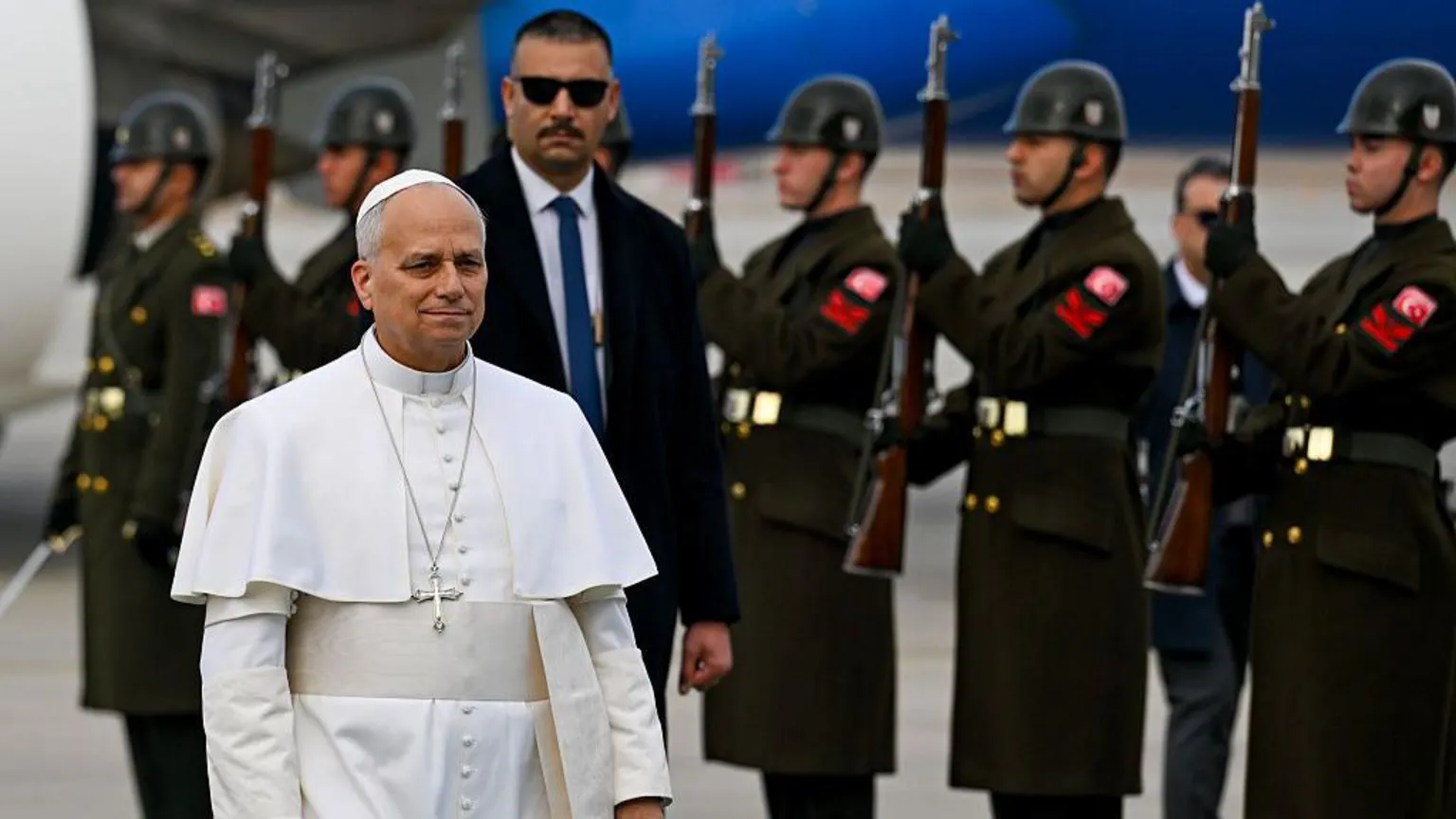
Pope Leo XIV has said he has “no fear” of the Donald Trump administration, insisting he will continue speaking out against war despite sharp criticism from the US leader.
Speaking to reporters aboard his flight to Algeria at the start of an 11-day Africa tour, the pontiff dismissed calls to engage in a public dispute with Trump, emphasizing that his role is not political but moral.
“I have no fear of the Trump administration, or speaking out loudly of the message of the gospel… what the Church is here to do,” he said, adding, “I don’t want to get into a debate with [Trump].”
The remarks followed an unusually direct and personal attack from Trump, who accused the Pope of being “WEAK on Crime and terrible for Foreign Policy” in a social media post, later telling reporters he was “not a big fan.”
The US president also criticized the pontiff as “weak on nuclear weapons” and claimed, without evidence, that his election was politically motivated, saying, “If I wasn’t in the White House, Leo wouldn’t be in the Vatican.”
The clash stems largely from the Pope’s outspoken stance on the Iran conflict. He has repeatedly condemned escalating rhetoric, describing Trump’s earlier threat that “a whole civilisation will die tonight” as “truly unacceptable,” and urging leaders to find an “off-ramp” to de-escalate tensions.
Despite the criticism, Pope Leo maintained his focus on the human cost of global conflicts.
“Too many people are suffering in the world today. Too many innocent people are being killed,” he said. “And I think someone has to stand up and say: there’s a better way to do this.”
Direct exchanges between a pope and a sitting US president are rare, making the episode particularly striking.
Analysts noted the sharp tone of Trump’s comments, with scholar Massimo Faggioli observing that “not even Hitler or Mussolini attacked the Pope so directly and publicly.”
The dispute also reflects broader differences between the two figures. Pope Leo has consistently called for peace in global conflicts and criticized hardline policies, including immigration measures he once described as involving the “inhuman treatment of immigrants.” His approach aligns with the humanitarian legacy of his predecessor, Pope Francis.
As he continues his Africa tour, including stops in Algeria, Cameroon, Angola and Equatorial Guinea, the Pope signaled he would remain focused on promoting dialogue and coexistence, even amid political criticism from world leaders.































Comments
Sign in with Google to comment, reply, and like comments.
Continue with Google