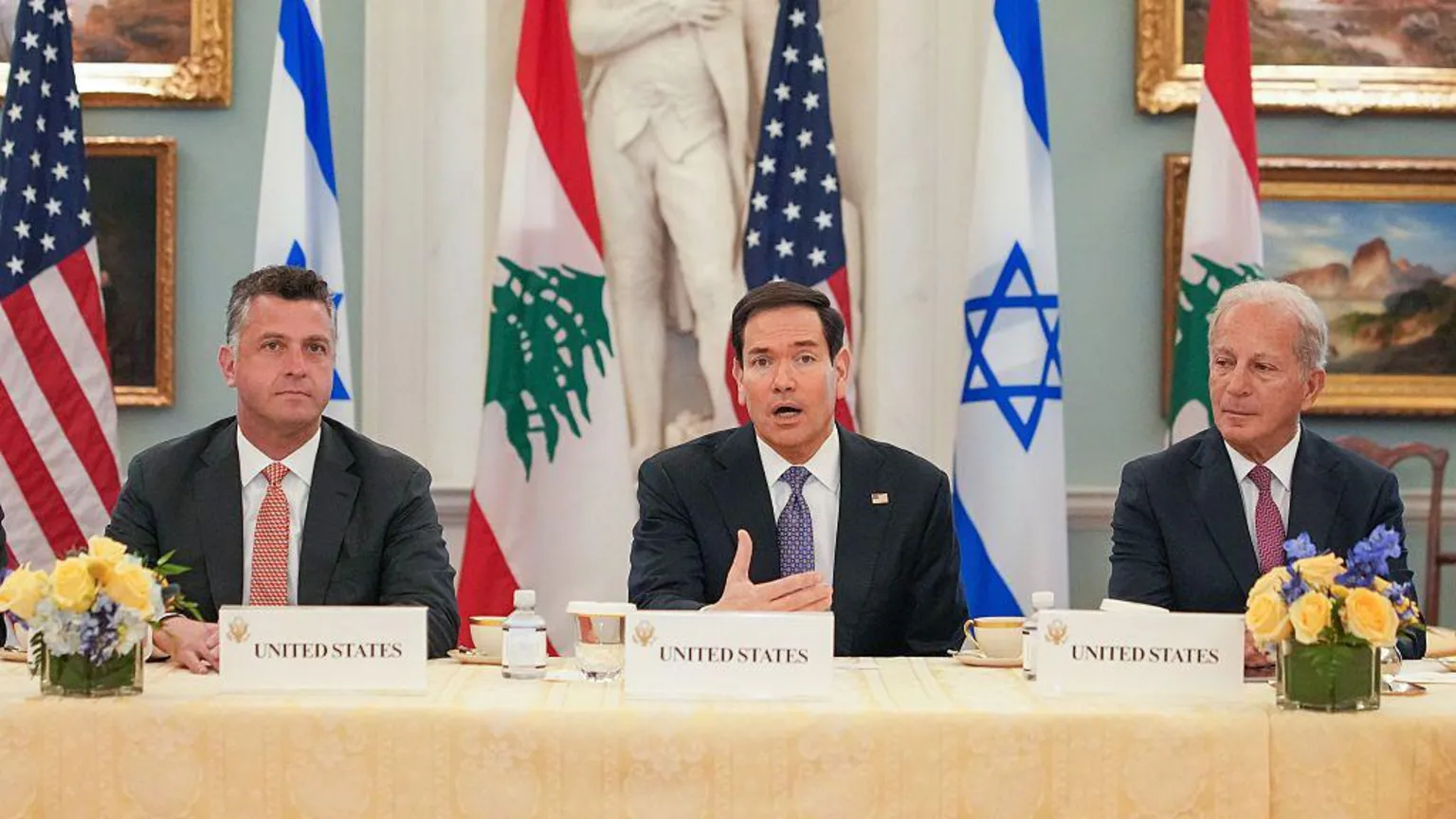
Lebanon and Israel have taken part in rare direct discussions in Washington, marking the first known high-level engagement between the two sides since 1993, in a move aimed at calming escalating fighting involving Israel and the Iran-backed Hezbollah group.
The talks, which were mediated by US Secretary of State Marco Rubio on Tuesday, come amid continuing hostilities along the Israel–Lebanon frontier and growing regional tension. The United States described the meeting as a step with the aim of reducing conflict and creating a path toward further engagement.
A US statement said both sides agreed to begin direct negotiations, with the timing and venue still to be decided. Israel used the meeting to restate its position that all armed non-state groups should be disarmed, referring to Hezbollah. Lebanon, on its part, pushed for a ceasefire and urgent steps to deal with the worsening humanitarian situation in the country.
Over 2,000 people have been killed since Israeli military operations in Lebanon began on 2 March, shortly after US and Israeli strikes began in Iran. The violence has also displaced about one million people, adding pressure on already strained services and communities.
While the Washington talks were ongoing, Hezbollah said it had carried out at least 24 attacks targeting Israel and Israeli troops operating inside Lebanon. In response, drone and rocket alarms were reported across northern Israel throughout the day, reflecting the intensity of the cross-border fighting.
Israel says its military actions in Lebanon are focused on dismantling Hezbollah, a group it has also clashed with in 2023 and 2024 during the wider war linked to Gaza. The US State Department spokesperson Tommy Pigott said after the meeting that both Israel and Lebanon had agreed to work towards reducing Hezbollah’s influence.
He also noted that the Lebanese side called for a ceasefire and concrete measures to address and ease the severe humanitarian crisis in the country. The US, meanwhile, reiterated its position supporting Israel’s right to defend itself from Hezbollah attacks.
Speaking before the talks, Rubio said the engagement was part of an ongoing effort rather than a one-off event.
"This will take time, but we believe it is worth this endeavour," he said. "It's a historic gathering that we hope to build on."
Lebanese President Joseph Aoun expressed hope that the discussions would bring relief to citizens affected by the conflict, saying he hoped they would "mark the beginning of the end of the suffering of the Lebanese people in general, and those in the south in particular".
He also stated that the "only solution" to the conflict would be in the Lebanese armed forces "being solely responsible for the security of the area".
However, Lebanon’s ability to confront Hezbollah remains limited. The group maintains strong influence in parts of the country, especially in the south and in Beirut’s southern suburbs, and also holds representation within the Lebanese government through cabinet positions.
Ahead of the talks, a senior Hezbollah political council member, Wafiq Safa, rejected any agreement reached without the group’s involvement, saying, "We are not bound by what they agreed to,".
Hezbollah, formed in 1982, remains a powerful armed and political force in Lebanon, with deep roots in the country’s Shia communities. Its role has become more contentious since it moved to take part in the wider conflict involving Israel and Iran, its main backer.
Separately, discussions between US and Iranian representatives held in Pakistan reportedly included calls for Lebanon to be part of any ceasefire arrangement. However, both the United States and Israel have maintained that Lebanon would not be included in such terms.
A US State Department official said the Israel–Lebanon talks had been planned about a month earlier, before the Iran-linked discussions in Islamabad were arranged, indicating the Washington meeting was not a direct outcome of those separate negotiations.































Comments
Sign in with Google to comment, reply, and like comments.
Continue with Google