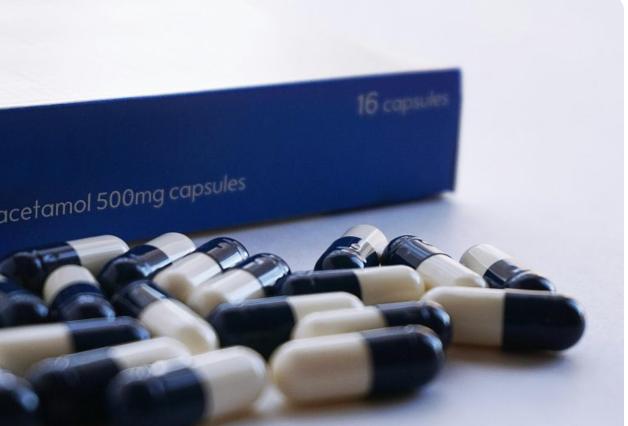
Kenya’s import expenditure on medicines has fallen sharply as the country increasingly sources more cost-effective pharmaceutical products.
From January to September 2025, spending on medicinal and pharmaceutical products totaled Sh62.1 billion, down from Sh79.6 billion over the same period in 2024, a reduction of Sh17.5 billion, according to the Kenya National Bureau of Statistics (KNBS).
This includes finished medicines ready for use, prescription and over-the-counter drugs, vaccines, generic and branded medications, and medical supplies such as syringes and diagnostic kits.
Despite the decline in spending, the volume of imports rose slightly by 1.2 percent, from 29,324.5 tonnes to 29,664.7 tonnes. This translates to roughly 23 percent lower costs per tonne, suggesting a deliberate move towards cheaper alternatives.
The shift is particularly evident in the third quarter of 2025, when spending hit Sh19.6 billion—the lowest quarterly figure ever recorded—a 32.1 percent drop from Sh28.9 billion in the same period a year earlier.
During the same quarter, import volumes climbed to 12,239.7 tonnes, the highest quarterly level and a 21.6 percent rise from the previous year. Analysts attribute the lower costs to a move towards generics, bulk purchasing agreements, and government efforts like the Universal Health Coverage program that aim to reduce health expenditures.
The pattern seen in early 2025 was anticipated in late 2024. In the fourth quarter of that year, pharmaceutical imports fell sharply to Sh20.3 billion, a 29.8 percent decline from the preceding quarter, establishing a downward trend that has continued into 2025.
Kenya remains a major player in pharmaceutical exports despite its reliance on imports. The country is the third-largest exporter in Africa and the leading exporter within the Common Market for Eastern and Southern Africa (Comesa).
In 2024, exports reached Sh19.2 billion and stood at Sh12.9 billion in the first nine months of 2025, with Uganda, Ethiopia, Malawi, and Rwanda being the main markets. Nonetheless, local manufacturers supply only around 30 percent of domestic demand, leaving about 70 percent of medicines consumed in Kenya imported.
A 2024 industry report notes, “With over 30 pharmaceutical manufacturing plants, Kenya’s pharmaceutical industry is the largest in the Common Market for the Eastern and Southern Africa region. However, insufficient drugs are manufactured in Kenya to meet domestic needs. As a result, approximately 70 percent of locally used drugs are imported.”
Health Cabinet Secretary Aden Duale highlighted efforts to expand domestic production during a visit to India: “Our priority is to advance technology transfer, industrial collaboration, and sustainable systems strengthening, fully aligned with the President’s role as African Union Champion for Local Manufacturing —to reduce dependency and enhance Africa’s capacity to produce essential health commodities.”
The government targets increasing local pharmaceutical production by at least 60 percent by 2026.































Comments
Sign in with Google to comment, reply, and like comments.
Continue with Google