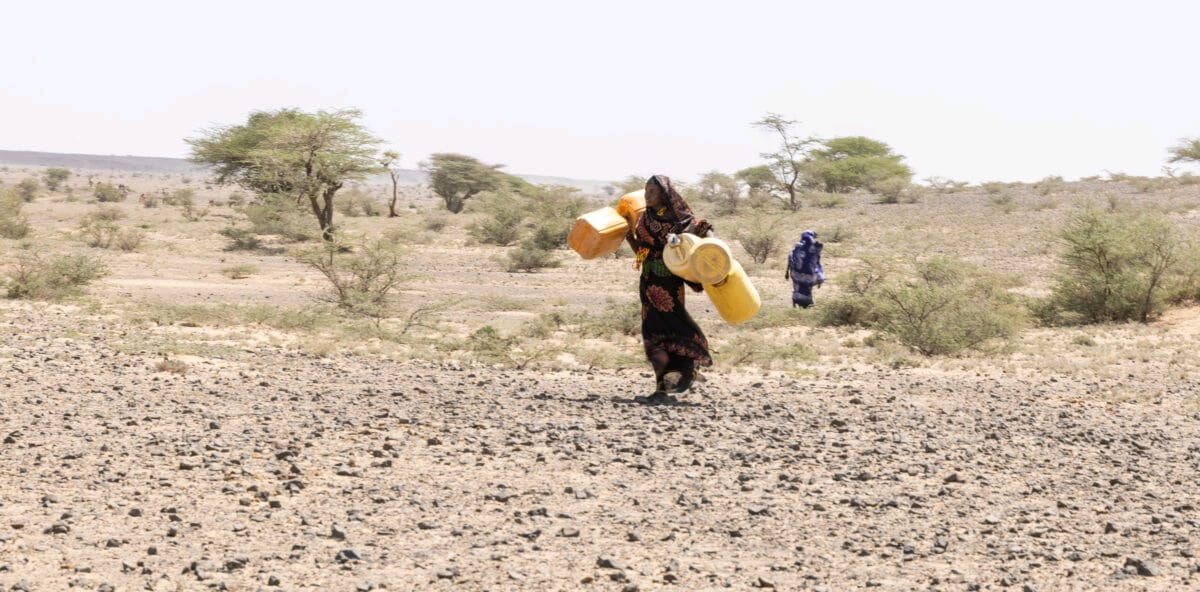
Severe drought continues to worsen across many parts of Kenya, leaving millions in dire need of assistance. Over two million people are facing crisis-level food insecurity through early 2026, according to the Kenya Red Cross.
Coupled with water scarcity and widespread livestock deaths, the risks of disease outbreaks and malnutrition continue to rise.
For 55-year-old herder Ibrahim Hassan, the loss of his livestock is more than a loss of livelihood; it is deeply personal.
Standing at his makeshift nomadic house on the outskirts of Mandera, Hassan says he has lost more than 70 animals in just three weeks.
“I was left with only eight goats. The rest died from disease and hunger. My children depend on this,” he said quietly during a phone interview.
The drought is hitting hardest in counties such as Turkana, Samburu, Garissa, Isiolo, Marsabit (North Horr, Laisamis), West Pokot (East), and Baringo (Tiaty), which are at a critical phase of drought conditions.
Four other counties—Wajir, Tana River, West Pokot, and Marsabit (Saku)—are entering severe drought conditions that continue to worsen.
Asha Abdullahi, a mother of six, said her family now survives on one meal a day after losing most of their cattle.
“When the cows died, our milk stopped. We have no income. We are borrowing food from relatives,” she explained.
Veterinary officer Dr. Issa Adan said weakened animals are succumbing to infections linked to malnutrition and prolonged dry conditions.
“The drought has reduced pasture drastically. Animals are weak, and diseases are spreading fast,” he said.
Dr. Adan warned that more herds could be lost without urgent intervention.
Mzee Ahmed Omar said some families have begun moving toward the border with Ethiopia in search of water and grazing land, while others remain stranded with no resources to migrate.
“We are calling for emergency vaccination programs, water trucking, and food aid to cushion the worst,” he added.






























Comments
Sign in with Google to comment, reply, and like comments.
Continue with Google