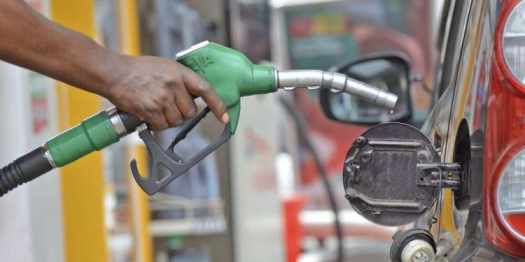
Retail fuel prices in Kenya will remain steady for the November-December period, the Energy and Petroleum Regulatory Authority (Epra) has said. This is the third review in a row this year in which the regulator opted to maintain the current rates, offering temporary relief to consumers and businesses.
In Nairobi, Super Petrol will continue to retail at Sh184.52 per litre, Diesel at Sh171.47, and Kerosene at Sh154.78.
The prices, which take effect from midnight, include the 16 per cent Value Added Tax, in line with the Finance Act 2023, the Tax Laws (Amendment) Act 2024, and updated excise duty rates as per Legal Notice No. 194 of 2020.
"Epra has calculated the maximum retail prices of petroleum products which will be in force for the next 30 days. During this period, the maximum allowed pump prices for Super Petrol, Diesel and Kerosene remain unchanged,” said Epra Director General Daniel Kiptoo.
Kenya relies entirely on imported refined petroleum, and domestic prices are influenced by global market rates and the exchange rate between the shilling and the US dollar.
Kiptoo explained that the stability in retail prices is due to minimal changes in the average landed cost of imported fuel.
“The average landed cost of imported Super Petrol decreased slightly by 0.18 per cent, from US$620.24 per cubic metre in September to US$619.14 per cubic metre in October.
Diesel increased by 1.81 per cent from US$623.75 to US$635.05 per cubic metre, while Kerosene rose by 0.71 per cent from US$627.72 to US$632.16 per cubic metre over the same period,” he noted.
The regulator said the pricing framework ensures fairness and transparency, protecting both consumers and transport operators. The Petroleum Pricing Regulations cap retail prices of petroleum products already in the country, allowing importers to recover legitimate costs while keeping fuel affordable.
"Epra wishes to assure the public of its continued commitment to the observance of fair competition and protection of the interests of both consumers and investors in the energy and petroleum sectors," Kiptoo added.
For households, unchanged fuel costs mean no immediate increase in transport or cooking expenses. Businesses that rely on fuel, including transport, logistics, and manufacturing, can better plan operational costs. Economically, stable fuel prices help control inflation, since fuel directly affects the price of goods and services.
However, Epra warned that the current stability is temporary and does not remove the risk of future fluctuations in global energy markets.































Comments
Sign in with Google to comment, reply, and like comments.
Continue with Google