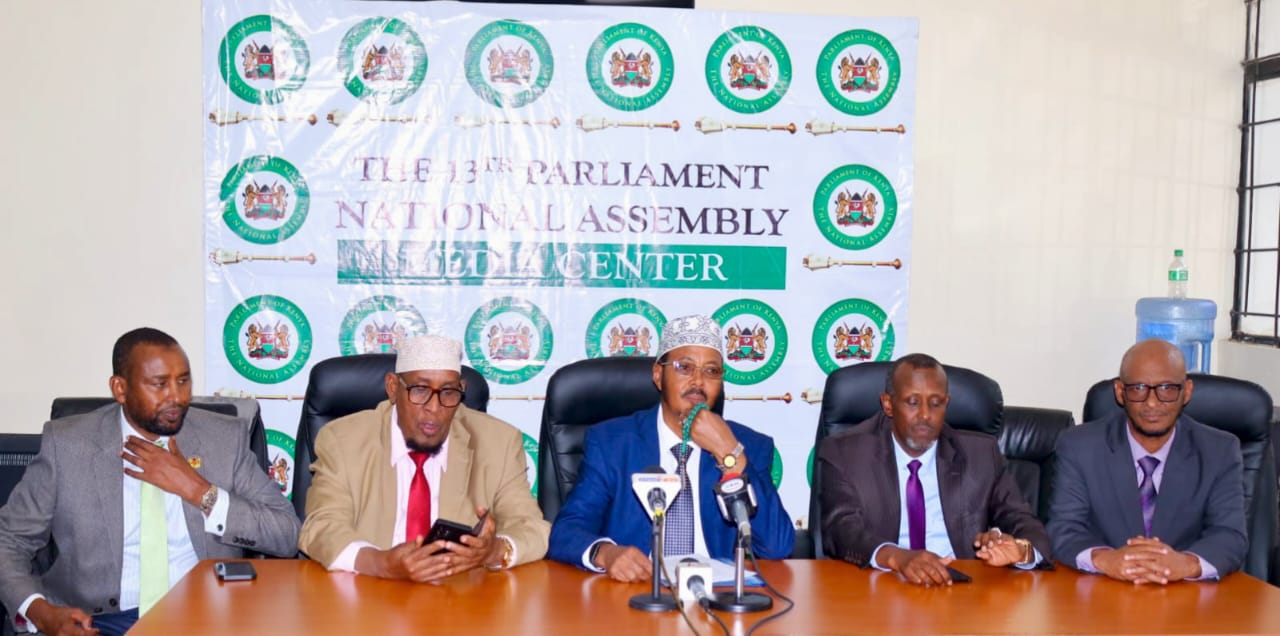
Growing concern over deepening drought conditions in North Eastern has pushed a section of lawmakers to demand quick intervention from the national government. They say families are sliding into severe food stress and warn that the dry spell is now threatening both lives and livestock.
Eldas MP Aden Keynan, who spoke alongside several MPs from the region, urged the government to declare the situation a national disaster, noting that about 2.1 million people are in need of support. He said communities are exhausting their food stocks and struggling to cope with the rising cost of basic supplies.
During a briefing in Parliament, Keynan said, "We have identified several issues; the issue of food security, household food stocks are getting depleted much earlier than usual, forcing families now to rely on increasing market purchases for a stable food. Nomadic families are seriously affected, facing a serious food crisis."
He added that livestock losses were rising as pasture and water sources shrink. "Serious livestock losses and scarcity of pasture and water are significantly affecting livestock productivity, with diseases spreading among herds, weakening the livelihood of pastoralists."
Keynan called for a proper plan to guide response efforts, saying, "There is natural destocking, and we appeal that the situation requires a serious intervention. We've been complaining all the time. The government develops a proper program to resolve the conditions."
Nominated MP Suleka Harun said women and children are the ones enduring the hardest conditions as they trek long distances searching for water and food.
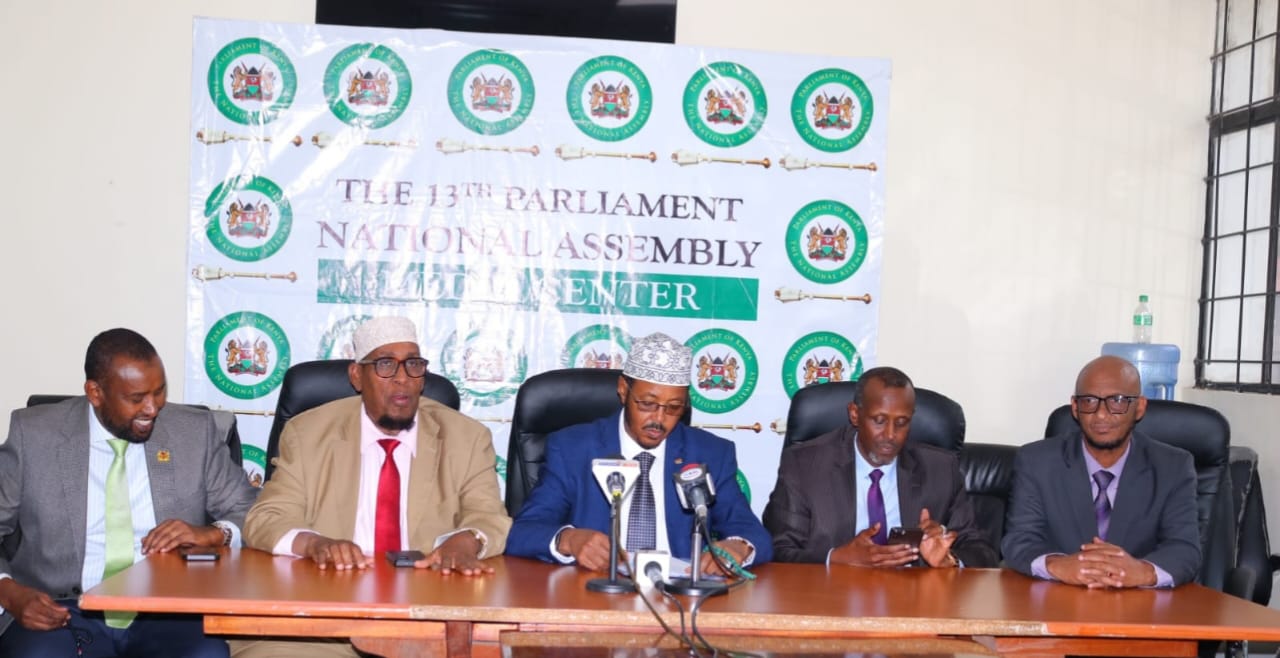 North Eastern MPs addressing the press on the current drought situation, where they were led by Aldas Constituency MP, Adan Keynan on December 3, 2025.PHOTO/David Bogonko Nyokang'i
"The fact remains: the situation is dire. Drought situations we've experienced in recent times and loss of rain, especially for three consecutive seasons, are not the norm. Women and children are the most vulnerable in society, tracking long distances to look for water, pastures, and food. We want President Ruto to declare the situation an emergency and a national disaster to respond to the situation immediately."
She added, "Mr. President, as you're taking the country to the first world, remember, North Eastern, we are surviving; we have nothing to eat; we're just serving to live."
Wajir South MP Mohamed Adow warned that the failure of short rains had pushed pastoral families into desperate movement in search of pasture.
"The short rains have failed and are spelling doom for hundreds of thousands of people living in the region. Pastoralists are on the move. The distance between water and pastures is ever-increasing. Mandera has already reported the first death; we are going to see a multiplication of that in many parts of the region if we don't act now and very fast."
Adow noted that both county and national governments must respond, saying, "The owners are in the national government and also in the county governments, who have a front-row seat to the suffering of the people they are going through now. My appeal is to both national and county governments, who have already witnessed the suffering of the people they are going through, to act and take the next necessary step to help the people."
Wajir North MP Ibrahim Saney pressed for long-term planning rather than routine emergency reactions.
"We don't need an emergency; we need the government to put itself in order. It's right, we are talking about pastoralism and pastoralists. The mainstay of quite a multitude of Kenyans who are citizens. We need the government to address itself rightfully. We can't always cry about drought now, and tomorrow is flooding. A disaster after another. Lack of preparedness—why do we prepare policies and not implement them?"
Mandera South MP Abdul Haro said drought has become a continuous cycle for communities in the North.
"The people of Northern Kenya are either in the middle of a drought, or are preparing to get into one, or are working to get out of one. That's the cycling nature of the droughts we are dealing with in that part of the world. We are protecting the livelihoods, and at the same time, we want to save lives because if the livelihood is gone, the next in line are the lives of people. After all, lives depend on the livestock as part of their livelihood."
Haro said the crisis could expand beyond the region, adding, "The impact will not only be worse for the people of the North Eastern region, but it will also be a national economic disaster. We don't need to be here every year to lament about the same situation; we want a permanent solution to be put in place. The megadams that have been constructed should begin operations as soon as possible."
Banisa’s new MP, delivering his first remarks in Parliament, said the situation is worsening.
"Drought has reached a new level in our area. The situation is tougher. If you visit the area, which is hot and dry, we urge the administration to put an urgent relief measure in place to save lives."
Earlier, Mandera Governor Mohamed Adan Khalif raised similar concerns, saying families now depend on overstretched boreholes after water pans dried up. He appealed for rapid help to prevent a deeper crisis.































Comments
Sign in with Google to comment, reply, and like comments.
Continue with Google