The National Authority for the Campaign Against Alcohol and Drug Abuse (NACADA) has welcomed President William Ruto’s New Year address, saying it reinforces the government’s commitment to tackling alcohol and substance abuse as a major public health, security, and socio-economic challenge.
In a statement dated January 1, 2026, NACADA said the President’s message “clearly underscores the Government’s commitment to addressing alcohol and substance abuse as a critical national issue,” noting that the problem continues to have far-reaching effects on public health, national security, productivity, and social cohesion.
The authority said the New Year address reaffirmed the government’s resolve to confront alcohol and drug abuse due to its growing impact on Kenyan society.
“The President’s New Year’s message reaffirms the Government’s resolve to confront alcohol and drug abuse due to its impact on public health, national security, productivity, and social cohesion,” the statement read in part.
NACADA said its board fully aligns with the national direction outlined by the President and reiterated its commitment to ensuring that Kenya becomes “a nation free from the harms of alcohol and drug abuse.” The authority pledged to play a central role in translating the President’s call into concrete action across the country.
According to the statement, NACADA will strengthen its operational and governance frameworks in line with the concerns raised in the President’s address, while leveraging enhanced multi-agency cooperation.
“The NACADA Board will strengthen operational and governance frameworks in line with the President’s address and expressed concerns, while leveraging enhanced multi-agency cooperation to reinforce prevention, enforcement, and public education interventions,” it said.
The authority emphasised that stronger policy measures, coordinated action, and sustained collaboration across government agencies and stakeholders will be key to winning the fight against alcohol and drug abuse.
“Through stronger policy measures, coordinated action, and sustained collaboration across government agencies and stakeholders, NACADA remains resolute in safeguarding the well-being of all Kenyans,” the statement added.
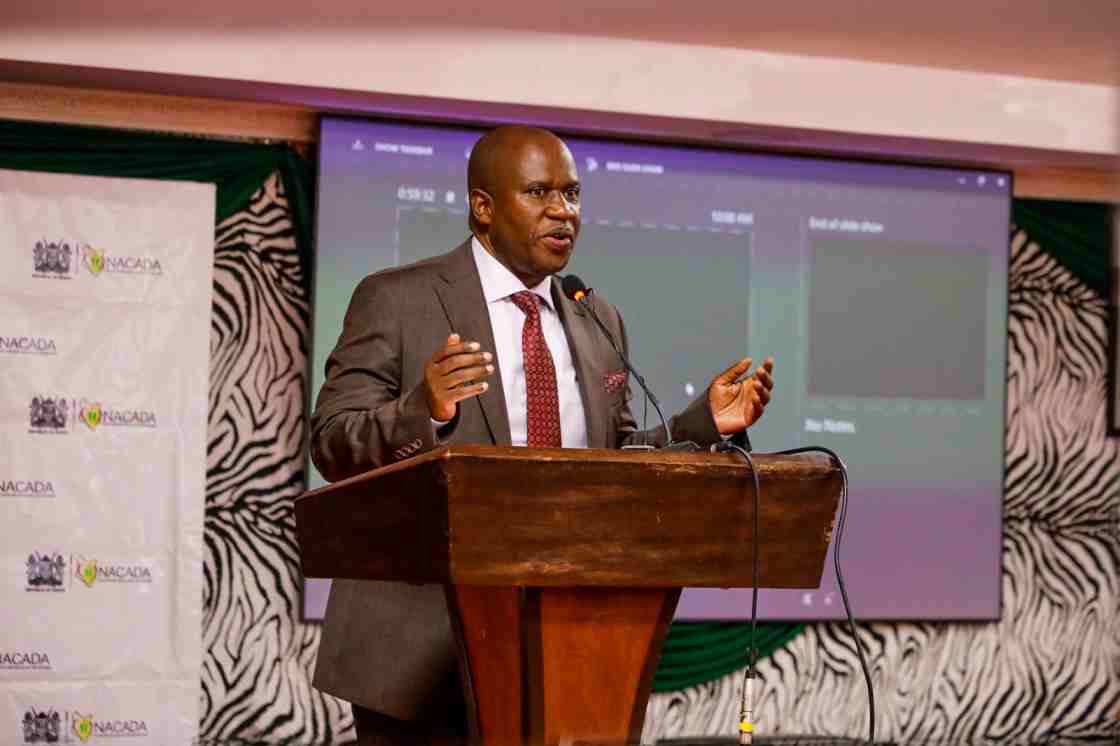
NACADA Board Chair Stephen K. Mairori said the authority appreciates the President’s leadership and goodwill in addressing the challenge.
“We appreciate His Excellency the President’s leadership and goodwill in the fight against alcohol and drug abuse in the country and commit our unwavering commitment to the realization of a healthy nation,” he said.
Speaking during a New Year address at Eldoret State Lodge on Wednesday, December 31, the President highlighted that the crisis disproportionately affects men and young adults, with one in every three men and one in five young adults aged 25 to 35 using drugs or abusing alcohol.
“Over 1.5 million young Kenyans are being pulled away from opportunity into dependency,” Ruto said, stressing that alcohol remains the most widely used substance, with more than 3.2 million current users.
2025 data by the National Authority for the Campaign Against Alcohol and Drug Abuse (Nacada) highlights a growing drug abuse crisis in Kenya, particularly among university students and the young working class.
Nationally, approximately 4.7 million Kenyans aged 15–65—about one in six—use at least one substance, with alcohol leading at 3.2 million users, followed by tobacco at 2.3 million, and khat (miraa/muguka).
The most affected group is youth aged 25–35, with over 1.5 million users.
Ruto said Kenya’s economic growth and security are at risk if millions of citizens remain trapped in addiction, particularly young people who form the country’s most productive population.
“Kenya cannot grow. Kenya cannot compete or remain secure when millions are trapped in addiction. This crisis demands decisive national action,” he said.