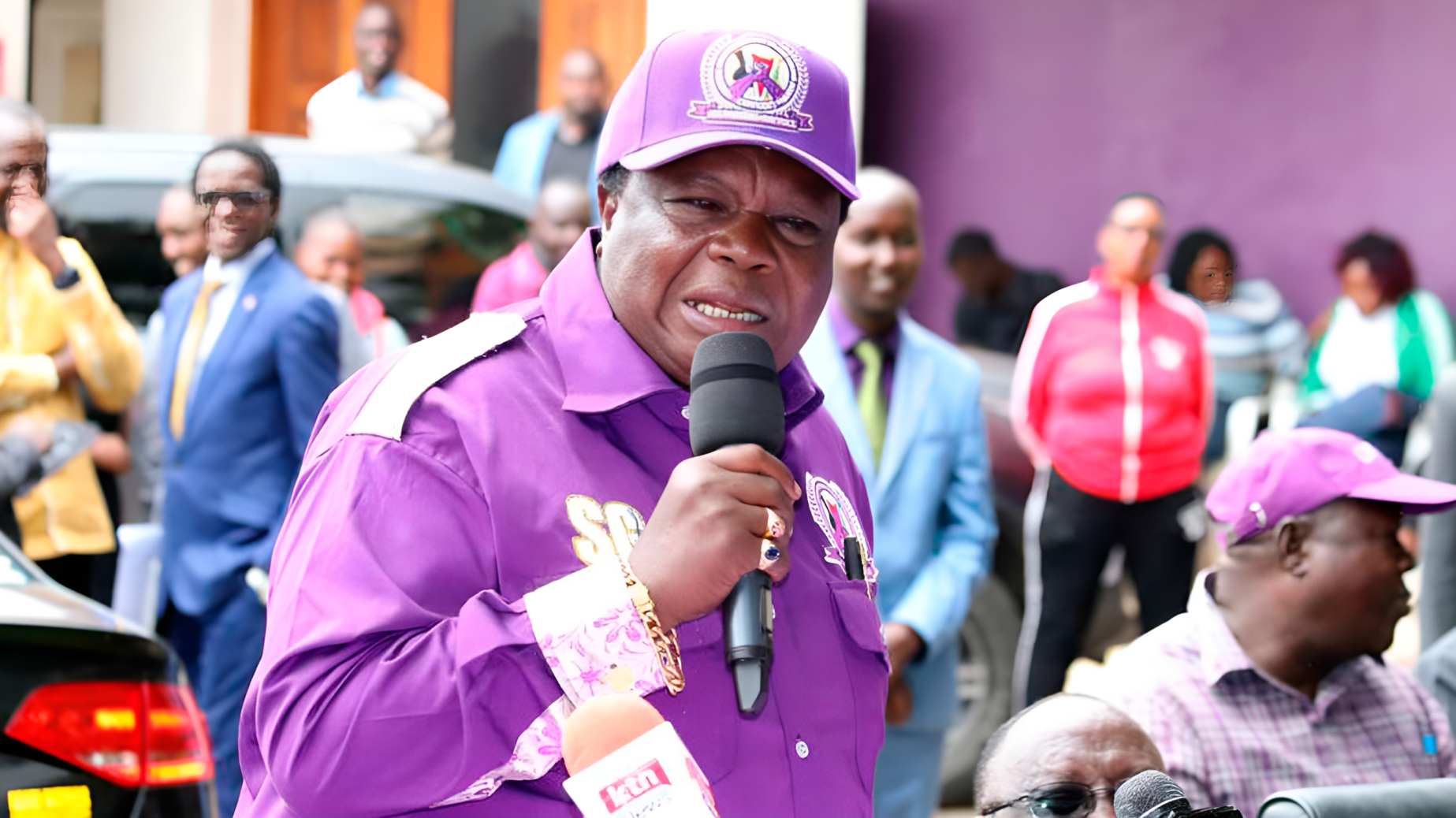
The Central Organization of Trade Unions (Kenya) has expressed support for the revised regulations governing school drama festivals, saying the new rules are meant to shield learners from political influence while still allowing them to express their creativity.
In a statement issued on April 7, 2026, the trade union said the updated Kenya National Drama and Film Festival Performance Guidelines are a necessary step to ensure that school platforms are not used for political messaging or influence.
COTU (K) noted that it had taken into account concerns raised by members over the increasing involvement of political actors in school productions, saying the trend risks exposing students to manipulation.
“As a responsible trade union movement, we have taken note that a majority of our members have raised issues around the use and misuse of their children by some political actors who seek to achieve political scores through these innocent children,” the statement read.
The union’s remarks come at a time when the 2026 National Drama Festival has attracted public attention following disputes around certain school performances, including a production from Moi High School Mbiruri that reportedly referenced Singapore and sparked debate over whether it carried political meaning.
Government officials, however, dismissed claims that the play was censored, explaining that it was not selected for nationals based on adjudication results rather than its content.
The matter has added to ongoing discussions around school drama festivals, following earlier controversy in 2025 linked to a play titled Echoes of War by Butere Girls High School, which also drew national debate over its themes.
In response to such incidents, the revised 2026 guidelines introduced tighter restrictions, including a general ban on political content in school performances. The rules cover both direct political references and symbolic messaging related to governments or public policies.
Festival organisers have denied claims of censorship, maintaining that the guidelines are intended to preserve the academic and developmental purpose of school drama rather than limit creativity.
COTU said the changes do not undermine the role of the arts in education, but instead aim to protect learners from external pressures that may distort their participation in such activities.
“In supporting this move, we do not negate the critical role that creative arts play in nurturing talent, critical thinking, and self-expression among young people, but simply affirm that such platforms must not be abused to advance political agendas at the expense of the welfare and development of learners,” COTU said.
The union further said the introduction of clearer rules to prevent political messaging, propaganda, and ridicule of public institutions within school productions is timely, given recent developments in the festival.
“The introduction of clear guidelines to curb political messaging, propaganda, and the ridicule of public institutions within school performances is both timely and necessary,” the statement added.
COTU also raised concern over what it described as the growing involvement of external individuals in shaping the content of school plays, warning that such influence may expose learners to manipulation.
“We are firmly opposed to the growing trend where learners are drawn into politically charged narratives, often crafted and driven by external actors, thereby exposing them to manipulation and exploitation,” the organization said.
The union cautioned that allowing political themes in school drama could shift the focus of educational institutions away from learning, turning them into spaces of political competition.
“Such practices risk turning schools into arenas of political contestation, undermining their core mandate as institutions of learning,” the statement noted.
It further warned that some themes used in school plays have become divisive and disruptive, adding that they may affect learners’ emotional well-being and academic progress.
“We are particularly concerned that some plays, over the years, have increasingly adopted themes that are divisive, deceptive, and disruptive, with little regard for the psychological well-being and academic progression of the learners involved,” it said.
COTU also rejected any attempt to position students as political actors through school performances.
“The attempt to transform students into political activists, under the guise of artistic expression, is both inappropriate and unacceptable,” the statement added.
The union called on teachers, parents, school administrators, and festival organisers to fully support and enforce the revised guidelines to ensure the integrity of school-based creative activities is maintained.
“As a workers' organization that strongly advocates for the protection of children's rights and the promotion of decent futures for all young people, COTU (K) calls upon all key players to fully support and implement these guidelines,” the statement concluded.
The statement was signed by COTU Secretary General Francis Atwoli.