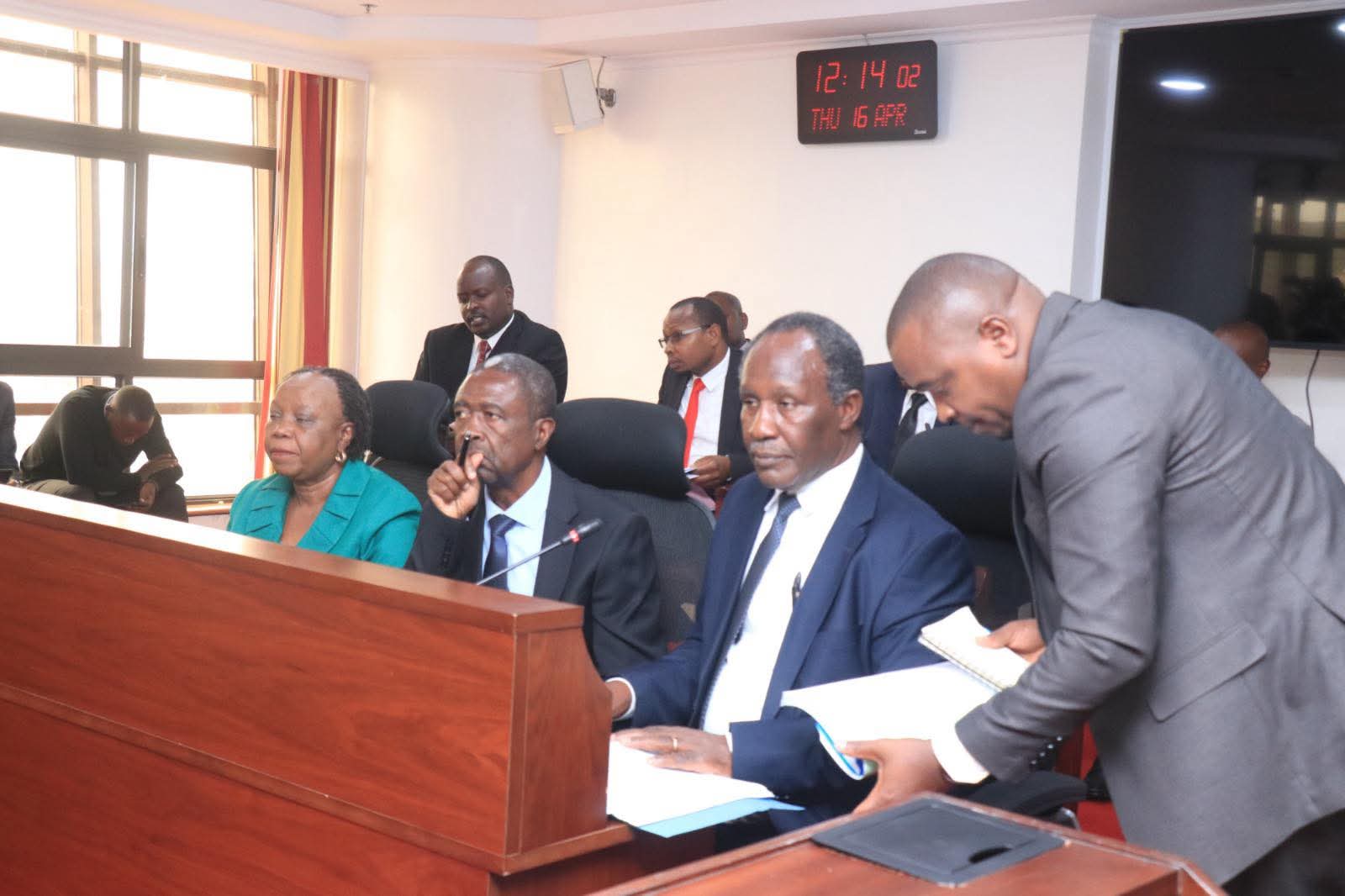
The National Assembly has raised fresh questions over how Mama Ngina University College and Kenyatta University handled a Sh2.7 million payment for legal services, with MPs faulting gaps in procurement records, unclear approvals, and inconsistencies flagged in audit findings.
The Public Investments Committee on Education and Governance spent another sitting on Thursday reviewing audit reports covering the 2022/2023 to 2024/2025 financial years, focusing on how external advocates were hired, instructed, and eventually paid despite missing key procurement documentation.
The Auditor-General noted that the legal services tied to the Environment and Land Court Petition No. E004 of 2022 were not included in the approved procurement plan for the 2022/2023 financial year, raising concerns about compliance with public finance rules.
MPs were informed that Kenyatta University first engaged the law firm in April 2022, before the official handover of the university college to Mama Ngina University College Council in December that year.
At that stage, the college had no allocated budget for legal services, a situation that later raised questions on how the expenditure was validated and settled.
Kenyatta University officials led by Acting Vice Chancellor John Okumu told the committee that a budget adjustment was later approved by the college council in January 2023, and the procurement plan was updated to regularise the spending. They acknowledged there had been a lapse but said corrective steps were taken.
Even with that explanation, lawmakers demanded clearer records showing how the law firm was selected and contracted.
“We directed that documentation be provided on how the legal firm was onboarded, including advertisement, evaluation and the number of firms that applied and qualified. Was that documentation supplied?” Wamboka questioned.
Central Imenti Moses Kirima also challenged the absence of supporting records, saying the committee could not verify the payment without full documentation.
“We were told that the firm was among those pre-qualified, and that contractual documents existed. But without these, we cannot confirm how the Sh2.7 million was arrived at,” Kirima said, adding that the committee had also sought to hear directly from the advocate involved.
MPs further stressed that pre-qualification alone was not enough, insisting that a specific instruction must be issued before any legal work begins.
“You have pre-qualified law firms, but when a matter arises, you must issue a brief. Where is that brief?” Wamboka asked.
Kenyatta University maintained that a formal instruction letter was issued to the law firm and that a fee note was provided showing how the charges were calculated. The institution also relied on the Advocates Remuneration Order to justify the figures.
However, lawmakers remained unconvinced, especially on how responsibility shifted from Kenyatta University to Mama Ngina University College in settling the bill.
A representative of the law firm confirmed receipt of the Sh2.7 million from Mama Ngina University College, further deepening scrutiny on the relationship between the two institutions and the payment process.
The committee also questioned the timing of key documents, noting that the fee note was issued in July 2022, while a formal agreement between the college and the law firm was only signed in 2023.
“That arrangement cannot operate retrospectively. Something is not adding up,” Kirima said.
Additional concerns were raised on whether required approvals were obtained from the Attorney-General before engaging external counsel, and whether statutory deductions and tax obligations were properly handled.
John Okumu and other officials maintained that all relevant records existed and would be submitted for verification, while founding principal James Kung’u pointed to council minutes that he said captured oversight of the matter.
The committee said it would finalize its findings after reviewing all documents and evidence to be submitted.































Comments
Sign in with Google to comment, reply, and like comments.
Continue with Google