Audit exposes widening financial strain at TSC with Sh7.9 billion negative working capital
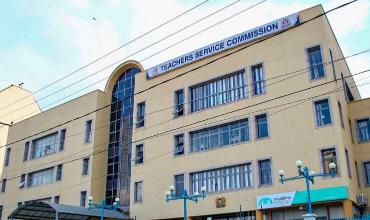
During the year under review, TSC reported a deficit of Sh4.38 billion, which pushed its total accumulated deficit to Sh7.34 billion. The audit further shows that at the time of review, current liabilities stood at Sh12.3 billion while current assets were Sh4.4 billion, leaving a negative working capital of Sh7.9 billion.
The Teachers Service Commission is under renewed scrutiny following findings that show its finances are under heavy strain, with liabilities far exceeding available resources and growing unpaid commitments raising concerns about its ability to operate smoothly.
A report by Auditor General Nancy Gathungu for the period ending June 30, 2025, indicates that the commission is unable to comfortably settle its short-term financial obligations, with doubts emerging over its overall financial health.
During the year under review, TSC reported a deficit of Sh4.38 billion, which pushed its total accumulated deficit to Sh7.34 billion. The audit further shows that at the time of review, current liabilities stood at Sh12.3 billion while current assets were Sh4.4 billion, leaving a negative working capital of Sh7.9 billion.
“This is indicative of the commission’s inability to meet its obligations as and when they fall due,” Gathungu said.
With more than 340,000 teachers under its management, the commission remains a key pillar in the education system, meaning any financial strain has a direct effect on salaries, benefits, and service delivery in schools across the country.
The audit also points to spending that went beyond approved limits. TSC is reported to have exceeded its recurrent budget by Sh4.48 billion during the period, contrary to the Public Finance Management Act. “Management has not provided an explanation for the over expenditure,” Gathungu said, raising concerns over financial controls.
Outstanding payments continue to pile up, with pending bills recorded at Sh12.3 billion. The report also highlights the presence of stale cheques and long-standing liabilities, warning that these could attract penalties, interest charges, or legal action.
Attention is also drawn to unpaid claims under the Workers’ Injury Benefits Act, where Sh186 million remains unsettled, some of it dating back more than two decades. “In the circumstances, long-outstanding and unpaid WIBA claims may expose the commission to legal cases and accumulation of interest or penalties,” the auditor warns.
The commission’s medical insurance programme for teachers, valued at Sh53.58 billion over three years, also raises questions. Although it is meant to serve teachers and their dependants, the audit notes that most government hospitals were not included among service providers, without any stated reason.
Teachers have also faced delays in accessing treatment due to lengthy approval procedures, forcing some to pay for services out of pocket. “Management did not provide explanations for the exclusions or the criteria applied,” Gathungu stated.
Further concerns arise from the absence of actuarial reports to evaluate whether the premiums paid match the risks covered. “The absence of these reports undermines the commission’s ability to assess the adequacy of premiums,” the auditor noted.
The audit additionally highlights weaknesses in payroll management, where seven individuals were found on the payroll but could not be matched with records in the official teachers’ database, raising the possibility of irregular entries. “The absence of the teachers from the official master data undermines the reliability of personnel management systems and increases the risk of financial loss through irregular or fraudulent payments,” the report reads.
At the same time, 6,129 teachers were reported to be earning less than one-third of their basic salary after deductions, pointing to further payroll and deduction issues.
Operational challenges were also identified in schools, where 199 institutions, including 120 primary and 79 secondary schools, were found to be operating without substantive administrators, contrary to TSC requirements.
The lack of headteachers and principals in these schools could affect leadership, discipline, and day-to-day management. “No explanation was provided on how the commission addressed the gap,” the auditor noted.




Comments
Sign in with Google to comment, reply, and like comments.
Continue with Google