MPs question Sh2.7 million legal payment at Mama Ngina University College
The audit report indicated that the institution could not properly justify the expenditure on legal services due to missing key requirements, including a procurement plan, a signed contract, and clearance from the Office of the Attorney General, all of which are expected in public sector engagements.
A parliamentary inquiry has put Mama Ngina University College under pressure after raising questions about how Sh2.7 million was paid out for legal services, with lawmakers and auditors pointing to gaps in procurement, documentation, and approval processes that should guide public spending.
The National Assembly’s Public Investments Committee on Governance and Education examined the matter while reviewing the Auditor-General’s report for the financial year ending June 2023, which highlighted irregularities linked to the payment and the process used to authorize it.
The audit report indicated that the institution could not properly justify the expenditure on legal services due to missing key requirements, including a procurement plan, a signed contract, and clearance from the Office of the Attorney General, all of which are expected in public sector engagements.
Further concerns were raised after it emerged that the legal case referenced to support the payment, Giciri Thuo & 160 others vs National Land Commission & 4 others, did not directly involve Mama Ngina University College as a party, casting doubt on the relevance of the expenditure to the institution’s operations.
“The accuracy, completeness and regularity of the contracted service amounting to Sh2.7 million could not be confirmed,” the Auditor-General noted, pointing to weaknesses in internal controls and financial management within the institution.
When he appeared before the committee at Parliament Buildings, founding Principal Prof. James Kung’u defended the arrangement, explaining that the law firm in question had already been engaged earlier through Kenyatta University during the period when Mama Ngina University College was still under its mentorship.
“By the time the University College was established, the lawyer had already been onboarded by Kenyatta University and was handling the land case. The arrangement simply continued,” said Prof. Kung’u.
Despite this explanation, members of the committee expressed dissatisfaction, arguing that the continuation of such an arrangement without formal procurement procedures and clear agreements did not meet the standards required for public institutions.
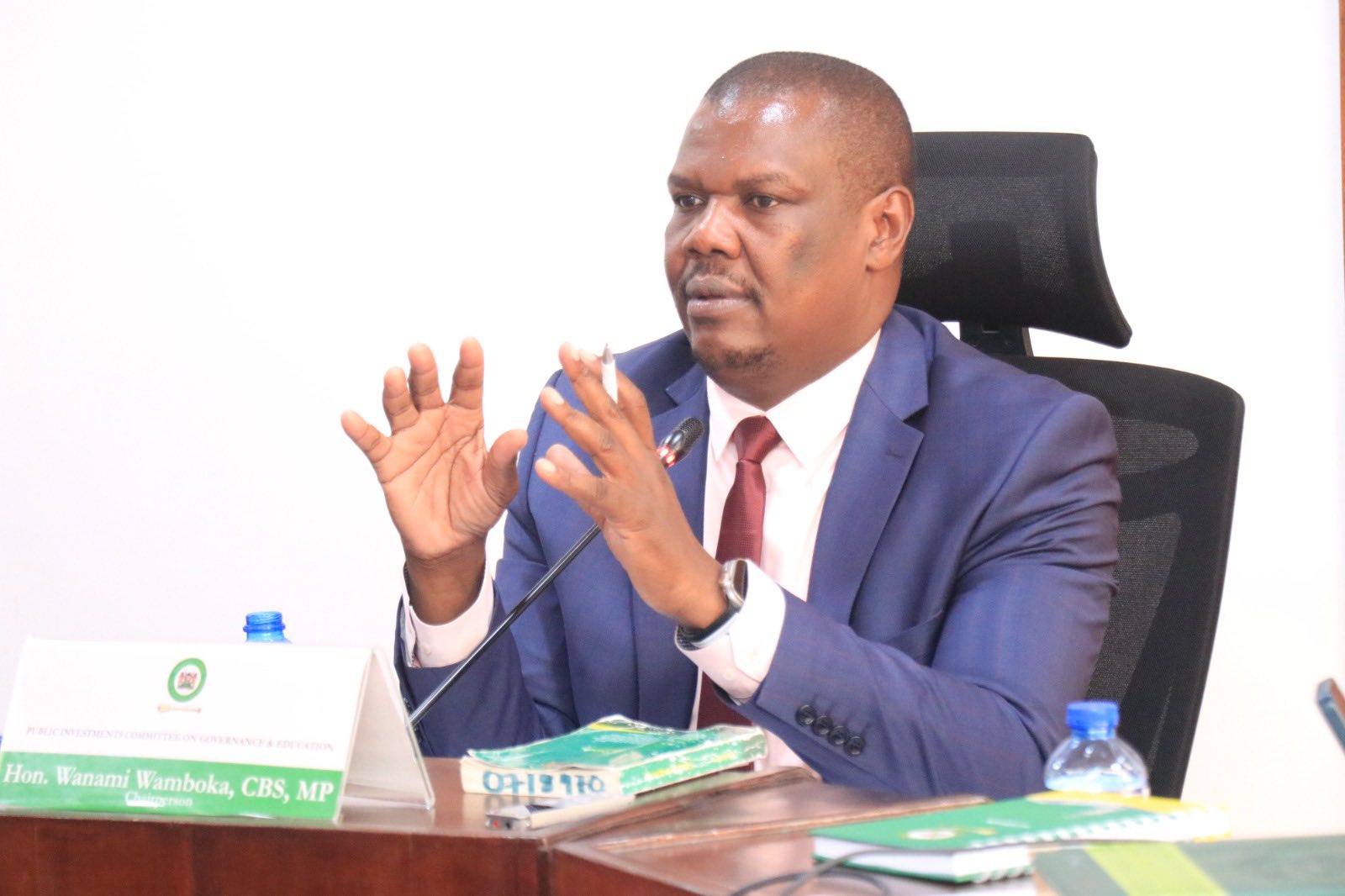
“How did you decide to onboard a law firm without a contract, without procurement, and without approval from the Attorney General?” posed MP Jack Wamboka Wanami.
Lawmakers also questioned whether the legal services had a direct and justifiable connection to Mama Ngina University College, stressing that public funds must only be used where a clear institutional interest is demonstrated.
Kenyatta University’s Acting Vice Chancellor Prof. John Okumu told the committee that the law firm had been engaged under Kenyatta University’s systems and was working on matters linked to land acquisition for the university college.
“Although the firm was engaged by Kenyatta University, the work related to land being acquired for Mama Ngina University College,” he explained.
Even with that clarification, MPs maintained that such engagements must be backed by specific instructions and formal contracts that clearly define the scope of work and responsibilities.
Central Imenti MP Hon. Moses Kirima Nguchine raised concerns over the absence of approval from the Attorney General, noting that such clearance is a requirement for government entities before entering into legal service agreements.
“If they did not obtain approval, they must explain why they proceeded. Otherwise, this amounts to an illegal payment,” said Hon. Nguchine.
The committee further pointed out inconsistencies in documents submitted by the institution, including the appearance of a contract between Mama Ngina University College and the law firm, which appeared to contradict earlier claims that no such agreement existed.
“It is very unfortunate that an institution of this stature can present documents that appear inconsistent with earlier submissions,” Hon. Nguchine added.
Hon. Wamboka also criticized the institution’s reliance on a prequalification framework, saying it did not meet the requirements of a specific procurement process tied to a defined assignment.
“This contract is not specific. It looks like a general prequalification document. Where are the instructions for the specific case? Where is the contract defining the exact duties?” he asked.
The committee clarified that while public institutions may draw from prequalified lists in certain situations, each engagement must be supported by clear instructions and proper documentation linking the service to a defined need.
“You cannot import a prequalified list wholesale. If you needed legal services, you should have issued specific instructions for that particular case,” Hon. Wamboka ruled.
Procurement Officer Zachary Kariuki told the committee that the institution relied on Kenyatta University’s prequalified list when engaging the law firm, a move that MPs said may not align with procurement regulations governing public entities.
The committee has since directed Mama Ngina University College to submit all relevant records, including procurement documents, contracts, and approvals, to allow for a full review and to establish whether the payment followed the law and who should be held responsible.




Comments
Sign in with Google to comment, reply, and like comments.
Continue with Google