Kenya’s debt use questioned as recurrent costs take bigger share
According to the 2026 Annual National Shadow Budget, the government borrowed a net Sh1.03 trillion in the 2024-25 financial year, but only Sh582.9 billion was channelled towards development expenditure. This gap has sparked concern over whether borrowing is delivering meaningful long-term benefits.
Kenya’s heavy borrowing is coming under fresh scrutiny after a new report revealed that a large portion of the funds is being used to run government operations instead of financing visible development, raising concerns over the value taxpayers are getting from rising public debt.
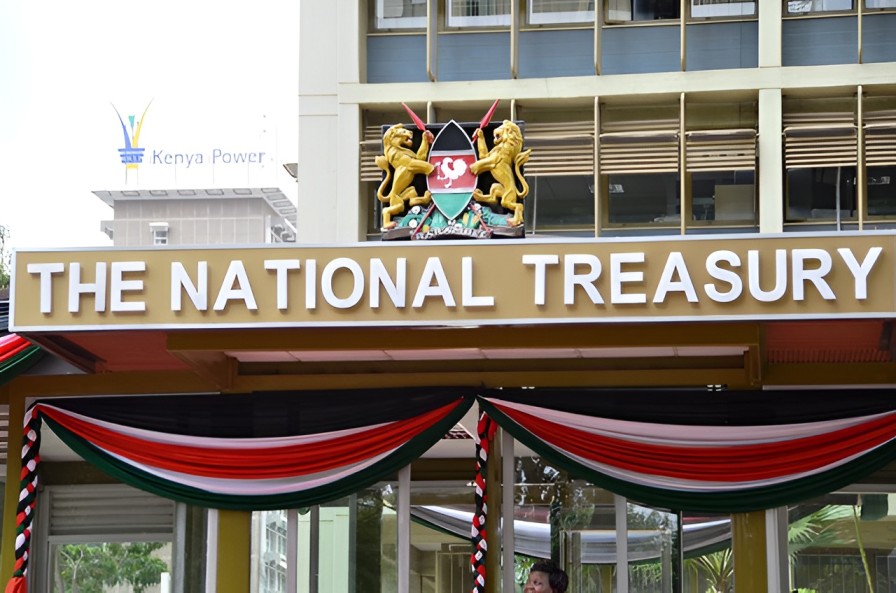
Fresh findings by the Institute of Public Finance show that less than half of the money borrowed in the last financial year went into projects such as infrastructure, health and education, pointing to a growing imbalance in how public resources are allocated.
According to the 2026 Annual National Shadow Budget, the government borrowed a net Sh1.03 trillion in the 2024-25 financial year, but only Sh582.9 billion was channelled towards development expenditure. This gap has sparked concern over whether borrowing is delivering meaningful long-term benefits.
The report indicates that about Sh451 billion of the borrowed funds may have been spent on recurrent needs, including salaries, administration and other routine expenses that do not create lasting assets.
The think tank paints a picture of a budget under pressure, where fixed costs are taking up most of the available resources. Interest payments alone are projected at Sh1.2 trillion, while wages and salaries for national government workers stand at Sh720.7 billion. County allocations are expected to reach Sh495.5 billion.
Together, these commitments total Sh2.42 trillion, taking up more than half of overall expenditure and leaving little room for new projects.
The Institute is now urging the National Treasury to tighten control over spending in the 2026-27 budget cycle by adopting realistic revenue targets, enforcing firm expenditure limits and reducing reliance on supplementary budgets.
“In social protection, for example, we have multiple bursary schemes operating in parallel, leading to duplication, leakages, and inequitable access.” said Ndirangu.
It also calls for a shift towards stronger domestic funding for health programmes, backed by a clear transition plan from donor support. In addition, the report recommends better coordination of social protection efforts, adoption of gender-responsive budgeting, and the inclusion of climate financing across all sectors.
The analysis warns that Kenya’s financial position is becoming more constrained as mandatory spending continues to rise, reducing flexibility in budget planning.
Daniel Ndirangu said the country is facing a growing mismatch between its policy goals and the resources available to implement them.
“Kenya’s challenge today is not a lack of policy ambition, but a growing disconnect between what we plan and what we can realistically finance,” said Daniel Ndirangu.
The report also raises concerns over optimistic economic projections. While Treasury expects the economy to grow by 5.3 per cent, the Institute warns that factors such as election-related spending, a narrow tax base and global uncertainties including tensions in the Middle East could slow growth.
It notes that the International Monetary Fund has already lowered Kenya’s 2026 growth forecast to 4.5 per cent, casting doubt on the government’s revenue expectations.
Tax collection targets are also flagged as ambitious. The report says the Sh2.77 trillion revenue goal for the 2026-27 financial year may be hard to achieve given recent trends and weak tax performance.
At the same time, social support programmes are struggling to meet demand. The Hunger Safety Net Programme reaches only a small portion of vulnerable households, while bursary schemes remain fragmented and poorly coordinated.
This has left many families facing delays in accessing school fee support, with some learners missing out while others benefit from overlapping allocations.
The report further points to climate financing as an area losing out due to limited budget space, as urgent spending needs continue to crowd out long-term investments.
It concludes that unless changes are made to how resources are managed, Kenya risks sustaining high borrowing levels without delivering tangible improvements in public services and infrastructure.


Comments
Sign in with Google to comment, reply, and like comments.
Continue with Google