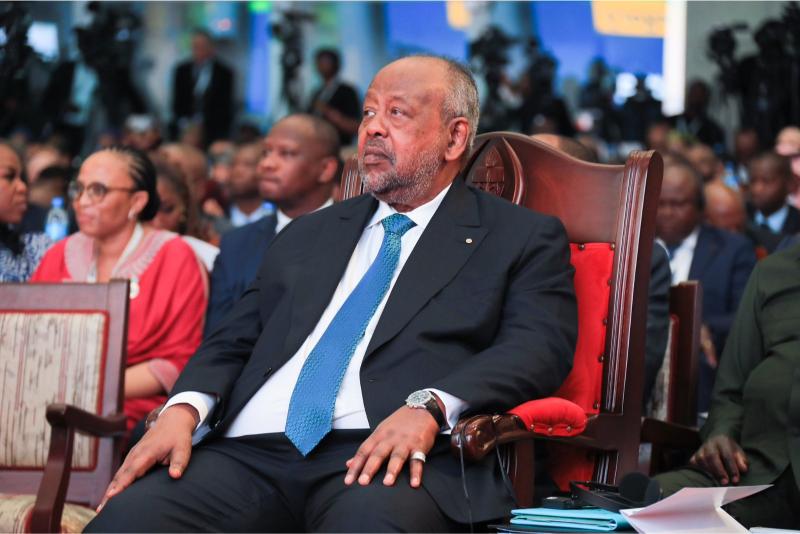
Djibouti’s long-serving leader Ismail Omar Guelleh has extended his stay in power after winning the presidential election by a wide margin, according to provisional results announced on Saturday.
The Ministry of Interior said Guelleh, who has been in office since 1999, took 97.81 per cent of votes cast in Friday’s election, defeating Unified Democratic Center candidate Mohamed Farah Samatar, who managed 2.19 per cent.
Guelleh, 78, had already signalled victory on social media hours before the official announcement after early tallies showed a strong lead in his favour.
The Horn of Africa nation, with a population of about 1 million people, sits at a strategic point near the Bab al-Mandeb Strait and plays a key role in global shipping routes linking the Red Sea and the Gulf of Aden. It also serves as the main export corridor for landlocked Ethiopia.
Guelleh has ruled Djibouti for more than two decades, and his latest win follows constitutional changes that removed presidential age limits, clearing the way for him to seek another term.
Turnout in Friday’s vote was recorded at 80.4 per cent, with about 256,000 registered voters, roughly a quarter of the population, according to local media reports.
Speaking as he cast his ballot in Djibouti City, Guelleh said, “By the grace of God, we have arrived here, and we hope that this will end in victory,” addressing reporters at City Hall around midday.
Polling stations, originally due to close at 6pm, remained open for an extra hour due to delays in some areas.
Even before results were declared, the election outcome appeared largely settled.
Campaign rallies for Guelleh drew large crowds and widespread visibility across the capital, while his opponent Mohamed Farah Samatar attracted smaller gatherings during visits to regions including Tadjourah and Obock, where he campaigned under the slogan that “another Djibouti is possible”.
A local voter, Deka Aden Mohamed, 38, said she supported the incumbent.
“I don’t even know what his opponent looks like,” she said.
Guelleh’s 2021 victory saw him secure 98 per cent of the vote. Opposition parties have largely stayed away from elections since 2016 following the removal of term limits in 2010.
Human rights groups have repeatedly raised concerns over restrictions on political space and freedom of expression, claims the government has denied.