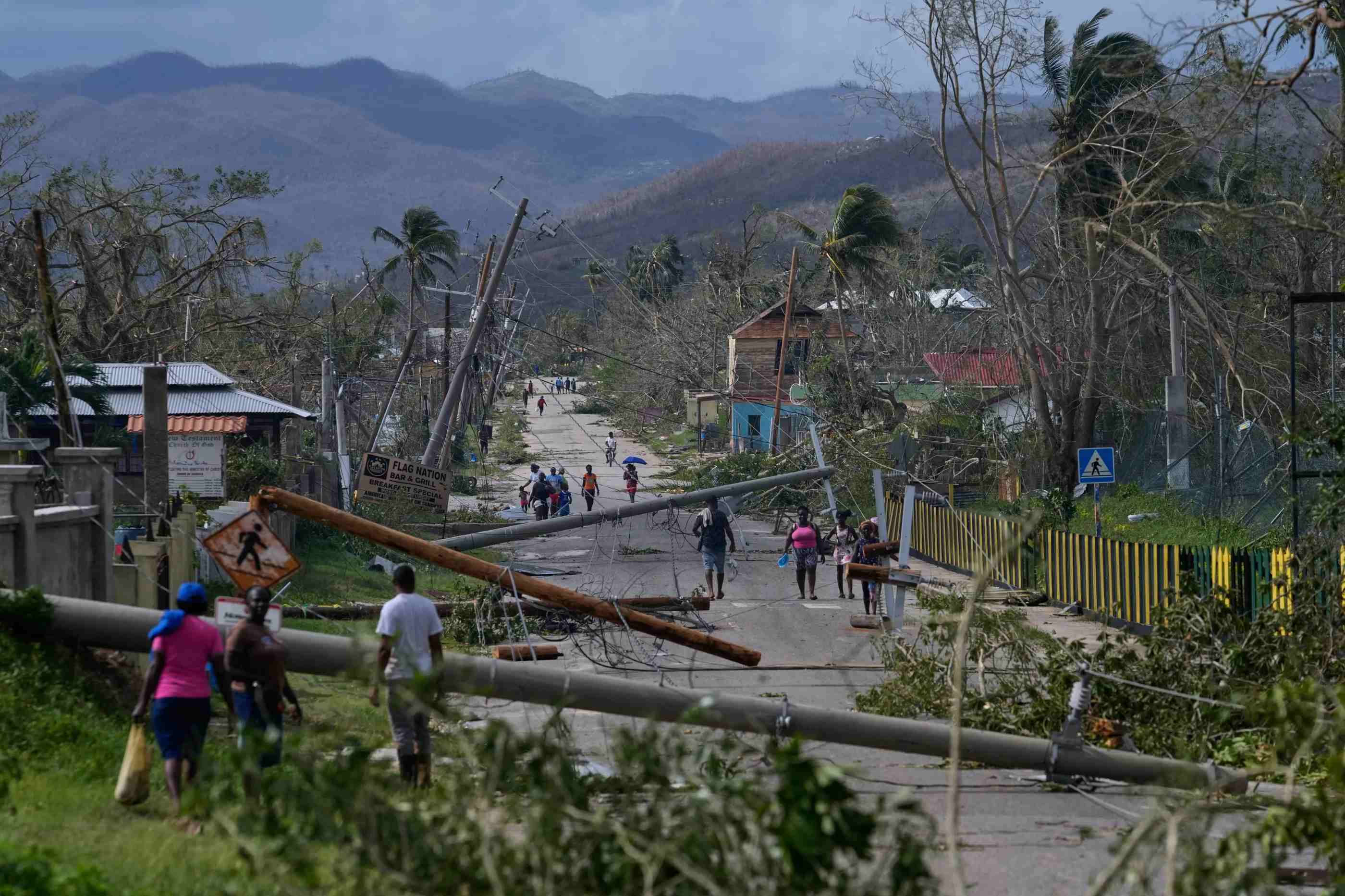
The Caribbean is grappling with catastrophic damage after Hurricane Melissa swept through the region, claiming lives and destroying homes, roads, and critical infrastructure.
The storm, which reached category five strength at its peak, tore through Jamaica before moving across Haiti, Cuba, and The Bahamas, leaving a path of destruction that has stunned residents and officials alike.
Jamaica bore the brunt of Melissa’s fury, with authorities confirming at least five fatalities as floodwaters and strong winds ripped through towns and villages.
Prime Minister Andrew Holness described the destruction as “total devastation,” reporting that 80 to 90 percent of roofs were torn from homes, hospitals, schools, and government buildings. Many residents remain stranded atop damaged structures as emergency teams work to reach them.
King Charles, Jamaica’s head of state, expressed sorrow at the scale of the disaster, saying he was “deeply concerned” and “profoundly saddened” by the losses.
“This most dreadful of record-breaking storms reminds us of the increasingly urgent need to restore the balance and harmony of Nature for the sake of all those whose lives and livelihoods may have been shattered by this heartbreaking disaster,” he said.
Melissa’s impact extended beyond Jamaica. In Cuba, where the hurricane had weakened to a category three storm, winds of up to 115 miles per hour and heavy rains battered the southeastern coast.
Trees were uprooted, buildings damaged, and homes flooded, prompting local authorities to take precautions.
Santiago de Cuba resident Rovier Mesa Rodríguez described the storm as “terrifying” and said it sounded “like a tornado.” Cuban President Miguel Díaz-Canel urged residents to stay alert, noting that early preparation had mitigated some of the worst outcomes.
The storm then turned northeast toward The Bahamas, with tropical storm warnings issued for the Turks and Caicos Islands. Forecasters predict Melissa will intensify in speed as it continues toward Bermuda, though it is not expected to make landfall in North America.
In Jamaica, the human toll is mounting. Desmond McKenzie, minister of Local Government and Community Development, confirmed that three men and a woman were found dead after being swept away by floodwaters.
Power outages affected roughly three-quarters of the island, while Montego Bay Mayor Richard Vernon reported that half of the city had been cut off by floods. “The priority is to check if everybody is alive,” he said.
Residents recounted harrowing experiences as homes and businesses were destroyed. Gordon Swaby, a Kingston businessman, described his cousin’s dream home on Crane Road being completely wiped out.
“She wanted a different kind of life,” he said. “She chose the area because she loves the sea, so this is really devastating.” Across central Jamaica, towns such as Mandeville were left flattened, with debris littering roads and building materials scattered everywhere. Recovery is expected to take months.
In Haiti, at least 20 people, including 10 children, died in floods and landslides. Thousands were displaced and forced into temporary shelters as homes along the coast were washed away.
Pascal Bimenyimana of World Relief described residents clearing debris by hand after violent winds destroyed roofs and crops across southern regions.
The United States is sending a disaster response team to Jamaica, while aid requests have also been made by Haiti and The Bahamas. Officials noted the challenge comes amid reduced global assistance following the closure of USAID and significant cuts to international aid funding.
Melissa is forecast to remain a powerful storm as it moves north, expected to reach St John’s, Newfoundland, in Canada as a strong extratropical system by Friday night.































Comments
Sign in with Google to comment, reply, and like comments.
Continue with Google